Condoms are among the oldest forms of birth control in human history. Today, they are widely recognized as a simple and effective method of preventing pregnancy and reducing the transmission of sexually transmitted infections. But the modern condom is the result of centuries of experimentation.
Who invented the first condom?
The answer is not as simple as naming one person. There was no single inventor of the condom. Different societies developed various forms of protective sheaths long before the modern latex condom appeared.
The Earliest Condoms
Historians have found evidence suggesting that people in ancient civilizations experimented with protective coverings during sexual intercourse.
Ancient Egyptians are sometimes associated with early forms of protective sheaths. Historical illustrations and archaeological evidence have led to theories that linen coverings may have been used for sexual purposes. However, the exact purpose of some of these ancient coverings remains debated.
Other ancient societies also developed methods of protecting the penis. Materials such as animal intestines, animal bladders, linen and other natural membranes were later used to create protective sheaths.
These early devices were very different from the condoms used today. They were often handmade, uncomfortable and difficult to manufacture consistently.
Ancient Rome provides another important chapter in the history of sexual protection.
Some historical accounts suggest that Romans experimented with protective coverings made from animal materials. One frequently repeated story claims that Roman soldiers used animal intestines as protective sheaths.
However, historians caution that many popular stories about Roman condoms are difficult to prove. There is limited direct archaeological evidence demonstrating widespread condom use in ancient Rome.
What is clear is that ancient societies understood the importance of fertility, reproduction and sexual health, even though their methods and medical knowledge were very different from those of today.
The First Written Evidence
One of the earliest relatively clear written references to a condom-like device appeared in Europe during the 16th century.
Italian physician Gabriele Falloppio described a linen sheath that he claimed could help protect men against syphilis, a devastating sexually transmitted infection that was spreading through Europe.
Falloppio recommended soaking the linen sheath in a chemical solution, allowing it to dry and then using it during intercourse.
His description is important because it provides one of the earliest documented references to a protective device specifically associated with preventing sexually transmitted infection.
Interestingly, Falloppio’s invention was not primarily promoted as a contraceptive. At the time, syphilis was a major public-health problem, and protection against infection was an important concern.
The “Cundum” and the 17th Century
By the 1600s, references to condoms became more recognizable.
One famous story connects the word “condom” to an English physician supposedly named Dr. Condom, who allegedly created sheaths from animal intestines for King Charles II.
According to the legend, the king wanted protection against sexually transmitted infections and unwanted pregnancies.
However, historians have never established conclusively that Dr. Condom actually existed.
The name may instead have developed from other linguistic origins. Despite the uncertainty, the story became one of the most famous explanations for the word “condom.”
By this period, condoms made from animal intestines were increasingly available in parts of Europe.
Condoms Made From Animal Intestines
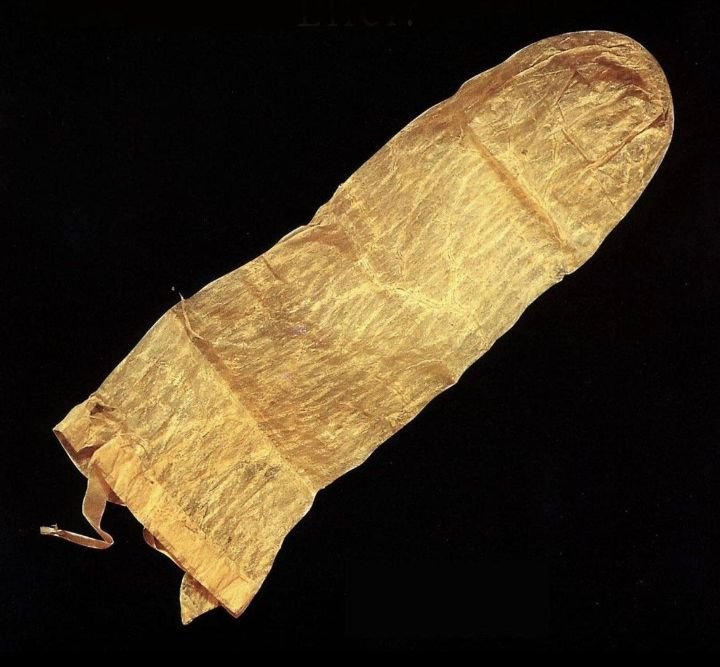
Before rubber became available, animal intestines were among the most important materials used to manufacture condoms.
The intestines were cleaned, processed and shaped into thin protective sheaths. Some versions had a small opening that could be secured with a ribbon.
These condoms were reusable and relatively expensive compared with modern disposable condoms.
Because they were made from animal tissue, they also required careful cleaning and maintenance.
Despite their limitations, they represented a significant development in the history of contraception.
The Rise of Rubber Condoms
The biggest transformation in condom history came during the 19th century with the development of vulcanized rubber.
In 1839, American inventor Charles Goodyear discovered a process known as vulcanization, which made rubber stronger, more elastic and more resistant to temperature changes.
The development of vulcanized rubber eventually allowed manufacturers to produce rubber condoms on a much larger scale.
The first rubber condoms were considerably thicker than modern condoms. They were also reusable rather than disposable.
Nevertheless, rubber dramatically changed the industry.
For the first time, condoms could be manufactured more consistently and distributed to a much larger population.
The Latex Revolution
The modern condom began to take shape during the 20th century with the introduction of latex.
Latex condoms were thinner, more flexible and easier to manufacture than earlier rubber versions.
Mass production also made condoms more affordable and accessible.
During the 20th century, condom technology continued to improve. Manufacturers developed thinner materials, better packaging and more reliable quality-control systems.
The condom gradually changed from a reusable protective sheath into the inexpensive, disposable product familiar today.
Condoms and the Fight Against HIV/AIDS
Condoms gained even greater importance during the HIV/AIDS crisis of the late 20th century.
When scientists established that HIV could be transmitted through sexual contact, condoms became an important part of public-health campaigns designed to reduce transmission.
Governments, health organizations and community groups promoted condom use alongside education, testing and other prevention strategies.
The AIDS crisis helped transform public attitudes toward condoms. They were increasingly viewed not simply as a method of contraception but also as an important tool for reducing the spread of sexually transmitted infections.
Condoms in Africa
The history of condoms in Africa is closely connected to colonial medicine, modern public-health campaigns and the HIV/AIDS epidemic.
During the late 20th century, many African countries experienced severe HIV epidemics. Governments and international health organizations expanded condom distribution and sexual-health education.
Condoms became an important part of HIV-prevention programs across the continent.
Today, condoms remain one of the most widely recognized methods of reducing the risk of HIV and many other sexually transmitted infections when used correctly and consistently.
From Ancient Sheaths to Modern Condoms
The journey from ancient protective coverings to modern condoms took thousands of years.
Early societies experimented with linen, animal membranes and other natural materials. European physicians later documented protective sheaths during outbreaks of sexually transmitted diseases. The development of rubber manufacturing in the 19th century made large-scale production possible, while latex technology in the 20th century produced the thin and flexible condoms commonly used today.
No single person can therefore be credited with inventing the condom.
Instead, the condom is the product of centuries of experimentation, medical knowledge and technological development.
Why the History of the Condom Matters
The history of condoms reveals something important about human society: people have been concerned about pregnancy, fertility and sexually transmitted diseases for thousands of years.
Although ancient people lacked modern medical knowledge, they developed their own methods for dealing with reproductive and sexual-health concerns.
The modern condom may look simple, but its history connects ancient civilizations, Renaissance medicine, industrial technology and modern public health.
From handmade animal membranes to mass-produced latex, the condom has undergone one of the longest technological journeys in the history of contraception.
Conclusion
There was no single inventor of the first condom. Instead, different civilizations contributed to the gradual development of protective sexual sheaths.
Ancient societies experimented with natural materials, Renaissance physicians documented protective devices, animal-intestine condoms became more common in Europe, and the invention of vulcanized rubber eventually transformed production.
The arrival of latex condoms in the 20th century completed the transition toward the modern product.
The Historabase Editorial Team is dedicated to exploring and sharing the stories that have shaped Africa and the wider world. Our work covers African history, ancient civilizations, empires, historical figures, wars, cultures, political movements, and important events from the past.
We aim to present history in a clear, engaging, and accessible way, combining historical records with careful research to help readers better understand the people, events, and civilizations that shaped our world.












One Comment