For decades, behind the walls of institutions scattered across Ireland, thousands of women gave birth under circumstances shaped by shame, secrecy and social rejection. Many were unmarried mothers who had become pregnant in a society where having a child outside marriage could bring disgrace upon an entire family.
Their children were born into a system that was supposed to provide care and protection. Instead, many experienced neglect, separation from their mothers, institutionalisation and, in some cases, death.
The story of Ireland’s Mother and Baby Homes is one of the darkest chapters in the country’s modern history. It is also a story that took decades to fully emerge.
In 2015, the Irish government established the Commission of Investigation into Mother and Baby Homes and Certain Related Matters to investigate what happened to women and children in these institutions between 1922 and 1998. Its final report was published in January 2021 after years of investigation.
What investigators uncovered was a deeply disturbing picture of how unmarried mothers and their children were treated.
A Society Built Around Shame
Following Irish independence, social attitudes toward unmarried pregnancy were extremely harsh.
A woman who became pregnant outside marriage could face rejection by her family, religious condemnation and social isolation. In many cases, she had nowhere to go.
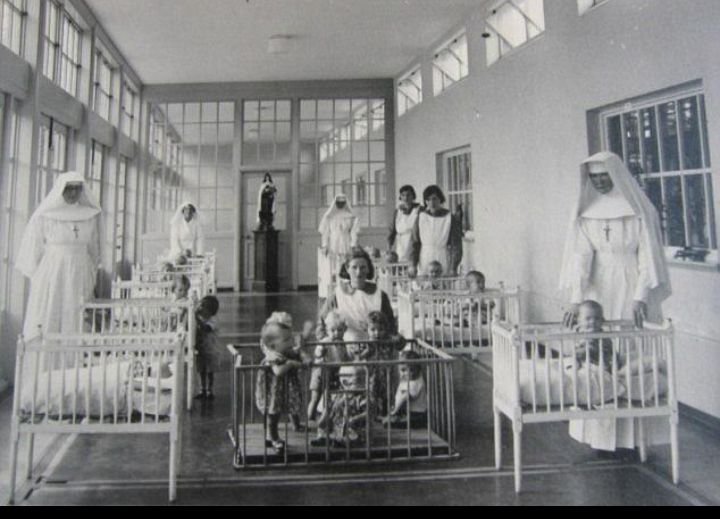
Mother and Baby Homes became places where unmarried pregnant women could give birth away from public view.
The institutions were operated by religious congregations, charitable organisations and, in some cases, local authorities. The State also played an important role in the wider system.
The women were often described in terms that reflected the prejudices of the period rather than their individual circumstances. Some had been victims of sexual violence. Others had been abandoned by partners or rejected by their families.
The official investigation found that women frequently entered these institutions because they had little or no realistic alternative.
The secrecy surrounding pregnancy was itself part of the trauma.
A young woman might arrive frightened and alone, hoping that the institution would protect her from public shame. Instead, many survivors later described an environment in which they experienced humiliation, emotional abuse and a profound loss of control over their lives.
Inside the Mother and Baby Homes
Conditions differed considerably from one institution to another and changed over time. It would therefore be misleading to describe every home as identical.
However, the Commission found serious problems in a number of institutions, particularly during earlier decades.
The report described many women as living in cold and uncaring environments. Some survivors recalled derogatory treatment from religious personnel, particularly during pregnancy and childbirth.
Women were frequently expected to work while resident in the institutions, including performing domestic tasks.
Perhaps the most devastating part of the system was what happened to their children.
A mother could give birth to her baby and then face separation from the child. Adoption, fostering and institutional placement became possible pathways.
For mothers who wanted to keep their children, the choices were often extremely limited.
Children Who Never Came Home
The most disturbing findings concerned infant deaths.
The Commission examined mortality records from the institutions and found exceptionally high infant mortality in several homes, particularly before 1960.
Its conclusion was stark: for children born to mothers who entered Mother and Baby Homes and County Homes before 1960, the homes did not improve their chances of survival. The Commission stated that they appeared to have significantly reduced those prospects.
This was not simply a historical statistic.
Behind every number was a child.
Some babies died from infectious diseases and other illnesses in circumstances where sanitation, nutrition and medical care were inadequate.
The Commission found that infant mortality levels were known to local and national authorities at the time. Yet the problem did not receive the attention that its seriousness demanded.
This is one of the most painful aspects of the history: the children were vulnerable, their deaths were recorded, but the system continued.
Tuam and the Discovery That Shocked Ireland
Among the institutions investigated, the Bon Secours Mother and Baby Home in Tuam, County Galway, became internationally associated with the scandal.
The home operated for decades and closed in 1961.
Researcher Catherine Corless played a major role in bringing attention to the deaths of children associated with the institution. Her work examined historical records and identified hundreds of children who had died while associated with the home.
The story became even more disturbing because of questions surrounding the burial site.
Historical records indicated that many children had died at the institution, while their remains were believed to have been buried in a former sewage-related structure on the grounds.
The Tuam story became a symbol of the broader questions surrounding the treatment and burial of children who died in Ireland’s institutions.
It also forced Ireland to confront something that many people had preferred not to discuss: the possibility that the remains of children had been placed in locations without the dignified burial and remembrance normally expected for the dead.
Adoption and the Loss of Identity
Death was not the only way children disappeared from their mothers’ lives.
Many children were separated from their birth mothers through adoption.
Adoption itself was not necessarily abusive, and many adopted children went on to have loving families and fulfilling lives. The darker issue was the circumstances under which some adoptions took place.
The Commission investigated adoption practices and found evidence of pressure and a lack of genuine choice affecting some mothers.
For women already dealing with stigma and institutional control, deciding whether to surrender a child could hardly be considered an ordinary choice.
Some mothers later spent decades searching for children they had lost.
Some adopted people spent their lives trying to discover who their biological parents were.
For others, the records were incomplete, difficult to access or surrounded by secrecy.
The result was a generation of people whose family histories were partially erased.
The Role of Church and State
One of the central questions surrounding the Mother and Baby Homes is responsibility.
It would be too simplistic to blame a single organisation or group.
The institutions involved religious congregations, local authorities and State agencies. The Commission examined how these different systems interacted.
Its findings demonstrated that the State was not merely an innocent observer.
The government itself later acknowledged the failures of the State, the Churches and wider Irish society.
In 2021, the Taoiseach issued an official apology, describing the treatment of unmarried mothers and their children as a profound generational wrong.
The apology recognised that women had been subjected to discrimination because they had given birth outside marriage and that many had been deprived of meaningful choice through social pressure, family expectations and institutional control.
The Hidden Human Cost
Statistics can make historical tragedies feel distant.
But the Mother and Baby Homes were ultimately about individual lives.
There was the teenager terrified of telling her parents she was pregnant.
There was the woman who entered an institution believing she had nowhere else to go.
There was the mother who gave birth and watched her baby taken away.
There was the adopted child who grew up wondering where he or she came from.
There was the family that was told a baby had died but had little information about what happened afterward.
And there were the children whose lives ended before they had the opportunity to leave the institution.
For survivors, the consequences did not end when the homes closed.
Many carried the experience throughout their lives.
Some struggled with questions of identity, family and belonging. Others spent years campaigning for access to records and recognition of what happened.
The Investigation That Broke the Silence
The Irish government established the Commission of Investigation in 2015.
Its mandate covered the period from 1922 to 1998 and examined 14 named institutions alongside a representative sample of county homes. The investigation considered issues including admissions, living conditions, adoption, deaths, finances, human rights and other practices.
The Commission eventually produced its final report, which was submitted to the government in October 2020 and published on 12 January 2021.
The report gave official weight to stories that survivors and researchers had been telling for years.
It also confirmed that the experiences of residents varied. Not every institution operated in exactly the same way, and conditions changed over the decades.
But variation does not erase the broader pattern.
The investigation found a system in which unmarried mothers were heavily stigmatised and where women and children were deprived of agency and dignity.
A Nation Confronts Its Past
The publication of the report created a major moment of national reflection.
Ireland had changed dramatically since the era when unmarried pregnancy could lead to institutionalisation and social exile.
Healthcare had improved. Social welfare expanded. Attitudes toward sexuality and family changed. Adoption laws and children’s rights developed.
But historical progress did not erase the suffering of those who had lived through the earlier system.
The government acknowledged this by introducing measures aimed at survivors and former residents.
In 2021, proposals for a Mother and Baby Institutions Payment Scheme were approved. The government estimated that approximately 34,000 survivors would be eligible for payments, with the scheme intended to recognise suffering experienced by people who had lived in Mother and Baby and County Home institutions.
The government also outlined measures concerning access to personal information, archives, education and research, memorialisation, restorative recognition and dignified burial.
The Survivors Who Refused to Be Forgotten
Perhaps the most important part of this history is the people who refused to let it disappear.
Survivors, relatives, historians and campaigners spent years demanding answers.
Their efforts challenged a culture of silence.
Researchers such as Catherine Corless helped bring specific institutions, particularly Tuam, into the public consciousness. Survivors shared painful memories. Families searched for records. Journalists investigated. Activists demanded accountability.
Without those efforts, much of this history might have remained buried in institutional files and family secrets.
The official investigation itself acknowledged the importance of survivors and their testimonies.
However, not all survivors accepted every conclusion of the Commission’s report. Following judicial review proceedings in 2021, the government formally acknowledged that some survivors did not consider the report a complete or accurate reflection of what they had told the Commission.
That disagreement is important.
History is not simply a collection of government reports. It is also the memory of the people who lived through it.
Why This History Still Matters
The story of Ireland’s Mother and Baby Homes is not simply a story about the past.
It raises difficult questions about what happens when social stigma becomes more powerful than compassion.
It shows how vulnerable people can become trapped when families, religious institutions and government systems reinforce the same social prejudices.
Most importantly, it demonstrates how easily children can become invisible when society decides that their circumstances make them less deserving of dignity.
The children who died cannot tell their stories.
The children who were adopted cannot recover every lost moment.
The mothers who were separated from their babies cannot reclaim the years that disappeared.
But remembering them matters.
The history of the Mother and Baby Homes is therefore not only about Ireland’s darkest secrets. It is about the consequences of silence, and the courage required to break it.
For decades, the walls of these institutions concealed painful stories.
Eventually, survivors and researchers began opening those doors.
And once the stories emerged, Ireland could no longer pretend that they had never happened.
The Historabase Editorial Team is dedicated to exploring and sharing the stories that have shaped Africa and the wider world. Our work covers African history, ancient civilizations, empires, historical figures, wars, cultures, political movements, and important events from the past.
We aim to present history in a clear, engaging, and accessible way, combining historical records with careful research to help readers better understand the people, events, and civilizations that shaped our world.