Nigeria’s history of armed robbery contains the stories of several notorious figures whose names became deeply associated with fear, violence and insecurity. Among the lesser-known names remembered in accounts of Nigeria’s robbery era is Babatunde Folorunsho, a figure associated with the wave of armed robbery that troubled parts of the country during the decades after independence.
Folorunsho’s story has survived largely through newspaper reports, historical accounts and popular recollections of an era when armed robbery became one of the most feared forms of violent crime in Nigeria.
One of the most striking stories associated with his name is the claim that his activities contributed to a peculiar fear among members of the public who wore expensive lace clothing. Whether every detail of that story can be independently verified is difficult to establish today, but the legend illustrates how notorious criminals could influence everyday behaviour and popular culture.
Nigeria’s Robbery Era
To understand the story of Babatunde Folorunsho, it is necessary to look at the wider history of armed robbery in Nigeria.
In the years following independence in 1960, Nigeria underwent significant political and economic changes. The country experienced military coups, civil conflict, rapid urbanisation and growing inequality.
As cities expanded, criminal networks also developed.
By the 1970s, armed robbery had become a major security concern. Banks, businesses, wealthy individuals and homes could become targets, while criminals armed with guns posed a serious challenge to the police.
The period produced several notorious robbery figures whose names became household words.
Among them were Ishola Oyenusi, Mighty Joe, Babatunde Folorunsho and, later, Lawrence Anini.
Their stories became part of Nigeria’s crime history.
Who Was Babatunde Folorunsho?
Information about Folorunsho is considerably less extensive than the surviving documentation surrounding some other famous Nigerian criminals.
He is remembered as an armed robber operating during an era when criminal gangs were becoming increasingly organised.
Accounts of his activities have contributed to the image of a criminal who targeted people perceived to possess valuable belongings.
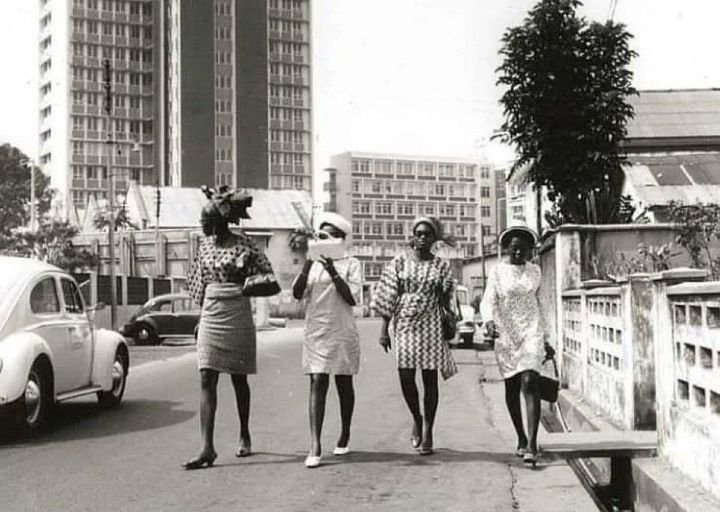
This was particularly significant in a society where clothing could communicate wealth and social status.
Traditional and fashionable clothing, jewellery and other possessions could signal prosperity.
That created an unusual connection between fashion and fear.
The Lace Story
The most memorable part of Folorunsho’s popular story concerns lace clothing.
Lace had long been associated in Nigeria with special occasions, social status and expensive fashion. People often wore elaborate lace outfits to weddings, religious ceremonies, parties and other important gatherings.
According to accounts circulated about Folorunsho, people became concerned that individuals dressed in expensive lace could attract the attention of armed robbers.
The story eventually became associated with the idea that wearing lace could make someone appear wealthy, and therefore potentially make them a target.
It is important, however, to distinguish between historical fact and popular memory.
There is insufficient reliable evidence to establish that Folorunsho alone caused Nigerians generally to stop wearing lace or that every robbery attributed to him specifically targeted lace wearers.
The story is better understood as an illustration of the atmosphere of fear surrounding armed robbery at the time.
When people began worrying that their clothing might reveal their wealth, crime was no longer perceived as something that happened only to banks or wealthy businessmen.
The power of notorious criminals often extended beyond their actual crimes.
A criminal did not have to attack everyone in a city to create fear.
Stories about robberies could spread rapidly through communities, churches, workplaces, markets and family gatherings.
People began changing their behaviour.
Some avoided travelling at particular times. Others became cautious about displaying jewellery or carrying large amounts of cash.
Expensive clothing could also attract unwanted attention.
This phenomenon demonstrates how crime can affect society psychologically.
The fear generated by armed robbery could sometimes become larger than the documented number of incidents themselves.
Rumours and exaggerated stories could further increase anxiety.
The Golden Age of Notorious Robbers
Folorunsho’s story belongs to a period that produced some of Nigeria’s most famous criminal figures.
In the 1970s, newspapers frequently reported armed robbery cases involving heavily armed gangs.
Ishola Oyenusi, popularly remembered as a major armed robber of the period, became one of the most notorious figures in Lagos and was eventually executed in 1971.
Other criminals also gained notoriety.
Their stories were sometimes presented almost like dramatic films, with newspapers reporting their robberies, arrests, trials and eventual punishment.
This contributed to the creation of a distinct Nigerian crime mythology.
Some criminals became symbols of brutality, while others were portrayed by sections of the public as daring or clever.
The romanticisation of criminals, however, often obscured the suffering of their victims.
Why Armed Robbery Flourished
There was no single reason for the growth of armed robbery in Nigeria.
Several conditions created opportunities for criminal activity.
Rapid urbanisation brought large populations together in cities such as Lagos, Ibadan, Benin City and Port Harcourt.
The expansion of banking and commercial activity created targets containing large amounts of money.
The availability of firearms after the Nigerian Civil War was also a major concern for security authorities.
Unemployment and economic hardship provided additional social pressures, although poverty alone cannot explain criminal behaviour.
Weak policing capacity and difficulties investigating organised criminal networks also created opportunities for armed gangs.
The Police Response
The rise of armed robbery forced Nigerian authorities to strengthen their response.
Police units were tasked with investigating robbery cases, arresting suspected gang members and recovering stolen property.
High-profile arrests and prosecutions became major news events.
The government also introduced severe punishments for armed robbery.
Under military governments, special tribunals and military-era laws were used in dealing with serious robbery cases.
Executions of convicted armed robbers became highly publicised.
The intention was to create a deterrent.
However, the persistence of armed robbery demonstrated that severe punishment alone could not eliminate the problem.
Crime and Popular Culture
The stories of Nigeria’s notorious robbers eventually entered popular culture.
Newspapers, books, films and oral storytelling helped preserve the names of criminals long after their deaths or imprisonment.
The public became familiar with dramatic accounts of robberies and police pursuits.
This created a paradox.
Society feared criminals while simultaneously becoming fascinated by their stories.
The same phenomenon can be seen in the history of crime in many countries.
Notoriety can give criminals a form of unwanted celebrity.
For historians, however, the important question is not simply why criminals became famous but what their stories reveal about the society in which they operated.
The Legacy of Folorunsho
Babatunde Folorunsho is not as extensively documented in popular Nigerian history as some other notorious robbers.
Nevertheless, the stories surrounding him remain useful for understanding the atmosphere of Nigeria’s armed-robbery era.
The famous association between Folorunsho and lace clothing illustrates how crime can influence ordinary cultural behaviour.
When people begin worrying that the clothes they wear could make them targets, insecurity has entered everyday life.
Fashion becomes associated with personal safety.
Social gatherings become occasions for caution.
And stories about criminals become part of the collective memory of a generation.
The Historabase Editorial Team is dedicated to exploring and sharing the stories that have shaped Africa and the wider world. Our work covers African history, ancient civilizations, empires, historical figures, wars, cultures, political movements, and important events from the past.
We aim to present history in a clear, engaging, and accessible way, combining historical records with careful research to help readers better understand the people, events, and civilizations that shaped our world.









One Comment