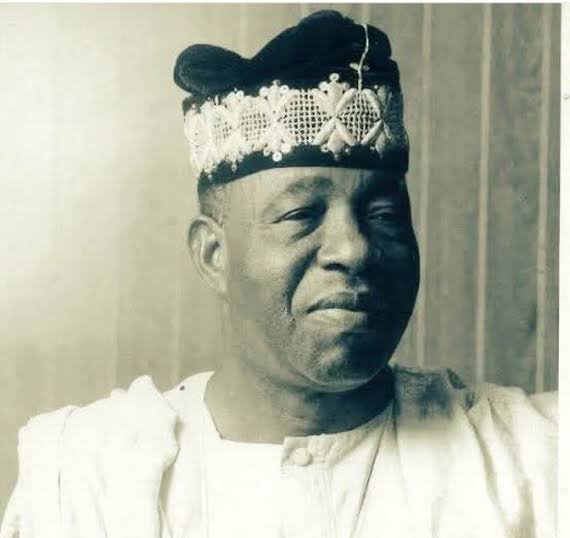
Kingsley Ozuomba Mbadiwe (1915–1990) was one of the most remarkable political figures of Nigeria’s nationalist era. A businessman, Pan-African activist, parliamentarian, federal minister, nationalist and statesman, Mbadiwe spent more than four decades at the centre of Nigeria’s political development.
Although his name is less frequently mentioned today than those of Nnamdi Azikiwe, Obafemi Awolowo, Ahmadu Bello and Abubakar Tafawa Balewa, historians have described him as one of the central figures in Nigerian political history. Historian Hollis R. Lynch’s major biography of Mbadiwe describes him as a national political figure whose career stretched from the colonial period through independence, the First Republic and the Nigerian Civil War.
His life reflected many of the struggles that shaped modern Nigeria: the fight against colonial rule, the search for national unity, regional rivalry, economic development, political competition and the crisis that eventually produced civil war.
Early Life and Education
Kingsley Ozuomba Mbadiwe was born on 15 March 1915 at Arondizuogu, in what was then the Orlu Division of southeastern Nigeria. He came from the Mbadiwe Odum family and grew up during a period when British colonial rule was transforming Nigerian society.
Mbadiwe received his early education in Nigeria before continuing his studies at institutions including Hope Waddell Training Institute, Aggrey Memorial College, Igbobi College and Baptist Academy. He later travelled to the United States for higher education.
His years in America were particularly important in shaping his political outlook. Between approximately 1939 and 1947, he became involved in African student activism and Pan-African ideas. His experience exposed him to international debates about colonialism, African self-government and racial equality.
Rather than simply returning to Nigeria with an academic qualification, Mbadiwe returned with a growing determination to participate in the political and economic transformation of Africa.
From Businessman to Nationalist
Politics was not Mbadiwe’s only interest. He was also a businessman and advocate of African enterprise.
Before entering frontline politics, he established the Mbadiwe Produce Association in 1937. His commercial activities reflected an important part of his philosophy: Africans should become economically strong enough to participate meaningfully in the development of their own societies.
His political relationship with Dr. Nnamdi Azikiwe also began relatively early. Azikiwe was already emerging as one of Nigeria’s most influential nationalists, and Mbadiwe became associated with the nationalist movement surrounding him.
When Mbadiwe eventually joined the National Council of Nigeria and the Cameroons (NCNC), he entered one of the most important political organisations in Nigeria’s struggle for self-government.
Entering Nigerian Politics
The constitutional reforms of the early 1950s created new opportunities for Nigerians to participate directly in government. Mbadiwe took advantage of this changing political environment.
In 1951, he was elected to the Eastern Region House of Assembly. His parliamentary career quickly expanded beyond regional politics, and he became an important voice in national affairs.
What distinguished Mbadiwe from many of his contemporaries was the national scope of his political ambitions.
According to Lynch, while Azikiwe, Awolowo and Ahmadu Bello developed powerful political bases largely around their respective regions, Mbadiwe consistently sought influence at the federal level. He became one of the most important political figures in the federal government during the years leading to independence.
This national outlook became one of the defining features of his career.
A Powerful Federal Minister
Mbadiwe’s political rise was remarkably fast.
From 1954 to 1958, he held three successive federal cabinet positions. In January 1954, he became Minister of Lands, Surveys and Natural Resources. In 1955, he moved to Communications and Aviation. In August 1957, he became Minister of Commerce and Industry in the first all-Nigerian Federal Executive Council headed by Prime Minister Tafawa Balewa.
His position gave him considerable influence during one of the most important periods in Nigerian history.
Nigeria was moving from colonial administration toward self-government, and ministers such as Mbadiwe were involved in developing institutions that would eventually be inherited by an independent Nigerian government.
As Parliamentary Leader of the NCNC ministers, and because of his political relationship with Tafawa Balewa and the Northern People’s Congress, Mbadiwe became one of the powerful figures within the federal government.
“Operation Fantastic”
One of the most memorable episodes of Mbadiwe’s career came during his involvement with Nigerian aviation.
As a minister responsible for aviation, he played a role in promoting Nigeria’s international aviation ambitions. The inaugural Nigeria Airways flight between Lagos and New York became an important symbolic moment.
Mbadiwe helped turn the event into a spectacular demonstration of Nigerian culture and confidence. The delegation included Atilogwu dancers and Kano trumpeters, and the operation became popularly associated with the name “Operation Fantastic.”
The episode perfectly captured Mbadiwe’s personality. He was not a politician who believed that government events should be dull or understated. He wanted Nigeria’s achievements to be visible, dramatic and internationally respected.
His flamboyant style eventually produced some of the most memorable expressions in Nigerian political history.
The Orator of Nigerian Politics
Mbadiwe became famous for his extraordinary command of language.
He was associated with expressions such as “Man of Timber and Calibre”, “Political Juggernaut”, “handshake across the Niger” and “zoning to unzone.”
His language was sometimes humorous and deliberately extravagant, but it also reflected his political philosophy.
The expression “handshake across the Niger”, in particular, became associated with the idea of cooperation between Nigeria’s major regions and peoples.
Mbadiwe understood that Nigeria’s survival as a country required political relationships that crossed regional boundaries.
His famous rhetoric eventually earned him a reputation as one of Nigeria’s great political orators.
His Political Crisis With Azikiwe
Mbadiwe’s relationship with Nnamdi Azikiwe was complicated.
Although he had originally emerged within the nationalist movement associated with Azikiwe and the NCNC, the two men eventually disagreed over political leadership and strategy.
In the late 1950s, Mbadiwe and Kola Balogun challenged Azikiwe’s leadership of the NCNC. The confrontation became one of the major internal crises in the party. Mbadiwe subsequently established The Daily Telegraph, which served as an outlet for his political position during the dispute.
The disagreement demonstrated an important reality about Nigeria’s nationalist movement: the struggle for independence did not eliminate political competition among Nigerian leaders.
These men could agree on the need for self-government while fiercely disagreeing over who should lead the country and what political direction Nigeria should take.
Mbadiwe and Azikiwe eventually reconciled, demonstrating that political relationships in the First Republic could change dramatically as circumstances changed.
A Nationalist With a Federal Vision
Mbadiwe’s greatest political ambition was arguably not simply independence from Britain but the creation of a strong Nigerian state.
He supported economic development and greater Nigerian participation in commerce and industry. His ministerial responsibilities placed him directly in areas that were crucial to the transition from colonial economic structures to indigenous economic participation.
His political career also reflected an attempt to build alliances across Nigeria’s regional divisions.
At a time when Nigerian politics was increasingly shaped by regional identities, Mbadiwe’s federal ambitions made him an unusual figure.
This does not mean that he was detached from Eastern Nigerian politics. He remained deeply connected to his region and its political struggles. But his career demonstrated that he wanted influence beyond the East.
That distinction is central to understanding his historical significance.
The Road to the Nigerian Civil War
Nigeria’s independence in 1960 did not end the country’s political problems.
The First Republic became increasingly unstable amid electoral disputes, regional rivalries, accusations of political manipulation and military intervention.
The military coup of January 1966, the counter-coup later that year, ethnic violence and the breakdown of political relations eventually produced the secession of the Eastern Region and the declaration of Biafra in 1967.
Mbadiwe’s position during this period was complicated.
Following the secession of the Eastern Region, he became a roving ambassador for Biafra, representing the Biafran government abroad during the Civil War.
His wartime role demonstrates the complexity of his political identity. The same man who had spent years promoting Nigerian nationalism and federal politics now became involved in an international campaign on behalf of the secessionist side.
His autobiography, Rebirth of a Nation, devotes a substantial section to the Nigerian Civil War and provides Mbadiwe’s own account of this turbulent period. The National Library of Nigeria describes the autobiography as an important source for understanding his views on the NCNC crisis, Operation Fantastic, the Civil War and the political developments that followed.
Life After the Civil War
The end of the Civil War did not mark the end of Mbadiwe’s political career.
He continued to participate in Nigerian public affairs and remained interested in the country’s political future.
His political journey eventually extended into the Second Republic, giving him a rare perspective on several generations of Nigerian politics.
He had witnessed colonial rule, participated in the struggle for independence, served in the federal government, experienced the First Republic’s collapse and lived through the Civil War.
His political career therefore provides a unique lens through which to examine the transformation of Nigeria during the twentieth century.
His Final Years and Legacy
K.O. Mbadiwe died on 29 August 1990, aged 75.
His death marked the passing of a politician whose career had closely followed the development of modern Nigeria.
The scale of his political life is perhaps best demonstrated by the fact that his autobiography, Rebirth of a Nation, covers the preparation for independence, the nationalist struggle, the First Republic, the Nigerian Civil War, the Second Republic and his vision for Nigeria’s future.
Historian Hollis R. Lynch’s 2012 biography similarly presents Mbadiwe as a central figure in Nigerian political history for more than forty years and as one of the important figures involved in the making of the Nigerian state.
Mbadiwe’s legacy is therefore larger than his political offices.
He represented a generation of Nigerians who inherited a colonial country and attempted to transform it into an independent nation.
He was ambitious, controversial, charismatic and sometimes flamboyant. He experienced political victories and defeats, alliances and bitter disagreements. Yet throughout his career, he remained deeply involved in the question that confronted Nigeria’s early political leaders:
How could a country of many peoples and regions build a united and prosperous nation?
Conclusion
K.O. Mbadiwe occupies an important but sometimes overlooked place in Nigerian history.
He was a businessman who became a nationalist, a Pan-African activist who became a federal minister, a powerful NCNC politician who challenged Azikiwe, and a national political figure who later became involved in the Biafran diplomatic effort.
His career cannot be reduced to a single political label.
It was shaped by the contradictions of Nigerian history itself.
Mbadiwe wanted Nigeria to become powerful and respected. He believed in political participation, economic development and national influence. He also operated within a political environment dominated by regional competition, ethnic tensions and struggles for power.
Perhaps that is why his story remains valuable today.
Understanding K.O. Mbadiwe means understanding not only one politician, but also the hopes, ambitions, conflicts and contradictions of the generation that built Nigeria’s early political institutions.
More than three decades after his death, his life remains a reminder that Nigeria’s history was shaped by many extraordinary figures, and that some of the most fascinating stories belong to those whose names have gradually faded from popular memory.
The Historabase Editorial Team is dedicated to exploring and sharing the stories that have shaped Africa and the wider world. Our work covers African history, ancient civilizations, empires, historical figures, wars, cultures, political movements, and important events from the past.
We aim to present history in a clear, engaging, and accessible way, combining historical records with careful research to help readers better understand the people, events, and civilizations that shaped our world.


One Comment