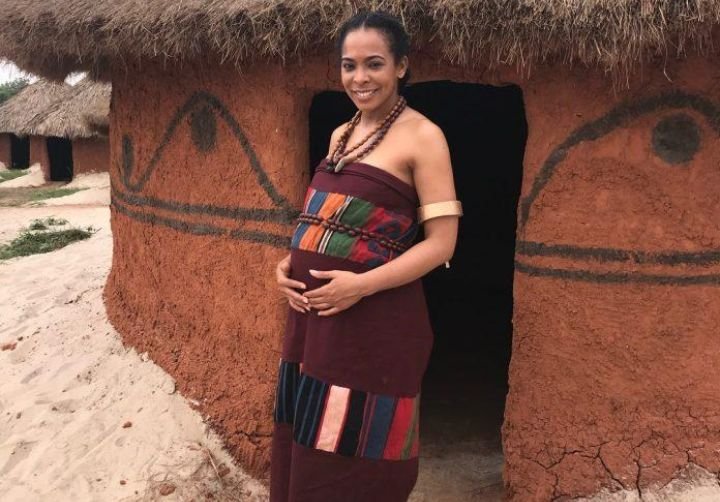
Across many African societies, pregnancy was surrounded by traditions, restrictions and spiritual beliefs that could appear extraordinary to modern observers. One such belief was the idea that pregnant women should sometimes avoid sacred forests, shrines, ritual grounds, ancestral sites or other places regarded as spiritually powerful.
These restrictions were not universal across Africa, and they did not arise from a single religious tradition. Africa contains thousands of ethnic groups with distinct histories and belief systems. However, in some communities, pregnancy was considered a spiritually sensitive period, and certain sacred places were thought unsuitable for expectant mothers.
To understand why such restrictions existed, it is necessary to look at how traditional African societies understood pregnancy, childbirth, ancestors and the relationship between the physical and spiritual worlds.
Pregnancy Was Considered a Vulnerable Period
In many traditional African communities, pregnancy was more than a biological process. It was associated with the arrival of a new member of the community and, in some belief systems, a connection between the unborn child, ancestors and the spiritual world.
Because childbirth could be dangerous, communities developed rules intended to protect both mother and child. Some of these rules were practical, while others had religious or spiritual explanations.
Sacred places were particularly important because they were believed to have a special relationship with supernatural beings, ancestors, deities or forces associated with nature. Entering such places was therefore not treated like visiting an ordinary location.
A pregnant woman entering a sacred site could be viewed as exposing herself and the unborn child to forces that ordinary people were expected to approach with caution.
Sacred Places Were Not Ordinary Spaces
Traditional sacred sites could take many forms.
They included sacred groves, rivers, mountains, caves, shrines, ancestral compounds and specially designated forests. Some were associated with particular deities or spirits, while others were connected to ancestors and important community traditions.
Access was sometimes restricted according to age, gender, social status or ritual condition.
In some societies, restrictions were not necessarily based on the belief that pregnant women were evil or dangerous. Instead, pregnancy itself could place a woman in a special category requiring particular protection.
A sacred location might have rules governing who could enter, what they could carry, what they could say and which rituals they had to perform before entering.
Breaking those rules could be regarded as disrespect toward the spiritual power associated with the site.
The Unborn Child Was Part of the Concern
One important reason for pregnancy-related restrictions was the belief that the unborn child was especially vulnerable.
Traditional explanations varied considerably. Some communities believed spiritual forces could influence a person’s health, character or destiny before birth. Others regarded the unborn child as being in a transitional state between different worlds.
Under such beliefs, exposing a pregnant woman to a spiritually powerful location could potentially affect the child.
This was not necessarily understood in terms of modern medical science. Instead, communities interpreted pregnancy through their existing religious worldview.
The restriction therefore functioned as a form of spiritual protection.
Women Could Also Have Special Ritual Restrictions
Gender was an important factor in many traditional African religious systems.
Certain shrines or ritual spaces were restricted to men, women, initiates, priests or particular members of a community. Pregnancy could create an additional restriction because the woman was believed to be carrying new life.
In some traditions, menstruation, pregnancy and childbirth were each associated with particular ritual rules. These rules differed greatly between communities.
It is therefore misleading to claim that African societies universally considered pregnant women spiritually impure. Some traditions treated pregnancy with enormous reverence, while others imposed restrictions intended to protect the woman, her unborn child or the sacred environment.
Fear of Spiritual Consequences
In societies where supernatural explanations were an important part of understanding illness and misfortune, violating a sacred restriction could be considered dangerous.
If a pregnant woman entered a forbidden sacred place and subsequently experienced complications, the event might be interpreted as evidence that the restriction had been justified.
Possible consequences could include illness, difficult childbirth or misfortune affecting the family.
From a historical perspective, these interpretations reveal how communities attempted to explain events that they could not medically understand.
Modern medicine provides different explanations for pregnancy complications, but traditional communities interpreted such events through the knowledge and worldview available to them.
Sacred Forests Were Especially Significant
Sacred forests provide some of the clearest examples of African spiritual traditions surrounding restricted spaces.
Across parts of West Africa, certain forests were protected because they were associated with deities, ancestors or other spiritual beings. Some were also important ecological areas where particular trees, animals and plants were protected.
People could be prohibited from entering these forests without permission or a ritual reason.
A pregnant woman might therefore be expected to avoid such places not simply because she was pregnant, but because the forest itself was governed by strict spiritual rules.
The restriction could also have a practical effect: it kept people away from dangerous terrain, wild animals, poisonous plants and other hazards.
Pregnancy and the Fear of Spiritual Contamination
Some traditional belief systems placed considerable importance on ritual cleanliness.
People undergoing particular physical or social conditions could be temporarily restricted from certain rituals. The reasoning differed from one society to another.
Pregnancy could sometimes be treated as a special condition requiring separation from particular ceremonies or sacred spaces.
However, the concept should not automatically be interpreted as meaning that pregnant women were regarded as dirty or cursed. In some cases, restrictions reflected the opposite idea: pregnancy was considered powerful, important and deserving of special protection.
The woman was carrying a future member of the community, and therefore her wellbeing had consequences beyond herself.
Priests and Ritual Specialists Enforced Sacred Rules
Sacred places were often governed by individuals who understood the traditions associated with them.
These could include priests, diviners, custodians of shrines, elders or members of families responsible for maintaining sacred sites.
Their authority helped preserve rules about who could enter particular locations.
A pregnant woman who wished to visit such a place might therefore have needed permission or guidance. In communities where the restrictions were strongly observed, ignoring the rules could be considered a serious offence.
The rules were transmitted through generations, meaning that many people followed them because they were part of the established social and religious order.
There Was Also a Practical Side
Although spiritual explanations were important, some pregnancy restrictions may have served practical purposes.
Pregnancy can make strenuous physical activity more difficult. Sacred forests, mountains, caves and isolated ritual sites could involve dangerous journeys.
Keeping pregnant women away from physically demanding or hazardous environments could reduce the risk of injury.
Similarly, traditional restrictions surrounding food, plants, ceremonies and certain activities may sometimes have protected pregnant women from substances or situations that communities had learned through experience could be harmful, even when they did not understand the biological mechanism.
This is one reason historians and anthropologists generally avoid reducing traditional practices to either “superstition” or “medicine.” Many customs contained multiple layers of meaning.
Not an African-Wide Rule
Perhaps the most important fact is that there was never one universal African rule concerning pregnant women and sacred places.
Africa is home to enormous cultural and religious diversity. Practices among the Yoruba could differ substantially from those among Igbo, Akan, Ewe, Hausa, Zulu, Maasai, Akan or other African peoples.
Even within the same ethnic group, traditions could differ between communities and historical periods.
Therefore, saying that “Africans feared pregnant women entering sacred places” would be historically inaccurate.
The more precise statement is that some African societies maintained restrictions that prevented pregnant women from entering particular sacred spaces, usually because of beliefs concerning spiritual protection, ritual status, pregnancy and the wellbeing of the unborn child.
A Window Into an Older African Worldview
These traditions provide an important window into how many African societies understood life.
Pregnancy was not always viewed as an isolated biological event. It could be connected to family, ancestors, community identity, religion and the future of the society itself.
Sacred places, meanwhile, were not simply pieces of land. They could represent relationships between humans, nature, ancestors and spiritual powers.
The restrictions placed on pregnant women therefore reflected a broader worldview in which certain locations, people and moments in life required special rules.
Whether or not one accepts the spiritual explanations behind these traditions, the beliefs themselves are historically significant.
The Historabase Editorial Team is dedicated to exploring and sharing the stories that have shaped Africa and the wider world. Our work covers African history, ancient civilizations, empires, historical figures, wars, cultures, political movements, and important events from the past.
We aim to present history in a clear, engaging, and accessible way, combining historical records with careful research to help readers better understand the people, events, and civilizations that shaped our world.