Juju is one of the most misunderstood aspects of Nigeria’s traditional religious and cultural history. In popular culture, the word is often associated with mysterious charms, curses and supernatural powers. However, historically, the traditions that came to be described as juju were much broader. They formed part of complex indigenous religious systems involving deities, ancestors, divination, sacred objects, rituals and systems of social order.
The history of juju is deeply connected to the traditional religions of several Nigerian communities, particularly among the Yoruba and other peoples of West Africa. These traditions existed long before European colonialism and Christianity arrived in the region.
Understanding the history of juju therefore requires looking beyond stories of magic and fear and examining the beliefs, institutions and cultural practices that shaped traditional Nigerian societies.
What Does Juju Mean?
The word juju is generally understood to be of West African origin, although its precise linguistic history remains debated. Europeans and other outsiders used the term broadly to describe various African religious objects, charms, rituals and spiritual practices.
This created a problem: traditional African religions were highly diverse, but the word “juju” was often used as a single label for practices that were actually very different.
Among the Yoruba, for example, religious life traditionally involved belief in Olódùmarè, numerous òrìṣà (divine beings), ancestors, divination and ritual specialists. Among other Nigerian peoples, religious systems had their own gods, spirits, sacred places and traditions.
Consequently, juju should not be treated as the name of one uniform Nigerian religion. It is better understood as a broad term that outsiders and later popular culture used for various indigenous spiritual practices.
The Ancient Roots of Traditional Spirituality
Long before Nigeria became a modern country, its peoples had developed sophisticated religious systems.
Traditional communities sought explanations for natural events, illness, death, fertility, success, disasters and other uncertainties through their understanding of the spiritual world.
The physical and spiritual worlds were not necessarily viewed as completely separate. Many communities believed that spiritual forces could influence everyday life and that humans could maintain relationships with supernatural beings and ancestors through prayer, offerings, rituals and other practices.
In Yoruba society, the òrìṣà occupied an important place in religious thought. Different òrìṣà were associated with different aspects of existence. For example, Ògún was associated with iron, warfare and occupations involving metal, while Ṣàngó became associated with thunder, lightning and royal power.
These beliefs were not simply about supernatural power. They were also connected to morality, identity, community traditions and political authority.
The Importance of Divination
One of the most important institutions in traditional Yoruba religious life was Ifá divination.
Ifá was a sophisticated system through which trained specialists known as babaláwo interpreted sacred verses and signs to provide guidance concerning different situations.
Rather than simply being a practice of predicting the future, Ifá traditionally functioned as a system of knowledge containing hundreds of stories, verses, proverbs and moral teachings.
The divination process could address questions concerning family, personal decisions, conflicts, health, business and other matters. Its importance demonstrates that indigenous spirituality was connected to intellectual and cultural traditions as well as ritual.
Charms, Amulets and Sacred Objects
Objects believed to possess spiritual significance were important in many traditional Nigerian societies.
These could include specially prepared objects, containers, plants, animal materials or other items associated with particular religious traditions. Their significance depended on the community and the circumstances in which they were used.
Some objects were associated with protection, while others could be connected with healing, prosperity, authority or religious ceremonies.
European observers frequently described such objects as “fetishes” or “juju.” These descriptions often failed to capture the cultural and religious meanings attached to them by the communities that used them.
For believers, the object itself was not necessarily considered a simple source of supernatural power. Its significance could depend on the spiritual forces, rituals, prayers and traditions associated with it.
Juju and Traditional Medicine
Traditional spirituality and medicine were often closely connected.
Before the development of modern hospitals and Western medicine in Nigeria, communities relied on herbalists, traditional healers, midwives and other specialists for different forms of healthcare.
Some healers possessed detailed knowledge of local plants and their medicinal properties. Others combined herbal treatments with prayers, divination and religious rituals.
This mixture of physical and spiritual approaches reflected the traditional understanding that illness could have multiple causes.
It is important, however, to distinguish historical traditional medicine from modern medical treatment. Traditional beliefs and practices form an important part of Nigerian cultural history, but they should not automatically be regarded as substitutes for evidence-based healthcare.
Oaths, Justice and Social Control
Spiritual beliefs also influenced systems of justice and social order.
In some traditional communities, people could swear oaths before sacred authorities or objects. Breaking an oath was believed to have serious spiritual consequences.
Such beliefs could strengthen social agreements because people feared not only human punishment but also supernatural consequences.
Sacred oaths could therefore play a role in resolving disputes, enforcing agreements and maintaining community order.
This reveals an important aspect of traditional spirituality: it was not limited to private religious practice. It could influence law, politics, family relationships and economic life.
Juju and Traditional Political Power
Religion and political authority were deeply connected in many pre-colonial Nigerian societies.
Kings, chiefs and other political leaders often operated within religious systems that gave legitimacy to their authority. Sacred rituals could accompany coronations, festivals, warfare and important political decisions.
Religious specialists could also become influential figures because communities believed they possessed specialized knowledge about the spiritual world.
In some kingdoms, sacred institutions were therefore closely connected to political institutions.
This relationship between religion and authority helps explain why colonial administrators sometimes regarded traditional religious institutions as potential sources of political influence.
The Arrival of Christianity and Colonialism
The nineteenth century brought major changes to Nigerian religious life.
Christian missionaries established churches and schools in different parts of the country, while British colonial expansion increasingly brought Nigerian societies under European political control.
Christian missionaries generally rejected indigenous religious practices, describing many of them as paganism, superstition or idolatry.
Traditional shrines were sometimes destroyed or abandoned, while converts were encouraged to reject traditional religious practices.
The colonial government also introduced new legal and administrative institutions. Practices that had previously been governed by traditional authorities increasingly came under colonial law.
These developments significantly changed the position of indigenous religious institutions.
However, traditional beliefs did not simply disappear.
The Survival of Traditional Beliefs
Despite missionary activities and colonial rule, indigenous religious traditions survived.
In many Nigerian communities, traditional beliefs continued alongside Christianity or Islam. Some people publicly identified with Christianity or Islam while maintaining certain cultural traditions inherited from their families.
Others abandoned traditional religious practices but retained cultural elements associated with them.
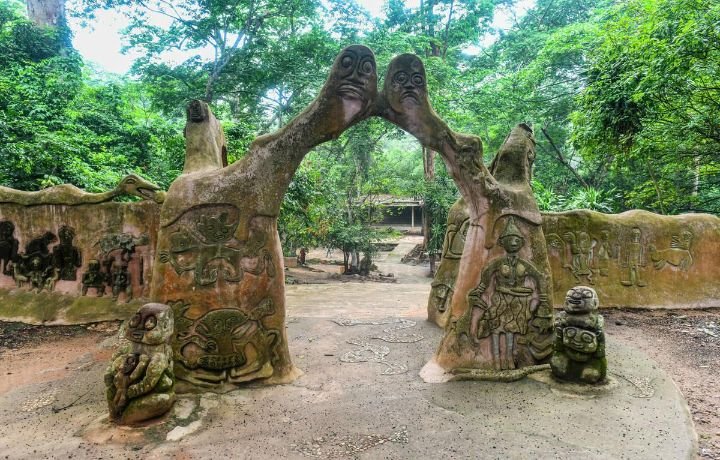
Festivals, names, oral traditions, sacred sites, traditional institutions and artistic expressions continued to preserve aspects of indigenous religious history.
This process of adaptation is one reason Nigerian traditional spirituality has survived into the modern era.
Why Did Juju Become Associated With Fear?
During the colonial period, European descriptions contributed significantly to the modern image of juju.
Missionaries and colonial writers sometimes portrayed indigenous religious practices as mysterious, primitive or dangerous. Such descriptions influenced later popular representations of African spirituality.
Over time, newspapers, novels, films and popular stories further reinforced the image of juju as something connected primarily with curses, revenge and supernatural attacks.
As a result, the broader religious and cultural traditions behind the word became overshadowed by sensational stories.
The modern Nigerian use of the word can therefore mean different things depending on the context. For some people, it refers to traditional religious practices. For others, it simply means a charm or supposed supernatural act.
Juju in Nigerian Popular Culture
In modern Nigeria, traditional spiritual themes remain visible in literature, music, films and storytelling.
Nigerian writers and filmmakers have frequently explored conflicts between traditional beliefs and Christianity, modernity and ancestral traditions.
Nollywood has also played a major role in shaping popular perceptions of juju. Films often portray spiritualists, shrines, curses, rituals and supernatural battles.
Although these stories are entertaining, they should not always be interpreted as accurate historical representations.
Popular culture frequently exaggerates supernatural elements for dramatic effect. The historical reality of Nigerian traditional religion was much more complex.
The Yoruba Connection and Juju Music
There is another important meaning of the word “juju” in Nigeria: Jùjú music.
Jùjú music is a popular Yoruba musical tradition that developed prominently during the twentieth century. It should not be confused with juju as a term for traditional spiritual practices.
Jùjú music incorporated instruments such as talking drums, guitars, shakers and other percussion instruments and became particularly influential in Nigerian popular music.
Musicians such as Tunde Nightingale, I. K. Dairo and later King Sunny Adé helped establish and popularize different forms of jùjú music.
The musical tradition demonstrates how Yoruba cultural ideas continued to evolve in modern Nigeria rather than simply disappearing.
Juju in Contemporary Nigeria
Today, traditional religious practices remain part of Nigeria’s cultural landscape.
Some Nigerians continue to participate in indigenous religious traditions, while others encounter them primarily through festivals, family traditions, cultural ceremonies or historical research.
Traditional religion has also attracted renewed interest from scholars, cultural historians and people interested in African heritage.
At the same time, the word “juju” continues to carry negative associations for many Nigerians because of its connection with stories about curses and supernatural harm.
The modern debate therefore involves both religion and cultural identity.
Separating History From Myth
One of the greatest challenges in studying juju is separating historical evidence from folklore.
Nigeria has a rich oral tradition, and stories about supernatural events have been passed from generation to generation. Oral traditions are valuable historical sources, but they must be examined carefully alongside archaeology, written records, linguistic evidence and anthropological research.
Claims about supernatural powers cannot be established historically simply because they appear in traditional stories.
What historians can establish is that Nigerian societies possessed sophisticated religious systems, spiritual specialists, sacred institutions, rituals and beliefs that profoundly influenced their communities.
Conclusion
The history of juju in Nigeria is far more complicated than the popular image of mysterious charms and curses.
Long before colonialism, Nigerian societies developed complex religious traditions that connected the physical world with a spiritual universe inhabited by deities, ancestors and other supernatural forces. These traditions influenced medicine, politics, justice, morality, warfare, festivals and everyday life.
Among the Yoruba, systems such as Ifá divination and worship of the òrìṣà formed important parts of religious and intellectual life. Similar indigenous traditions existed among numerous other Nigerian peoples, each with their own beliefs and institutions.
Colonialism and the spread of Christianity and Islam transformed these traditions, but they did not completely erase them. Elements survived through festivals, cultural practices, oral traditions, music, art and contemporary indigenous religious movements.
Today, juju remains a powerful and sometimes controversial word in Nigerian society. To understand its history properly, however, it is necessary to move beyond fear and sensationalism and examine the traditions as part of Nigeria’s broader cultural and religious heritage.
The Historabase Editorial Team is dedicated to exploring and sharing the stories that have shaped Africa and the wider world. Our work covers African history, ancient civilizations, empires, historical figures, wars, cultures, political movements, and important events from the past.
We aim to present history in a clear, engaging, and accessible way, combining historical records with careful research to help readers better understand the people, events, and civilizations that shaped our world.






One Comment