On the morning of June 8, 1998, Nigeria awoke to news that would abruptly change the country’s political direction.
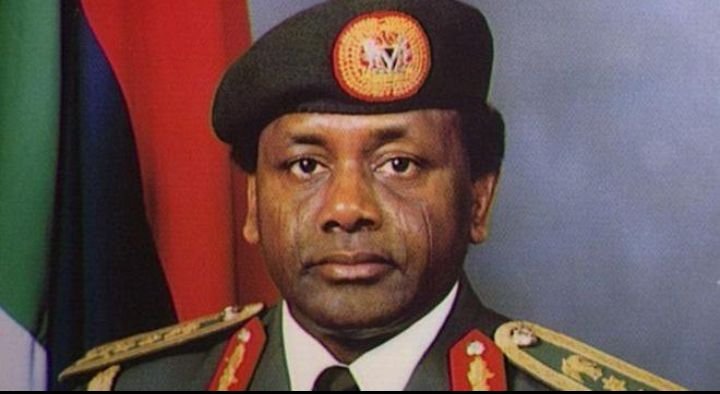
General Sani Abacha, Nigeria’s military Head of State since 1993, had died suddenly in Abuja at the age of 54.
His death came at a critical moment. Abacha was overseeing a controversial transition programme and had been widely expected to remain in power by transforming himself from military ruler into a civilian president. His sudden death therefore created an immediate political vacuum and intensified questions about what had actually happened inside the heavily guarded Presidential Villa.
Almost three decades later, the circumstances surrounding his death remain the subject of debate.
What happened on June 8, 1998?
The Nigerian government announced that Abacha had died in the early hours of June 8 at the Presidential Villa in Abuja. The initial official statement did not publicly specify the cause of death. Contemporary reports, however, said that government sources and diplomats believed he had suffered a heart attack.
Abacha was 54.
His death was particularly unexpected because he had continued to exercise considerable political power and was preparing for a transition to civilian rule. At the time, all five officially recognised political parties had adopted him as their candidate for the planned presidential election, making his death even more politically significant.
Within hours, Major General Abdulsalami Abubakar, the Chief of Defence Staff, emerged as Abacha’s successor. He was subsequently sworn in as Head of State.
The transition that followed eventually led Nigeria back to civilian government in 1999.
Why did people suspect something more?
The suddenness of Abacha’s death immediately generated rumours.
Nigeria was under military rule, and Abacha’s government had been widely criticised for its treatment of political opponents and civil society. His administration had also become associated with international controversy over the detention and execution of political activists, including Ken Saro-Wiwa and members of the Ogoni Eight in 1995.
Against that background, rumours that Abacha had been poisoned spread quickly.
Some reports suggested that he had been poisoned by foreign women who had allegedly been brought to the Presidential Villa. Other versions of the story claimed that poisoned food or fruit was involved.
However, these stories were never conclusively established as the cause of his death.
Contemporary reporting already reflected the uncertainty. The Washington Post reported that the government statement did not provide a cause of death, while Nigerian sources and diplomats were reporting that Abacha had apparently died from a heart attack.
The lack of a publicly available definitive medical explanation helped the rumours survive.
Was Sani Abacha poisoned?
This remains one of the most persistent questions surrounding his death.
There have been allegations over the years that Abacha was poisoned, but allegations are not the same as proof.
A 2006 report by the International Crisis Group, reproduced by the U.S. Department of Justice, described Abacha as having died “apparently from a heart attack.
The poisoning theory nevertheless continued to circulate in Nigerian public discussion.
Part of the difficulty is that the circumstances were never subjected to the kind of publicly documented forensic examination that would definitively settle every competing theory. Consequently, stories about poisoned food, women and secret plots became part of the mythology surrounding his death.
A new account emerged in 2026
The mystery received renewed attention in 2026 following claims by retired Department of State Services officer Dennis Amachree.
In his memoir, DSS @40: My Journey Behind the Shield, Amachree presented a different account of Abacha’s final hours.
According to reports about the memoir, Amachree claimed that Abacha suffered a cardiac arrest at about 4:05 a.m. on June 8, 1998, while in an intimate encounter with a woman at the Presidential Villa Guest House in Abuja.
Amachree said that intelligence officers subsequently traced the woman to Lagos and questioned her. He argued that Abacha had not been poisoned and that the investigation pointed toward a cardiac event instead.
If accurate, the account would provide a very different explanation for the circumstances of Abacha’s death from the long-running poisoning stories.
But it is important to distinguish a later personal account from independently established historical fact.
Amachree’s account was published 28 years after the event, and the woman at the centre of the story has not been publicly identified in the reports.
Not everyone accepts the new account
The 2026 account has itself been challenged.
Major Hamza Al-Mustapha, who served as Abacha’s Chief Security Officer, rejected Amachree’s version of events. Al-Mustapha described the claim as false and urged Nigerians not to accept it.
Other commentary has also questioned the evidentiary basis of the memoir’s account, pointing out that no publicly available post-mortem report or other documentary evidence has been produced alongside the claim.
That disagreement is important because it demonstrates why the circumstances of Abacha’s death should not simply be presented as a solved mystery.
There is a difference between saying that an investigator later claimed something happened and proving that it happened.
What can actually be established?
Several facts are considerably less controversial.
Sani Abacha died on June 8, 1998, at the Presidential Villa in Abuja. He was 54 years old.
The Nigerian government’s initial announcement confirmed his death but did not publicly provide a detailed cause of death. Contemporary sources reported that he was believed to have suffered a heart attack.
His death occurred while Nigeria was undergoing a politically sensitive transition. Abacha had been expected to play a major role in the country’s political future, and his sudden disappearance from the scene immediately altered the direction of the transition.
Abdulsalami Abubakar succeeded him and subsequently accelerated the process that eventually brought Nigeria back to elected civilian government in 1999.
What remains less certain is precisely what caused Abacha’s fatal medical episode and what happened during his final moments.
Why the mystery has survived
Abacha’s death became more than a medical question because of the political circumstances surrounding it.
He was one of the most powerful and controversial figures in Nigeria at the time. His government faced intense domestic opposition and international criticism, while his transition programme had generated widespread debate about whether Nigeria was genuinely returning to democracy.
His sudden death therefore created an environment in which rumours could flourish.
The passage of time has not completely eliminated those rumours. Instead, new accounts have occasionally revived the debate.
The 2026 memoir is the latest example. It provides a detailed version of events, but the fact that it comes from a retired intelligence officer does not automatically make every detail independently verified. Conversely, the existence of competing accounts does not by itself prove that the poisoning theory was correct.
So, what really happened?
The most responsible historical answer is that Sani Abacha died suddenly on June 8, 1998, and contemporary accounts attributed his death to a heart attack or cardiac arrest, while rumours of poisoning quickly emerged and persisted for decades.
In 2026, former DSS official Dennis Amachree offered a more specific account, claiming that Abacha suffered a fatal cardiac arrest during an intimate encounter. That account has been publicly disputed by Hamza Al-Mustapha, Abacha’s former Chief Security Officer.
Therefore, the famous poisoning stories should not be presented as established fact, but neither should a later memoir account automatically be treated as definitive proof of exactly what happened.
What remains certain is that Abacha’s death ended one of the most consequential military regimes in Nigeria’s modern history and unexpectedly changed the country’s political trajectory.
The Historabase Editorial Team is dedicated to exploring and sharing the stories that have shaped Africa and the wider world. Our work covers African history, ancient civilizations, empires, historical figures, wars, cultures, political movements, and important events from the past.
We aim to present history in a clear, engaging, and accessible way, combining historical records with careful research to help readers better understand the people, events, and civilizations that shaped our world.