On 10 November 1995, Nigeria carried out one of the most controversial executions in its modern history.
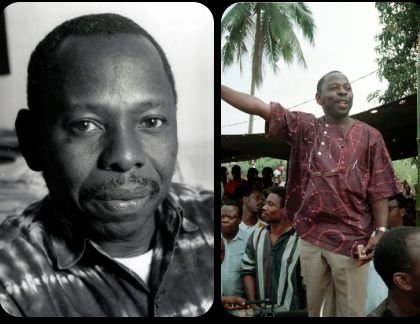
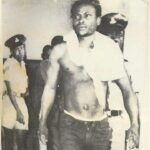
Kenule Beeson Saro-Wiwa, writer, businessman and environmental activist, was hanged alongside eight other Ogoni men after a military tribunal found them guilty of involvement in the murder of four Ogoni leaders.
The executions immediately provoked international condemnation. Human-rights organizations had already warned that the trial was deeply flawed, while supporters of Saro-Wiwa maintained that he was being punished for leading a peaceful campaign against environmental destruction and the treatment of the Ogoni people.
Nearly three decades later, the case remains one of the darkest chapters in Nigeria’s history.
Who Was Ken Saro-Wiwa?
Ken Saro-Wiwa was born in Bori, in present-day Rivers State, in 1941. He became a prominent writer and later emerged as one of Nigeria’s most recognizable environmental campaigners.
His activism was rooted in the problems facing the Ogoni people, a minority ethnic group living in the Niger Delta
For decades, oil production had transformed the region. Ogoniland became an important oil-producing area, but residents complained about pollution, environmental degradation, loss of farmland and damage to fishing communities.
Saro-Wiwa increasingly used his writing and public influence to draw attention to these issues.
He eventually became the leading figure of the Movement for the Survival of the Ogoni People (MOSOP), which campaigned for greater political recognition for the Ogoni people and demanded compensation and environmental restoration.
The movement advocated non-violent resistance.
By the early 1990s, however, its confrontation with the Nigerian government and oil companies had become increasingly intense.
The Ogoni Struggle
At the center of the conflict was oil.
Oil had become the foundation of Nigeria’s economy, but communities in the Niger Delta argued that they were paying a heavy environmental price while receiving too little benefit from the wealth extracted from their land.
MOSOP accused oil companies, particularly Shell, and the Nigerian government of allowing environmental destruction to continue.
In January 1993, MOSOP declared that Shell was no longer welcome to operate in Ogoniland. The movement’s protests attracted international attention and turned Saro-Wiwa into an increasingly influential critic of Nigeria’s military government.
The military government under General Sani Abacha viewed the growing Ogoni movement with suspicion.
Tensions eventually became deadly.
The Murder of Four Ogoni Leaders
On May 21, 1994, four prominent Ogoni leaders were killed by a mob during a meeting in Giokoo, Ogoniland.
The government blamed members of MOSOP for the killings.
Saro-Wiwa was arrested shortly afterward, along with other Ogoni activists.
He was accused of inciting the murders.
The arrests marked the beginning of a legal battle that would eventually end with nine men facing execution.
Human-rights organizations, however, disputed the government’s case and raised serious concerns about the circumstances surrounding the arrests and evidence used against the defendants.
The Ogoni Nine
Saro-Wiwa was not executed alone.
The group became known internationally as the Ogoni Nine.
They were:
Ken Saro-Wiwa
Barinem Kiobel
John Kpuinen
Baribor Bera
Felix Nuate
Paul Levula
Saturday Doobee
Nordu Eawo
Daniel Gbokoo
They were accused of involvement in the deaths of the four Ogoni leaders.
The defendants denied the accusations.
Amnesty International regarded Saro-Wiwa and some of the others as prisoners of conscience and argued that the prosecutions appeared to be politically motivated.
A Controversial Military Tribunal
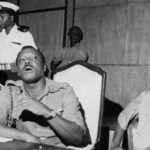
The case was heard before a special tribunal rather than an ordinary civilian court.
The military government had established the tribunal under legislation dealing with civil disturbances. Its judgment could not be appealed through the normal judicial system; instead, it was subject to confirmation by the military government’s ruling council.
This became one of the central controversies surrounding the case.
Human-rights organizations questioned whether the defendants could receive a genuinely fair trial under such a system.
Amnesty International warned before the verdict that the accused faced a mandatory death penalty if convicted and expressed serious concerns about the fairness of the proceedings.
Allegations of False Evidence
Perhaps the most disturbing aspect of the case involved allegations concerning prosecution witnesses.
According to Amnesty International, at least two witnesses later claimed that they had been bribed to give evidence against the defendants. They alleged that they had been offered money and promises of employment.
The witnesses also alleged that a Shell lawyer was present when they were bribed. Shell denied these allegations.
These claims became central to the continuing controversy surrounding the convictions.
Human-rights organizations also reported allegations that some defendants had been subjected to torture or other mistreatment while in detention.
For Saro-Wiwa’s supporters, the trial increasingly appeared less like an ordinary murder prosecution and more like an attempt by the military government to silence a powerful opponent.
The Verdict
The tribunal eventually delivered its verdict in October 1995.
On October 30 and 31, Saro-Wiwa and eight other defendants were convicted and sentenced to death.
Amnesty International described the trials as falling far short of international fair-trial standards and argued that they were aimed at crushing MOSOP’s campaign against environmental damage and for greater autonomy for the Ogoni people.
International pressure intensified.
Governments, human-rights organizations and activists appealed to Nigeria’s military government to stop the executions.
But the appeals failed.
The Final Days
On November 8, the military ruling council confirmed the death sentences.
There would be no further appeal.
The government moved rapidly to carry out the executions.
The men were taken to Port Harcourt Prison, where they were to be hanged.
Outside Nigeria, the case had become an international human-rights crisis.
Yet the military government under General Sani Abacha refused to reverse the sentences.
Two days later, the executions took place.
November 10, 1995
On the morning of November 10, Saro-Wiwa and the other eight men were taken from detention to the prison in Port Harcourt.
One after another, they were hanged.
Ken Saro-Wiwa was dead at the age of 54.
The other eight men were executed with him.
Their bodies were reportedly buried in an unmarked grave.
The executions immediately produced international outrage.
Amnesty International condemned the killings and described the executions as the culmination of an unfair judicial process.
The World Reacts
The execution transformed the Ogoni struggle into an international issue.
Governments around the world condemned Nigeria.
The Commonwealth responded by suspending Nigeria from the organization, while international pressure against the Abacha government intensified.
Saro-Wiwa’s death also turned him into a global symbol of environmental and human-rights activism.
His campaign had begun as a struggle centered on Ogoniland, but his execution ensured that the story reached audiences far beyond Nigeria.
The question was no longer simply about oil production in the Niger Delta.
It was about whether a government could execute activists after a trial that international observers considered fundamentally unfair.
The Shell Controversy
The role of Shell in the Ogoni crisis became another major controversy.
Shell operated extensively in the Niger Delta and had been a central target of MOSOP’s protests.
Shell denied responsibility for the executions and rejected allegations that it participated in the prosecution of the Ogoni Nine.
Nevertheless, allegations concerning Shell’s relationship with the Nigerian government continued for years.
In 2017, Amnesty International published research concerning a civil case brought by Esther Kiobel, widow of executed Ogoni Nine member Barinem Kiobel, and other relatives. The case accused Shell of complicity in unlawful arrest, detention and execution. Shell disputed the allegations.
The controversy demonstrated that the consequences of the 1995 executions did not end when the gallows were dismantled.
A Legacy That Survived the Gallows
Saro-Wiwa’s execution was intended to end his political campaign.
Instead, it made his message more powerful.
His writings, speeches and activism continued to inspire environmental and human-rights movements in Nigeria and around the world.
The Ogoni struggle also became an important part of the wider history of the Niger Delta, where communities have continued to demand environmental justice and accountability for pollution.
In June 2025, the Nigerian government granted pardons to the Ogoni Nine. Amnesty International welcomed the move but argued that a pardon did not go far enough and called for their full exoneration.
The distinction is important.
A pardon does not necessarily declare that a person was innocent of the crime for which they were convicted. For Saro-Wiwa’s supporters, the central demand has therefore remained a formal recognition that the men were wrongly convicted.
The Dark Lesson of the Ogoni Nine
The execution of Ken Saro-Wiwa remains one of the most painful episodes in Nigerian history because it brought together several powerful forces: oil, environmental destruction, minority rights, military rule, political dissent and the limits of justice under authoritarian government.
Saro-Wiwa had challenged a system much larger than himself.
He confronted a military government, criticized the environmental consequences of oil production and brought the grievances of the Ogoni people to the international stage.
On November 10, 1995, the government silenced his voice through execution.
But it could not erase his message.
Today, the name Ken Saro-Wiwa remains inseparable from the struggle for environmental justice in the Niger Delta. His death transformed him from a Nigerian writer and activist into an enduring symbol of resistance.
The Historabase Editorial Team is dedicated to exploring and sharing the stories that have shaped Africa and the wider world. Our work covers African history, ancient civilizations, empires, historical figures, wars, cultures, political movements, and important events from the past.
We aim to present history in a clear, engaging, and accessible way, combining historical records with careful research to help readers better understand the people, events, and civilizations that shaped our world.



2 Comments