On January 1, 1914, Britain formally joined the Northern and Southern Protectorates of Nigeria into one political entity. The decision, known as the Amalgamation of 1914, created the territorial framework of what would eventually become modern Nigeria.
The amalgamation is one of the most important events in Nigerian history. However, it was not an act of Nigerian independence or a decision made by Nigerians themselves. It was a colonial administrative arrangement designed largely to make British rule easier and more economically efficient.
More than a century later, the consequences of that decision can still be seen in Nigeria’s political, economic, and cultural development.
Nigeria Before 1914
Before the British created the Nigerian colony, the region was home to numerous kingdoms, emirates, communities, and societies with their own political systems and identities.
In the north, the Sokoto Caliphate was one of the most powerful political structures in West Africa. It controlled a large territory through a network of emirates.
In the southwest, powerful Yoruba states such as Ibadan, Egba, and others had their own political institutions. Further south and southeast were societies including the Igbo, Ijaw, Efik, Ibibio, and many others, each with distinctive traditions and systems of governance.
There was therefore no single political entity called Nigeria before British colonial rule.
The name “Nigeria” itself was popularized in the late 19th century by British journalist Flora Shaw, who later became the wife of Frederick Lugard.
British Expansion
During the late 19th century, Britain expanded its influence across the region as European powers competed for territories in Africa.
British commercial interests were particularly attracted to the region’s palm oil, agricultural products, minerals, and other resources. British traders and companies established increasingly powerful commercial networks.
The Royal Niger Company played a major role in Britain’s expansion. In 1900, the British government took direct control of the company’s territories, creating the Northern Nigeria Protectorate and expanding its colonial administration.
Meanwhile, the Southern Nigeria Protectorate had developed separately.
Although Britain controlled both territories, they were administered largely as separate political units.
Who Was Lord Lugard?
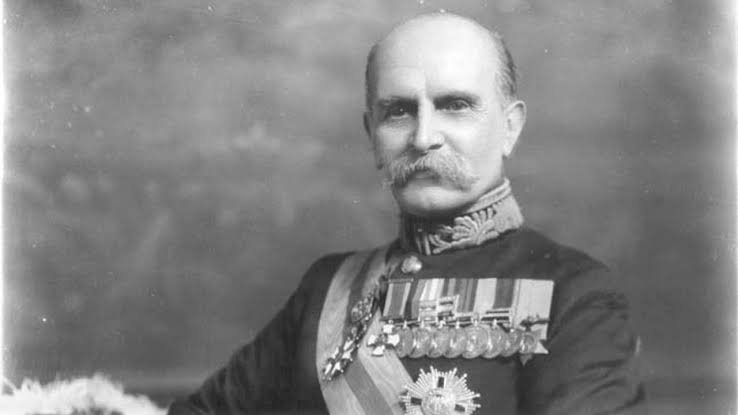
The person most closely associated with the 1914 amalgamation was Frederick Lugard, a British colonial administrator who became the first Governor-General of the unified territory.
Lugard believed that combining Northern and Southern Nigeria would make colonial administration more efficient.
He also wanted to reduce the financial burden of governing the Northern Protectorate. The north generated less revenue for the colonial administration than the south, while southern territories had more developed commercial activity.
By joining the territories, Lugard could create a system in which revenues from the south helped support administration in the north.
This became one of the major economic motivations behind the amalgamation.
Why Did Britain Amalgamate Nigeria?
The decision was influenced by several factors.
1. Economic Reasons
One of the most important reasons was financial efficiency.
Southern Nigeria generated significant revenue through trade, taxation, agriculture, and other economic activities. Northern Nigeria, meanwhile, was more expensive for Britain to administer.
By combining the two territories, Britain could manage their finances collectively.
This arrangement allowed the colonial government to redistribute revenue across the new territory.
2. Administrative Efficiency
Running two separate colonial administrations created duplication.
There were separate administrative structures, budgets, and systems of government. Amalgamation allowed Britain to centralize important aspects of colonial administration.
Lugard believed a unified administration would make Britain’s control easier and less expensive.
However, the north and south were not completely merged in every aspect. Britain continued to maintain significant differences in their administrative and political systems.
3. British Political Interests
Britain was also interested in strengthening its control over the territory.
A single colonial administration made it easier to coordinate policies, taxation, transportation, trade, and security.
The amalgamation therefore strengthened British authority over a vast and diverse region.
Indirect Rule and the North-South Divide
Lugard became famous for developing and promoting a system known as indirect rule.
Rather than replacing every traditional ruler, British officials often governed through existing institutions.
This approach was particularly developed in Northern Nigeria, where emirates already had centralized political structures.
Traditional rulers were allowed to remain in positions of authority, but they operated under British supervision.
The system was different in many southern societies, particularly among communities where political authority was more decentralized.
These differences contributed to the development of distinct administrative traditions between northern and southern Nigeria.
Some historians argue that colonial policies strengthened regional differences that later became important in Nigerian politics.
Did Nigerians Choose the Amalgamation?
No.
The amalgamation was primarily a British colonial decision. Nigerian communities were not given a referendum to decide whether the northern and southern territories should become one country.
This is important when understanding the history of modern Nigeria.
The people living within the territory had diverse identities and political interests. The boundaries created by British colonial authorities brought many different societies under one administration.
For some communities, the new political arrangement connected peoples who had previously been governed separately. For others, it placed them within a colonial state whose boundaries had been determined by Britain.
What Changed After 1914?
The amalgamation created a single colonial territory officially known as the Colony and Protectorate of Nigeria.
However, unity did not mean complete political or cultural integration.
Britain continued to administer different regions in different ways. Northern and Southern Nigeria retained significant differences in education, taxation, political institutions, and economic development.
The south generally experienced greater exposure to Western-style education and Christian missionary activity, while the north retained stronger Islamic institutions and traditional emirate structures.
These differences became increasingly important as nationalist politics developed in the decades that followed.
The Legacy of the Amalgamation
The greatest legacy of the 1914 amalgamation was the creation of the territorial framework that eventually became independent Nigeria.
When Nigeria gained independence on October 1, 1960, it inherited the boundaries established during the colonial period.
But the legacy of amalgamation remains debated.
Supporters of Nigerian unity point out that the creation of one territory eventually provided the foundation for a country capable of bringing together hundreds of ethnic groups and languages.
Critics argue that Britain created a state primarily for colonial convenience, without sufficiently considering the political and cultural interests of the people who lived within it.
Both perspectives are important when examining Nigeria’s history.
From Colonial Territory to Independent Nation
After the First World War and particularly from the 1920s onward, Nigerian nationalism began to grow.
Educated Nigerians, political organizations, traditional leaders, workers, and other groups increasingly demanded greater participation in government.
Figures such as Herbert Macaulay, Nnamdi Azikiwe, Obafemi Awolowo, and Ahmadu Bello later became important figures in the country’s political development.
Nigeria eventually moved toward self-government through constitutional reforms.
In 1960, nearly five decades after the amalgamation, Nigeria became an independent nation.
The country inherited the colonial borders, but Nigerians began the much larger task of transforming a territory created under British rule into a sovereign nation.
Conclusion
The Amalgamation of 1914 was a turning point in Nigerian history. Britain united the Northern and Southern Protectorates mainly for administrative and economic reasons, creating the political territory that would eventually become modern Nigeria.
It was not the birth of Nigeria as an independent nation, nor was it a decision made through popular consent. Instead, it was a colonial restructuring that brought hundreds of communities and diverse societies under one administration.
Yet the story did not end in 1914. Over the following decades, Nigerians developed political movements, institutions, and a national identity that eventually led to independence in 1960.
Understanding the amalgamation therefore means looking beyond the date itself. It helps explain both the origins of Nigeria’s territorial unity and some of the regional and political complexities that have continued to shape the country.
The Historabase Editorial Team is dedicated to exploring and sharing the stories that have shaped Africa and the wider world. Our work covers African history, ancient civilizations, empires, historical figures, wars, cultures, political movements, and important events from the past.
We aim to present history in a clear, engaging, and accessible way, combining historical records with careful research to help readers better understand the people, events, and civilizations that shaped our world.