Long before Nigeria became a modern country, a powerful Islamic state emerged across much of what is now northern Nigeria and parts of neighbouring countries. Known as the Sokoto Caliphate, it became one of the largest political formations in 19th-century West Africa.
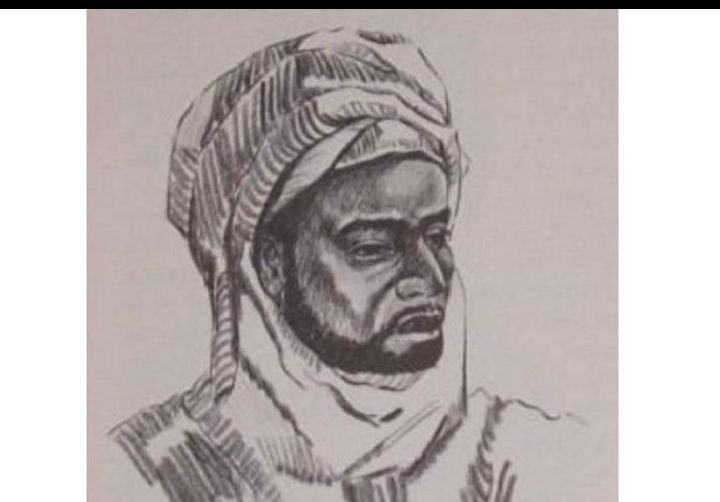
At the centre of its creation was Usman dan Fodio, an Islamic scholar, teacher, reformer, and political leader whose movement transformed the religious, political, and social landscape of the region.
The legacy of the Sokoto Caliphate remains important to understanding the history of northern Nigeria, particularly the development of Islamic scholarship, traditional leadership, and political institutions.
Northern Nigeria Before the Caliphate
Before the rise of the Sokoto Caliphate, northern West Africa was home to numerous Hausa states. Among the most influential were Kano, Katsina, Zazzau, Gobir, and Kebbi.
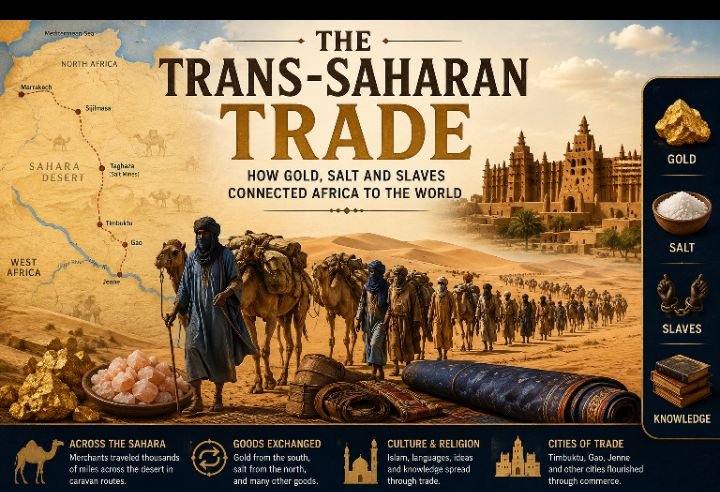
These states had developed sophisticated political systems and participated in extensive trade networks that connected West Africa with North Africa and the wider Muslim world.
Islam had already existed in the region for centuries. Muslim scholars and traders played important roles in education, commerce, diplomacy, and religious life.
However, Usman dan Fodio believed that some rulers and religious leaders had moved away from what he considered proper Islamic principles.
The Early Life of Usman dan Fodio
Usman dan Fodio was born in 1754 in Gobir, in present-day northern Nigeria.
He came from a Fulani scholarly family and received an extensive Islamic education. As he grew older, he became known as a respected teacher and preacher.
Dan Fodio travelled through communities preaching religious reform. He criticized corruption, unjust taxation, abuses of power, and practices he believed were inconsistent with Islam.
His message attracted a large following, particularly among Fulani and Hausa communities.
His relationship with the rulers of Gobir gradually became tense.
Conflict with Gobir
The ruler of Gobir initially tolerated dan Fodio’s activities, but relations eventually deteriorated.
Dan Fodio’s growing influence was increasingly seen as a political threat. Restrictions were placed on his followers, and tensions escalated.
In 1804, Usman dan Fodio and his followers withdrew from Gobir.
This migration, known as the Hijra, became a major turning point. Dan Fodio’s supporters gathered around him, and armed conflict followed.
The movement developed into a wider religious and political revolution that would transform much of the region.
The Creation of the Sokoto Caliphate
Dan Fodio’s movement defeated several Hausa rulers and established new political authority across large parts of northern Nigeria.
In 1808, his forces captured Gobir’s capital, Alkalawa.
As the movement expanded, Usman dan Fodio established the foundations of a new Islamic state.
The territory eventually became known as the Sokoto Caliphate, named after Sokoto, which emerged as its political and religious centre.
The caliphate was not simply a single centrally controlled territory in the modern sense. It consisted of numerous emirates and political units that acknowledged the authority of the Sultan of Sokoto.
Among the important emirates were Kano, Katsina, Zazzau, Gwandu, and Adamawa.
A New Political System
One of the major changes introduced by the Sokoto movement was the restructuring of political authority.
Usman dan Fodio did not attempt to govern every part of the vast territory personally. Instead, he appointed trusted leaders and established emirates that operated with considerable local authority.
The Sultan of Sokoto served as the spiritual and political leader of the wider caliphate.
This decentralized structure allowed the state to govern a huge territory while maintaining a common religious and political framework.
The Role of Education
Education was one of Usman dan Fodio’s most important legacies.
He was a prolific writer who produced works on Islamic law, theology, morality, politics, and society. His brother, Abdullahi dan Fodio, and his son, Muhammad Bello, were also important scholars and political leaders.
The Sokoto Caliphate supported Islamic scholarship and expanded networks of Quranic schools.
Sokoto became a major centre of learning, attracting scholars from different parts of West Africa.
This intellectual tradition continued long after the death of Usman dan Fodio and contributed to the importance of Islamic scholarship in northern Nigeria.
The Role of Women
Women also played an important role in the intellectual history of the Sokoto movement.
One of the most notable figures was Nana Asma’u, the daughter of Usman dan Fodio.
She was a respected scholar, poet, teacher, and writer. She promoted female education and helped establish networks through which women could receive religious instruction.
Her work demonstrated that scholarship within the Sokoto intellectual tradition was not limited entirely to men.
Economic Development and Trade
The Sokoto Caliphate controlled a large territory containing important agricultural and commercial centres.
Trade connected cities such as Kano, Katsina, and Sokoto with other parts of West Africa and North Africa.
Kano became particularly important as a commercial centre, with thriving textile production and long-distance trade.
Agriculture also supported the caliphate’s economy. Taxes and other forms of revenue helped maintain government institutions and armies.
The political stability provided by the caliphate in many areas contributed to the growth of commerce and urban centres.
The Caliphate and Slavery
Like many precolonial states in the region, the Sokoto Caliphate operated within systems of slavery.
Enslaved people were used in agriculture, domestic service, military activities, and other forms of labour. Warfare and slave raiding were important aspects of the wider regional economy.
The subject remains an important and sometimes difficult part of the caliphate’s history.
Understanding this aspect is necessary for an honest account of the society that existed in 19th-century northern West Africa.
British Conquest
The Sokoto Caliphate remained a major political power throughout much of the 19th century.
Its decline accelerated in the late 19th and early 20th centuries as European colonial powers expanded across Africa.
Britain gradually extended its control over northern Nigeria.
In 1903, British forces captured Sokoto and defeated the caliphate’s military resistance. The Sultanate was brought under British colonial authority.
However, Britain did not completely eliminate the traditional emirate system.
Instead, colonial officials often governed indirectly through existing rulers, particularly under the system associated with Frederick Lugard.
The Sultan of Sokoto and many emirs retained important religious and traditional roles, although ultimate political authority rested with the British colonial government.
Usman dan Fodio’s Lasting Legacy
Usman dan Fodio died in 1817, but his influence continued long after his death.
The Sokoto Caliphate shaped the political organization of northern Nigeria for generations. Several emirates established during or after the jihad continued to exist under colonial rule and, in modified forms, remain part of Nigeria’s traditional institution today.
His emphasis on Islamic education also created an intellectual tradition that influenced generations of scholars.
The history of the caliphate has also influenced modern discussions about religion, leadership, culture, and identity in northern Nigeria.
Conclusion
The Sokoto Caliphate was one of the most significant political and religious developments in 19th-century West Africa.
Through his preaching, scholarship, and political leadership, Usman dan Fodio helped create a movement that overturned several Hausa ruling systems and established a vast network of Islamic emirates.
His legacy goes beyond military conquest. The institutions, educational traditions, scholarship, and political structures associated with the Sokoto Caliphate continued to influence northern Nigeria long after the caliphate itself came under British colonial rule.
To understand the history of northern Nigeria, it is impossible to overlook the transformation brought about by Usman dan Fodio and the remarkable state that emerged from his movement.
The Historabase Editorial Team is dedicated to exploring and sharing the stories that have shaped Africa and the wider world. Our work covers African history, ancient civilizations, empires, historical figures, wars, cultures, political movements, and important events from the past.
We aim to present history in a clear, engaging, and accessible way, combining historical records with careful research to help readers better understand the people, events, and civilizations that shaped our world.