Today, billions of people use the internet every day to communicate, learn, work, shop, watch videos, share information and connect with people around the world. Yet the internet was not created by one person or invented in a single year.
Instead, it emerged from decades of research involving scientists, engineers, universities and government agencies. Its story began with experiments in computer networking in the 1960s and eventually produced the global network that connects much of the modern world.
Who actually invented the internet?
The answer is complicated. Several people played important roles, but researchers Vinton Cerf and Robert Kahn are widely recognized for developing TCP/IP, the fundamental communication protocols that allowed separate computer networks to communicate with one another. The earlier ARPANET, developed with support from the U.S. government’s Advanced Research Projects Agency (ARPA), provided a crucial foundation.
And then came Tim Berners-Lee, who invented the World Wide Web, not the internet itself.
The Idea That Started It All
The origins of the internet can be traced to the 1960s, when computers were becoming increasingly important to governments, universities and research institutions.
At the time, computers were generally isolated machines. If researchers wanted to share information between computers located in different places, they needed a reliable way to connect them.
One of the organizations working on this problem was the U.S. Advanced Research Projects Agency, known as ARPA. Its research into computer networking eventually led to the creation of the ARPANET.
The goal was not to create Facebook, Google or a platform for entertainment. Early networking research focused heavily on allowing computers and research facilities separated by large distances to share resources and communicate.
ARPANET: The Internet’s Early Ancestor
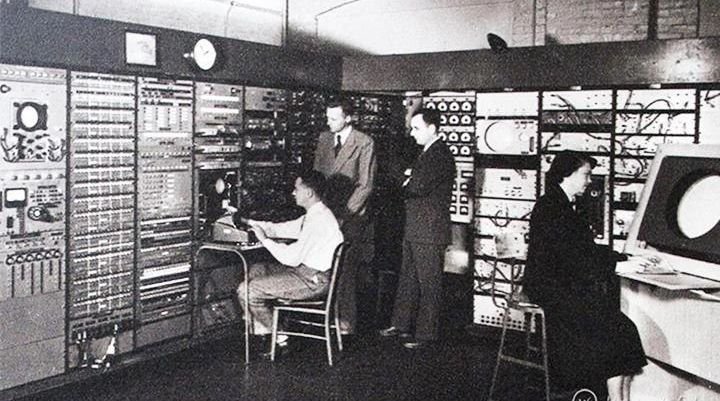
In 1969, ARPANET became operational with four initial nodes located at research institutions in the United States.
They included the University of California, Los Angeles; the Stanford Research Institute; the University of California, Santa Barbara; and the University of Utah.
On October 29, 1969, researchers attempted to send a message between UCLA and the Stanford Research Institute. The first intended word was “LOGIN,” but the system crashed after the first two letters.
The first message sent across this experimental network was therefore simply “LO.”
Although it was a tiny beginning, the experiment demonstrated that computers in distant locations could communicate over a network.
ARPANET continued to expand, connecting more universities, research institutions and government facilities.
The Problem of Connecting Different Networks
Creating a single computer network was only part of the challenge.
Researchers soon envisioned something much larger: different networks should be able to communicate with one another, even if those networks used different technologies.
This became known as internetworking—connecting networks together.
This is where two scientists, Robert Kahn and Vinton Cerf, played a crucial role.
Kahn, working at ARPA, began exploring how computers could communicate across different networks. In 1973, he brought Stanford researcher Vinton Cerf into the project. Together, they developed the principles behind what became the Transmission Control Protocol and Internet Protocol, better known as TCP/IP.
What Is TCP/IP?
TCP/IP may sound technical, but its basic purpose is relatively easy to understand.
IP is responsible for addressing and helping packets of information find their way across interconnected networks.
TCP helps ensure that information is properly delivered and reconstructed at its destination.
Instead of sending a huge message as one continuous stream, information can be broken into smaller packets. Those packets can travel through different routes and eventually be reassembled at their destination.
This architecture made it possible to connect many different networks into a much larger “network of networks.”
That concept is fundamental to the modern internet.
January 1, 1983: A Major Turning Point
One of the most important dates in internet history was January 1, 1983.
On that day, ARPANET officially transitioned from its earlier Network Control Protocol to TCP/IP.
The change was enormously important because TCP/IP provided a common standard for connecting different networks.
As more networks adopted the protocols, the system became increasingly similar to the internet we know today.
DARPA describes the development of TCP/IP and the growth of interconnected networks as a crucial stage in the evolution of the internet.
The original ARPANET itself eventually disappeared, but the technology and ideas behind it had already become part of a much larger network.
Did Vinton Cerf and Robert Kahn Invent the Internet?
They were certainly among its most important creators, but saying that they alone “invented the internet” would oversimplify the story.
The internet was built through the contributions of many researchers.
People such as Joseph Licklider, who helped shape early ideas about interconnected computing, contributed to the intellectual foundation. Engineers working on ARPANET helped develop the infrastructure. Researchers at universities and government institutions tested and improved networking technologies.
Cerf and Kahn’s contribution was particularly important because TCP/IP provided a practical way for independent networks to communicate.
The internet was therefore more of an evolutionary invention than a single invention.
Then Who Invented the World Wide Web?
This is where one of the biggest misconceptions about internet history appears.
Many people say Tim Berners-Lee invented the internet.
He didn’t.
Berners-Lee invented the World Wide Web.
In 1989, while working at CERN in Switzerland, British computer scientist Tim Berners-Lee proposed a system for sharing information among researchers around the world.
His idea combined computers, networks and hypertext into an information system that allowed documents to be linked together.
Berners-Lee developed the technologies that became fundamental to the Web, including HTML, HTTP and URLs. By the end of 1990, the first web server and web browser were operating at CERN.
The first website was hosted on Berners-Lee’s NeXT computer and was dedicated to explaining the World Wide Web project itself.
Internet vs. World Wide Web
The easiest way to understand the difference is this:
The internet is the infrastructure. The Web is one of the services that operates on that infrastructure.
Think of the internet as a worldwide transportation network.
The roads, bridges and highways represent the underlying network infrastructure.
The Web is like one transportation service operating across those roads.
Email, online gaming, video calls, file transfers and other services can also use the internet without being the World Wide Web.
This distinction is important because the internet existed before the Web.
How the Web Changed Everything
Berners-Lee’s invention dramatically simplified access to information.
Instead of requiring specialized knowledge to communicate between networked computers, people could use web browsers to navigate linked documents.
In 1993, CERN made the World Wide Web software available on a royalty-free basis. This helped the technology spread rapidly.
The Web soon moved beyond scientific institutions.
Businesses, schools, governments and ordinary users began establishing websites.
By the mid-1990s, the internet was entering mainstream society.
The Rise of the Modern Internet
The 1990s marked a major transformation.
Personal computers became more common, commercial internet providers expanded access, and the Web made online information much easier to navigate.
Search engines, online stores, news websites, forums and eventually social-media platforms began appearing.
The internet gradually changed from a research-oriented network into a global communication and commercial platform.
By the 21st century, broadband connections, smartphones and wireless networks made internet access possible from almost anywhere.
Today, the internet supports everything from banking and education to entertainment, scientific research, journalism and international business.
An Invention Built by Many People
The story of the internet demonstrates why some inventions cannot be credited to a single individual.
ARPA and its researchers helped establish the foundations of networked computing. ARPANET demonstrated that distant computers could communicate.
Robert Kahn and Vinton Cerf developed TCP/IP, providing a powerful framework for connecting different networks.
Universities, engineers and researchers around the world continued improving the technology.
Then Tim Berners-Lee created the World Wide Web, giving ordinary users a simple way to access and connect information across the growing internet.
Each development built upon what came before it.
Conclusion
So, who invented the internet?
There is no single inventor.
The internet emerged from decades of research and collaboration. ARPANET provided one of its most important early foundations, while Vinton Cerf and Robert Kahn played a central role in developing TCP/IP, the protocols that made interconnected networks possible.
And although Tim Berners-Lee did not invent the internet, his invention of the World Wide Web transformed how ordinary people interacted with it.
What began as an experimental method for connecting computers eventually became the world’s greatest communication network—changing how humanity communicates, works, learns and shares information.
The internet was not the product of one brilliant moment. It was the result of many ideas, experiments and inventions coming together over decades.
The Historabase Editorial Team is dedicated to exploring and sharing the stories that have shaped Africa and the wider world. Our work covers African history, ancient civilizations, empires, historical figures, wars, cultures, political movements, and important events from the past.
We aim to present history in a clear, engaging, and accessible way, combining historical records with careful research to help readers better understand the people, events, and civilizations that shaped our world.