Every week, millions of people begin with Monday. It marks the return to school, work and routine after the weekend. But have you ever wondered why it is called Monday?
The names of the seven days of the week are not random. They are the result of thousands of years of astronomy, religion, mythology and language. The system used in much of the modern world can be traced through ancient Babylon, Rome and the Germanic peoples of northern Europe.
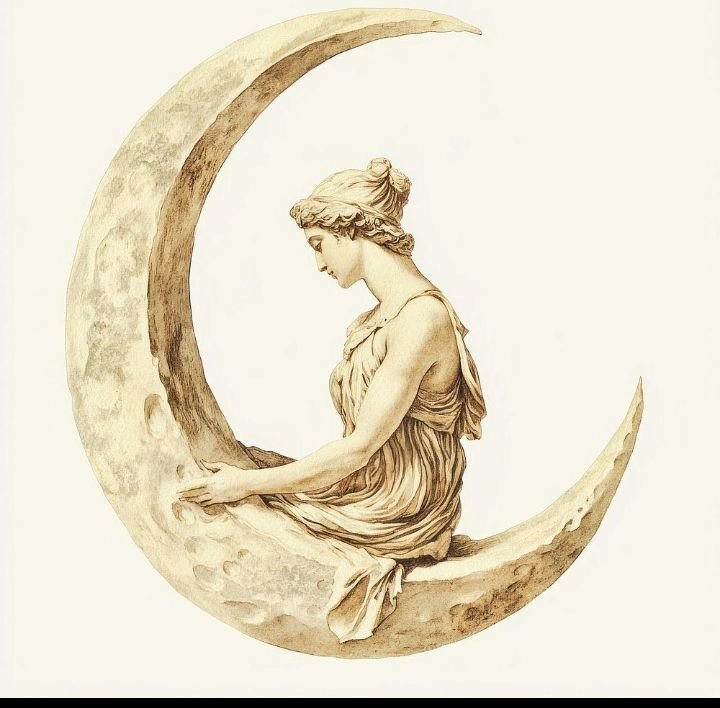
Monday has a particularly interesting story because its name literally connects the day to the Moon.
The Ancient Origins of the Seven-Day Week
The seven-day week is extremely old.
One of the most important early influences came from ancient Babylonian civilization. Babylonian astronomers closely observed the sky and recognized seven celestial bodies that appeared to move against the background of the stars.
These were the Sun, Moon, Mars, Mercury, Jupiter, Venus and Saturn.
Because these seven objects were considered particularly important, they became associated with the seven days of the week.
The Babylonians also had religious and astrological traditions connected to these celestial bodies. Their influence eventually spread to other civilizations.
The seven-day cycle was later adopted and developed by Jewish communities and eventually became widespread throughout the Mediterranean world.
Why Is Monday Called Monday?
The English word Monday comes from Old English Mōnandæg, meaning “Moon’s day.”
The name is essentially a linguistic description of the day: it was the day associated with the Moon.
This connection was not unique to English.
The Latin name for Monday was dies Lunae, meaning “day of the Moon.” This referred directly to the Moon goddess Luna and to the Moon itself.
Several modern languages preserve this ancient connection.
For example:
Spanish: lunes
French: lundi
Italian: lunedì
Romanian: luni
These words developed from the Latin luna, meaning Moon.
English took a different linguistic route.
Rather than preserving the Latin name, Germanic-speaking peoples translated the idea of “Moon’s day” into their own language.
The result eventually became Monday.
The Germanic Influence
When Germanic peoples encountered the Roman seven-day system, they did not simply copy every Roman god’s name.
Instead, they often substituted Roman gods with their own gods who had similar characteristics.
This explains why several English day names are connected to Norse and Germanic mythology.
Monday was one of the simpler cases because the Roman name was associated directly with the Moon rather than a particular Roman god.
The Old English Mōnandæg eventually developed into the Middle English forms and finally the modern Monday.
The same basic idea can still be seen in the word today: Moon + day.
Why Is Tuesday Named Tuesday?
Tuesday is another day whose English name comes from Germanic mythology.
The Latin name was dies Martis, meaning “day of Mars.” Mars was the Roman god of war.
Germanic peoples associated Mars with their own war god, Tiw or Tyr.
As a result, the Roman “day of Mars” became the Germanic “day of Tiw.”
Old English called the day Tīwesdæg, meaning “Tiw’s day.”
This eventually developed into Tuesday.
The connection survives in other Germanic languages. For example, the German word Dienstag is also historically connected with the same Germanic tradition.
Why Is Wednesday Named Wednesday?
Wednesday has perhaps one of the most interesting names of the week.
Its origin can be traced to Odin, one of the most important gods in Norse mythology.
The Romans called Wednesday dies Mercurii, meaning “day of Mercury.” Mercury was associated with communication, travel, knowledge and commerce.
Germanic peoples associated Mercury with Woden, another name for Odin.
Old English therefore used the name Wōdnesdæg, meaning “Woden’s day.”
Over time, Wōdnesdæg evolved into Wednesday.
The modern spelling looks unusual because the pronunciation changed considerably over the centuries. Today, the word is generally pronounced “Wenz-day,” even though the written form still preserves traces of its older history.
Why Is Thursday Named Thursday?
Thursday is named after Thor, the famous Norse god associated with thunder.
The Roman name was dies Jovis, meaning “day of Jupiter.” Jupiter was the Roman god of the sky and thunder.
Germanic peoples associated Jupiter with Thor, who was also connected with thunder and storms.
The Old English form was Þūnresdæg, meaning “Thor’s day” or “Thunor’s day.”
Eventually, it became Thursday.
This gives us a fascinating example of cultures translating one religious system into another rather than simply copying foreign names.
Why Is Friday Named Friday?
Friday has a more complicated history.
The Romans called Friday dies Veneris, meaning “day of Venus.”
Venus was the Roman goddess associated with love, beauty and fertility.
Germanic traditions connected Venus with a female deity commonly identified as Frigg, the wife of Odin in Norse mythology. Another goddess, Freyja, is also sometimes associated with the origin of Friday, although the precise linguistic and mythological relationship remains debated.
Old English used Frīgedæg, meaning “Frigg’s day.”
This eventually became Friday.
Thus, the English name preserves a Germanic religious tradition while the Latin name preserved the connection with Venus.
Why Is Saturday Named Saturday?
Saturday is unusual because English largely kept the Roman association instead of replacing it with a Germanic god.
The Latin name was dies Saturni, meaning “day of Saturn.”
Saturn was an important Roman god associated with agriculture, time and wealth.
Old English used Sæternesdæg, which literally meant “Saturn’s day.”
Over time, this became Saturday.
English is therefore different from many other European languages in retaining Saturn’s name.
For example, the French samedi comes from Latin sambati dies, associated with the Sabbath, while Spanish sábado is also derived from the Sabbath tradition.
Why Is Sunday Named Sunday?
Sunday is another name that is easy to understand once its ancient origin is revealed.
The Latin name was dies Solis, meaning “day of the Sun.”
The Sun was one of the seven celestial bodies used in the ancient seven-day system.
Old English translated the idea into Sunnandæg, meaning “Sun’s day.”
This eventually became Sunday.
The same tradition survives in several languages.
For example, German uses Sonntag, literally “Sun day.”
A Week Built From the Sky
When we look at all seven English names together, a fascinating pattern emerges:
Sunday — Sun
Monday — Moon
Tuesday — Tiw/Tyr
Wednesday — Woden/Odin
Thursday — Thor
Friday — Frigg
Saturday — Saturn
The names are essentially a linguistic record of ancient people’s relationship with the heavens and their gods.
Two days are named directly after celestial bodies, the Sun and Moon.
One retains the name of a Roman god—Saturn.
Four reflect Germanic or Norse equivalents of Roman gods.
Why Did the Seven-Day Week Survive?
The seven-day week survived for thousands of years because it became deeply connected with religious and social traditions.
In Judaism, the seven-day cycle was associated with the creation story and the Sabbath.
Christianity adopted the seven-day week and eventually helped spread it throughout Europe.
The Islamic tradition also places importance on the seven-day cycle, with Friday holding particular religious significance as the day of communal prayer.
As major civilizations interacted, the seven-day week became increasingly established across different parts of the world.
The Ancient Sky Is Still in Our Calendar
Today, most people do not think about Roman gods or Norse mythology when they say “Monday” or “Thursday.”
Yet every time someone mentions Monday, they are unknowingly using a word that preserves an ancient connection to the Moon.
When someone says Thursday, they are invoking the name of Thor.
When they say Wednesday, they are using a word descended from the name of Odin.
The days of the week therefore serve as linguistic fossils. They preserve pieces of ancient astronomy, mythology and religion long after the civilizations that created those traditions have changed.
The Story Behind Monday
So, why is Monday named Monday?
The answer is surprisingly simple: Monday means “Moon’s day.”
The name developed from the Old English Mōnandæg, which was influenced by the ancient tradition of naming days after celestial bodies.
But Monday is only one part of a much larger story.
The names of the week are the product of Babylonian astronomy, Roman culture, Germanic mythology and centuries of linguistic change.
The Historabase Editorial Team is dedicated to exploring and sharing the stories that have shaped Africa and the wider world. Our work covers African history, ancient civilizations, empires, historical figures, wars, cultures, political movements, and important events from the past.
We aim to present history in a clear, engaging, and accessible way, combining historical records with careful research to help readers better understand the people, events, and civilizations that shaped our world.









One Comment