Anal sex is often discussed as a modern sexual practice, but historical evidence shows that it was known in the ancient world thousands of years ago. Ancient Greek and Roman writers, artists and legal traditions left behind references that help historians understand how people thought about sex, pleasure, gender, social status and morality.
However, one important point must be made from the beginning: ancient Greeks and Romans did not think about sexuality in exactly the same way people do today. Modern categories such as heterosexuality and homosexuality did not function as fixed identities in the ancient Mediterranean. Instead, ancient attitudes were often shaped by gender, social rank, citizenship, age, power and sexual roles.
This makes the history of anal sex much more complicated, and much more fascinating, than simply asking whether ancient people considered it acceptable.
Was Anal Sex Known in Ancient Greece and Rome?
Yes.
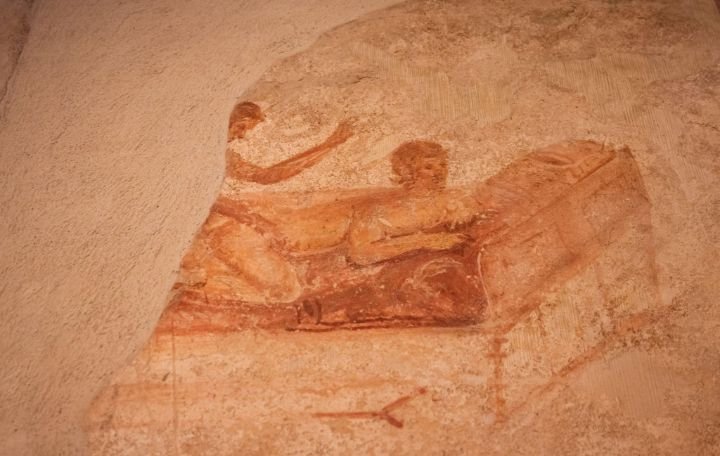
References to anal intercourse can be found in ancient Greek and Roman literature, comedy and art. Some surviving artworks depict sexual activity, while writers sometimes discussed or joked about sexual practices.
However, the existence of these references does not mean that everyone in ancient Greece or Rome approved of the practice.
Ancient societies were highly hierarchical. A person’s social position could determine how the same sexual act was viewed.
A powerful male citizen, an enslaved person, a prostitute and a married woman could face very different expectations.
Therefore, instead of asking simply, “Did ancient Greeks and Romans accept anal sex?”, historians ask more complicated questions:
Who was involved? What was their social status? What was their gender? And how did society interpret their roles?
Ancient Greek Attitudes Toward Sex
Ancient Greece was not a single society.
Athens, Sparta, Corinth and other Greek communities developed different customs, and attitudes also changed over several centuries.
Much of what survives today comes from literature and artwork produced by men, particularly educated and wealthy men. As a result, historians know much more about elite male perspectives than about the private sexual experiences of ordinary women or enslaved people.
Greek attitudes toward sexuality were also different from modern ideas.
People were not necessarily categorized according to whether they were permanently heterosexual, homosexual or bisexual. Instead, ancient discussions could focus more heavily on sexual roles, age, gender and social status.
The Importance of Sexual Roles
One of the most important ideas in understanding ancient Greek and Roman sexuality is the distinction between active and receptive roles.
For elite men, masculinity was closely associated with strength, authority and self-control.
Being perceived as sexually passive could sometimes be used as an insult, particularly when it was associated with a free adult male who was expected to demonstrate masculine authority.
This does not mean that every Greek or Roman person followed the same rules.
Attitudes varied significantly depending on the period, location and social group.
Nevertheless, the connection between sexuality and social status was extremely important.
Anal Sex in Ancient Greek Literature
Ancient Greek writers occasionally referred to anal intercourse.
Greek comedy is particularly useful for historians because playwrights frequently used sexual subjects to make audiences laugh, insult characters or comment on social behavior.
Sexual jokes could be surprisingly direct.
However, a joke about anal sex does not necessarily prove that the audience considered the practice morally acceptable. Comedy often works by exaggerating, mocking or challenging social expectations.
What the jokes do demonstrate is that audiences understood the references.
Sexual behavior was clearly familiar enough to appear in popular entertainment.
Sexuality in Ancient Greek Art
Ancient Greek pottery and artwork provide another important source of information.
Some surviving vessels contain erotic scenes showing different forms of sexual activity. These objects demonstrate that sexual subjects could be represented openly in certain artistic contexts.
But historians must be careful when interpreting them.
An erotic painting or vase does not necessarily represent the behavior of every Greek citizen.
It may have been created for private entertainment, humor, artistic purposes or a particular social setting.
This is why historians compare artwork with literature, archaeology and other historical evidence.
What Did the Romans Believe?
Roman attitudes toward sex were also complicated.
Roman society placed enormous importance on status, citizenship, masculinity and power.
The sexual behavior of a Roman citizen could therefore be judged differently from the behavior of an enslaved person or prostitute.
This is one of the biggest differences between ancient Roman sexuality and modern ideas.
Modern discussions often focus on whether someone was attracted to men or women.
Roman society could instead place greater emphasis on questions such as:
Who had power? Who was expected to take the active role? What was the person’s social position? Was the behavior considered appropriate for a respectable citizen?
These questions could matter more than the modern concept of sexual orientation.
Why Status Mattered in Ancient Rome
Roman society was deeply unequal.
There were citizens, non-citizens, freed people and enslaved people, with major differences in legal and social status.
This hierarchy affected many areas of life, including sexual relationships.
A wealthy Roman citizen had considerably more social power than an enslaved person. Sexual relationships involving people of different social positions could therefore have meanings that are difficult to understand from a modern perspective.
This is why historians avoid describing ancient Roman sexual culture as simply “liberal.”
Rome could be sexually expressive while also maintaining strict social expectations.
Was Anal Sex Considered Shameful?
Sometimes, but not universally and not in exactly the way modern people might expect.
Ancient Greek and Roman societies could criticize sexual behavior when it was associated with weakness, loss of self-control or inappropriate social roles.
A man who was perceived as failing to behave according to expectations of masculinity could become the target of ridicule.
Roman political writers sometimes used sexual accusations as weapons against their enemies.
This reveals something important about ancient society:
Sex could be used to attack someone’s reputation.
Accusations about sexual behavior were not always simply descriptions of what someone did. They could be designed to portray an opponent as weak, immoral or unworthy of respect.
Anal Sex and Roman Comedy
Roman writers frequently used sexual humor.
Comedy, satire and poetry contain references to sexual acts, including anal intercourse and male-male sexual behavior.
These references show that Romans were familiar with the subject and were willing to discuss it publicly in certain literary contexts.
But again, we should not mistake the existence of sexual humor for universal acceptance.
Ancient comedy often made fun of behaviors precisely because they could be controversial or embarrassing.
Ancient Rome Was Not Simply a “Sexually Free” Society
Modern popular culture sometimes portrays ancient Rome as a place where people had unlimited sexual freedom.
The reality was more complicated.
Romans had rules concerning marriage, adultery, reputation and appropriate behavior. Social status also played a major role.
At the same time, Roman art and literature could contain remarkably explicit sexual material.
These two facts existed together.
Ancient Romans could openly represent sexual activity while maintaining strong expectations about social hierarchy, masculinity, marriage and respectable behavior.
That apparent contradiction is one of the most interesting aspects of Roman history.
Did Greeks and Romans Have the Same Attitudes?
Not exactly.
Although Rome adopted many elements of Greek culture, Roman society developed its own traditions and values.
Greek sexual culture also changed over time. The customs of classical Athens were not necessarily identical to those of later Greek communities.
Likewise, Roman attitudes during the Republic were not necessarily identical to those during the Roman Empire.
There was never one universal ancient Greek or Roman opinion about anal sex.
Instead, there were changing attitudes influenced by religion, philosophy, politics, social status and cultural traditions.
What Did Ancient Philosophers Think About Sexual Pleasure?
Ancient philosophers were interested in desire and self-control.
For many philosophical traditions, the question was not simply whether sex was pleasurable.
The larger question was whether a person could control their desires.
Philosophers discussed moderation, self-discipline and the dangers of excessive pleasure.
This meant that sexual behavior could become part of a much larger discussion about what it meant to live a good life.
A person who was unable to control their desires could be portrayed as lacking discipline.
Therefore, ancient discussions about sex were often also discussions about character and self-control.
Women and the Historical Record
One major problem for historians is that the surviving evidence does not give everyone an equal voice.
Much ancient literature was written by men.
Many surviving artworks were also created within societies dominated by male political and social power.
As a result, historians have less direct evidence about the private sexual experiences of women, enslaved people and ordinary working-class individuals.
This means that statements such as “ancient Greeks believed…” or “Romans always believed…” should be treated with caution.
The ancient world was too diverse for such simple conclusions.
What About Religion?
Religion also influenced attitudes toward sexuality.
Greek and Roman religious traditions included gods and myths associated with love, fertility and sexual desire.
But religious mythology should not automatically be interpreted as a description of everyday behavior.
A story about a sexually active god does not necessarily mean that ordinary people were expected to imitate that god.
Religious beliefs existed alongside social customs, laws and philosophical ideas.
Later, as Christianity spread throughout the Roman world, ideas about sexual morality increasingly changed.
Sexual restraint, marriage and religious morality became increasingly important themes in discussions about sexual behavior.
Why the History Is Often Misunderstood
The history of anal sex is frequently presented in extremes.
One version claims that ancient Greece and Rome were completely sexually liberated.
Another suggests that ancient societies universally condemned sexual behavior.
Neither description is accurate.
The reality was much more complicated.
Ancient people could discuss, depict and practice sexual activities while simultaneously maintaining strict expectations about gender, status, marriage and social reputation.
The same sexual behavior could be viewed differently depending on who was involved.
What History Really Reveals
The history of anal sex in ancient Greece and Rome tells us something bigger than the history of one particular sexual practice.
It demonstrates that ideas about sexuality are strongly influenced by culture.
Ancient societies did not necessarily organize sexual behavior around the same categories used today.
Instead, they often connected sexuality with:
Gender
Masculinity
Social class
Citizenship
Power
Marriage
Reputation
Religion
Self-control
Understanding these differences helps historians avoid imposing modern ideas onto ancient societies.
Conclusion
Anal sex was known in both ancient Greece and Rome, and surviving literature and artwork provide evidence that it formed part of the broader sexual culture of the ancient Mediterranean.
But the idea that ancient Greeks and Romans simply considered it either “normal” or “forbidden” is misleading.
Their attitudes were shaped by social hierarchy, gender, masculinity, citizenship and cultural expectations.
In ancient Greece, sexual relationships could be interpreted through questions of age, gender and social position. In Rome, status and masculinity were particularly important in determining how sexual behavior was judged.
The ancient world therefore cannot be described as completely sexually liberated or completely sexually restrictive.
Instead, it was a world where sex, power, reputation and social status were deeply connected.
Perhaps the most fascinating lesson is that ancient Greeks and Romans did not necessarily think about sexuality in the same categories we use today.
The Historabase Editorial Team is dedicated to exploring and sharing the stories that have shaped Africa and the wider world. Our work covers African history, ancient civilizations, empires, historical figures, wars, cultures, political movements, and important events from the past.
We aim to present history in a clear, engaging, and accessible way, combining historical records with careful research to help readers better understand the people, events, and civilizations that shaped our world.










One Comment