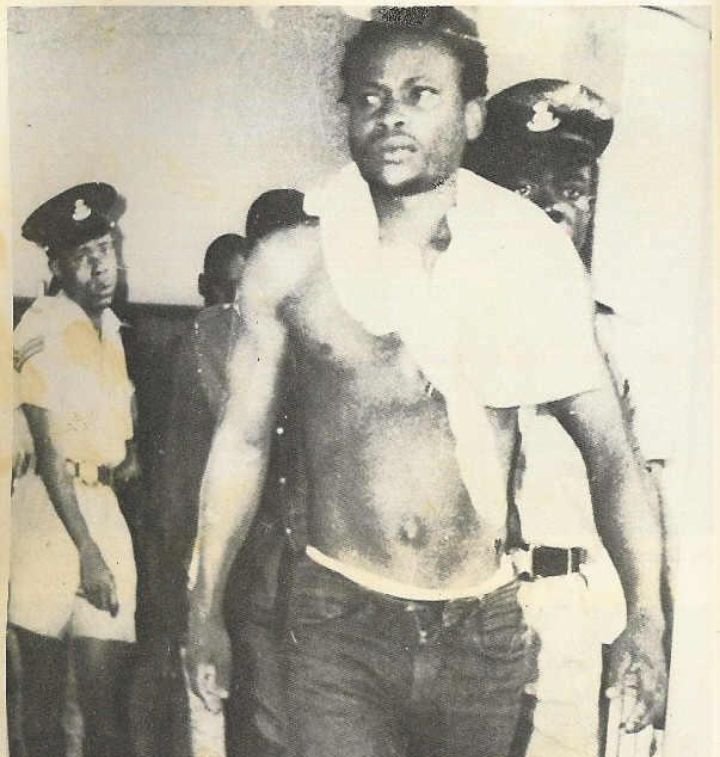
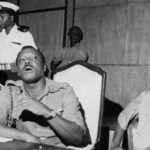
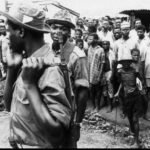
In the turbulent years after Nigeria gained independence, few young men challenged the Nigerian state as boldly as Isaac Adaka Boro.
In February 1966, Boro, an Ijaw nationalist from the Niger Delta, declared the region an independent republic and launched an armed rebellion against the Federal Government. His revolt lasted only twelve days, but it established him as one of the earliest and most influential voices in the struggle for greater recognition of the Niger Delta.
The Young Man From Oloibiri
Isaac Jasper Adaka Boro was born on 10 September 1938 in Oloibiri, in present-day Bayelsa State.
His birthplace would later become historically significant as the location of Nigeria’s first commercially viable oil discovery. Boro therefore grew up in a region that was becoming increasingly important to Nigeria’s economy while many local communities continued to complain about political marginalisation and inadequate development.
Boro studied at the University of Nigeria, Nsukka, where he became politically active and eventually served as a student leader.
He believed that the Niger Delta’s minority communities deserved greater political representation and a fairer share of the wealth being generated from their region.
His frustration eventually moved beyond political speeches.
He decided to take up arms.
The Twelve-Day Revolution
On 23 February 1966, Boro and his followers launched what became known as the Twelve-Day Revolution.
He formed the Niger Delta Volunteer Force and declared the Niger Delta Republic.
The rebellion was an extraordinary challenge to Nigeria’s territorial integrity. Boro’s forces were poorly equipped compared with the Nigerian military, but they initially managed to resist government forces in the difficult creek terrain of the Niger Delta.
The objective was to force attention onto the political and economic grievances of the region.
But the rebellion could not withstand the superior resources of the Federal forces.
After approximately twelve days, the uprising collapsed. Boro and his surviving associates were captured.
The rebellion had failed.
But Boro had succeeded in putting the Niger Delta question firmly onto Nigeria’s political map.
The Death Sentence
Following the collapse of the rebellion, Boro and his associates were prosecuted for treason.
On 21 June 1966, Boro was convicted and sentenced to death.
For a young man who had openly declared a breakaway republic, the punishment was severe but unsurprising under the law at the time.
Boro now faced the hangman’s noose.
But Nigeria itself was entering an even greater crisis.
The country had already experienced a military coup in January 1966. A counter-coup followed in July, bringing General Yakubu Gowon to power. Ethnic tensions intensified, and Nigeria moved towards the conflict that would become the Civil War.
These events dramatically changed Boro’s fate.
How Boro Escaped the Gallows
Boro’s death sentence was not carried out.
As Nigeria descended into political turmoil, the Federal Government eventually granted him an amnesty. He was released from prison in 1967, shortly before the Nigerian Civil War intensified. Sources differ on some details of the timing, but historical accounts agree that the death sentence was ultimately commuted and Boro regained his freedom.
The irony was remarkable.
The man who had attempted to break away from Nigeria was about to become a soldier fighting to preserve Nigeria’s territorial integrity.
From Rebel to Federal Soldier
When the Nigerian Civil War began, Boro joined the Nigerian Army and served on the Federal side.
He was commissioned as a major.
His knowledge of the Niger Delta’s rivers, creeks and terrain made him particularly valuable to Federal forces operating in the region.
His transformation was extraordinary.
Only a short time earlier, Boro had been condemned as a traitor for trying to establish a Niger Delta republic.
Now he was wearing the uniform of the Nigerian Army and fighting against Biafran forces.
His decision has been interpreted in different ways. For some, it demonstrated that his struggle was primarily about the interests of the Niger Delta rather than the destruction of Nigeria itself. For others, it reflected the complicated political calculations of a country entering a devastating civil war.
Whatever his motivations, Boro became a Federal war hero.
The Mysterious Death
In 1968, while the Civil War was still raging, Isaac Boro died during military operations around Ogu, near Okrika, in present-day Rivers State.
This is the point where the historical record becomes uncertain.
The commonly cited date is 9 May 1968, although other accounts have given different dates. What is much less disputed is that Boro died while serving with Federal forces in the Niger Delta.
The precise circumstances of his death, however, remain controversial.
Some accounts describe him as having been killed during combat. Other accounts suggest that he may have been struck by friendly fire.
There have also been longstanding suspicions among some of his supporters that his death was not accidental.
Olusegun Obasanjo later wrote that Boro was killed by a retreating rebel soldier during a private visit, while other accounts have suggested a different explanation.
Because of these conflicting accounts, it would be misleading to state as established fact that Boro was secretly executed or deliberately assassinated.
The mystery lies precisely in the fact that the circumstances have never been conclusively resolved.
Why the “Secret Execution” Story Persists
The dramatic phrase “secret execution” has become associated with Boro because of the extraordinary circumstances surrounding his death.
He had already experienced a death sentence.
He had survived imprisonment.
He had been released and transformed from separatist rebel into a Federal Army major.
Then, less than a year later, he was dead.
Some later accounts have portrayed his death as a deliberate killing because of his political history and the possibility that powerful individuals may have regarded him as a threat.
There is, however, no conclusive historical evidence establishing that the Federal Government secretly ordered his execution.
Even recent historical accounts acknowledge that the circumstances surrounding his death remain disputed.
That uncertainty is an important part of Boro’s story, and should not be replaced with an unproven conspiracy as fact.
A Rebel Who Became a Symbol
Boro’s rebellion lasted only twelve days.
Yet its influence lasted much longer.
His declaration of the Niger Delta Republic became an important landmark in the history of minority rights and resource-control struggles in Nigeria.
Later Niger Delta activists, including Ken Saro-Wiwa, drew inspiration from the issues Boro had raised.
The methods were different.
Boro had taken up arms.
Saro-Wiwa would famously emphasize writing, public advocacy and non-violent activism.
But both men challenged the political and economic conditions affecting communities in the Niger Delta.
Boro’s legacy also influenced later generations of Niger Delta activists who continued demanding greater control over the region’s resources and better treatment for its communities.
The Man Behind the Legend
It is easy to remember Boro simply as a rebel.
But his life was far more complicated.
He was a student leader, teacher, activist, police officer, separatist, prisoner, soldier and war hero.
His political journey reflected the extraordinary instability of Nigeria’s first years of independence.
He challenged the Federal Government, was sentenced to death by the same state, was later released by that state, joined its army and eventually died fighting for it.
Few Nigerian historical figures experienced such dramatic reversals.
A Legacy That Refused to Die
Isaac Adaka Boro was only 29 when his life ended.
His Niger Delta Republic had lasted barely twelve days. His death came only a few years after Nigeria’s independence and during one of the bloodiest periods in the country’s history.
Yet the questions he raised did not disappear.
Who should control Nigeria’s natural resources?
How should minority communities be represented?
What should oil-producing communities receive from the wealth extracted from their land?
And how should Nigeria respond when regional grievances become powerful enough to threaten national unity?
These questions continued to shape the Niger Delta long after Boro’s death.
His story therefore belongs to more than the history of one failed rebellion.
It is part of the larger story of Nigeria’s struggle to balance national unity with the demands of its many ethnic and regional communities.
The Historabase Editorial Team is dedicated to exploring and sharing the stories that have shaped Africa and the wider world. Our work covers African history, ancient civilizations, empires, historical figures, wars, cultures, political movements, and important events from the past.
We aim to present history in a clear, engaging, and accessible way, combining historical records with careful research to help readers better understand the people, events, and civilizations that shaped our world.