Moremi Ajasoro is one of the most celebrated women in Yoruba history and oral tradition. Remembered as a courageous queen of Ile-Ife, she is said to have risked her life to uncover the secret behind the mysterious enemies who repeatedly attacked her people.
Her story combines history, legend, sacrifice and courage. For generations, the tale of Moremi has been passed down among the Yoruba, particularly in Ile-Ife, which is regarded as one of the most important spiritual and historical centres of the Yoruba people.
But who was Moremi, and how did she become remembered as the woman who saved Ile-Ife?
Ile-Ife and the Threat of the Mysterious Warriors
According to Yoruba tradition, Moremi lived in Ile-Ife during a period when the ancient city was repeatedly attacked by a mysterious group of warriors.
The attackers were described as frightening figures covered in grass-like or raffia materials. Their unusual appearance terrified the people of Ile-Ife, and whenever they appeared, they were able to overwhelm the city’s defenders.
The people of Ife struggled to understand who these attackers were or where they came from.
The repeated attacks created fear throughout the community. Families lost loved ones, property was destroyed and people were taken away as captives.
Despite their strength and determination, the people of Ile-Ife could not defeat the mysterious warriors because they did not understand their identity or methods.
Moremi decided that someone had to discover the truth.
Moremi’s Dangerous Plan
Moremi was not simply a member of the royal household. Yoruba tradition remembers her as a woman of extraordinary courage and determination.
She reportedly devised a dangerous plan: she would allow herself to be captured by the enemy.
It was an enormous personal risk.
Moremi understood that if she could enter the enemy’s community, she might discover their secret and find a way to protect Ile-Ife.
Eventually, according to the traditional account, Moremi was captured by the mysterious warriors.
Rather than treating her as an ordinary captive, however, she attracted the attention of their leader and eventually became his wife.
This gave her access to information that would have been impossible for an outsider to obtain.
Moremi patiently observed the warriors and learned about their weapons, methods and, most importantly, the secret behind their terrifying appearance.
The Secret of the Warriors
According to the most widely told version of the legend, Moremi discovered that the warriors were not supernatural beings.
Their frightening appearance was largely a disguise.
They covered themselves with materials such as raffia or grass, creating the impression that they were mysterious spirits or supernatural creatures.
Moremi also discovered an important weakness: fire.
Because the disguise was made from dry plant material, it could easily catch fire.
With this information, Moremi eventually escaped and returned to Ile-Ife.
She told her people what she had discovered.
The people of Ife then prepared themselves for the next attack.
When the mysterious warriors appeared again, the defenders reportedly used fire against them. Their disguises caught fire, exposing the men underneath and destroying the psychological advantage they had enjoyed.
The attackers were defeated.
For the people of Ile-Ife, Moremi had accomplished what their warriors had struggled to achieve.
Moremi’s Great Sacrifice
The story, however, does not end with her victory.
One of the most important parts of the Moremi tradition concerns the price she was asked to pay.
According to Yoruba oral tradition, Moremi had made a vow to the river deity associated with the River Esimirin before embarking on her dangerous mission. After returning successfully to Ile-Ife, she was required to fulfil the vow.
The sacrifice demanded was devastating.
The tradition says that Moremi was required to sacrifice her only son, Oluorogbo.
As a mother, this was an unimaginable loss.
The story portrays Moremi as facing a painful choice between her personal happiness and the survival of her community. Having already risked her life to save Ile-Ife, she ultimately paid an enormous personal price.
Her sacrifice transformed her from a courageous woman into a legendary figure whose story would be remembered for generations.
Moremi and Oluorogbo
Oluorogbo, Moremi’s son, also became part of Yoruba tradition.
His death is one of the most tragic elements of the story because it illustrates the enormous price Moremi supposedly paid for the safety of her people.
In some versions of the tradition, Oluorogbo is associated with later ideas of spiritual significance and heroic sacrifice.
However, different accounts of Moremi’s story exist, and details vary depending on the community and storyteller.
This is important when discussing Moremi as history. Much of the story comes from Yoruba oral tradition rather than contemporary written records. As a result, historians cannot independently verify every detail of the narrative.
Nevertheless, the persistence of the story demonstrates its importance in Yoruba cultural memory.
Was Moremi Really a Queen?
Moremi is often described as a Yoruba queen, although traditional accounts of her exact historical position vary.
She is generally associated with the royal traditions of Ile-Ife and is remembered as a woman connected to the ruling class.
Her story became deeply embedded in the history and identity of Ile-Ife, where she came to represent courage, intelligence and devotion to the community.
The title “queen” therefore captures her traditional status and cultural importance, although modern readers should distinguish between later descriptions and what can be established through contemporary historical evidence.
The Historical Meaning of Moremi’s Story
Beyond the dramatic events, the story of Moremi contains several important themes.
First is courage.
Moremi willingly placed herself in extreme danger because she believed that discovering the enemy’s secret was more important than protecting herself.
Second is intelligence.
The story does not portray Moremi defeating the attackers through physical strength. Instead, she used observation, patience and strategy.
This is particularly significant because traditional accounts often focus heavily on male warriors and kings. Moremi’s story places a woman at the centre of a major act of strategic leadership.
Third is sacrifice.
Moremi’s victory came at an extraordinary personal cost. Her story therefore became a powerful example of the idea that protecting one’s community may require personal sacrifice.
The Moremi Legend and Yoruba Identity
Moremi’s story has survived because it became more than a tale about one woman.
She became a symbol of the strength and resilience of the Yoruba people.
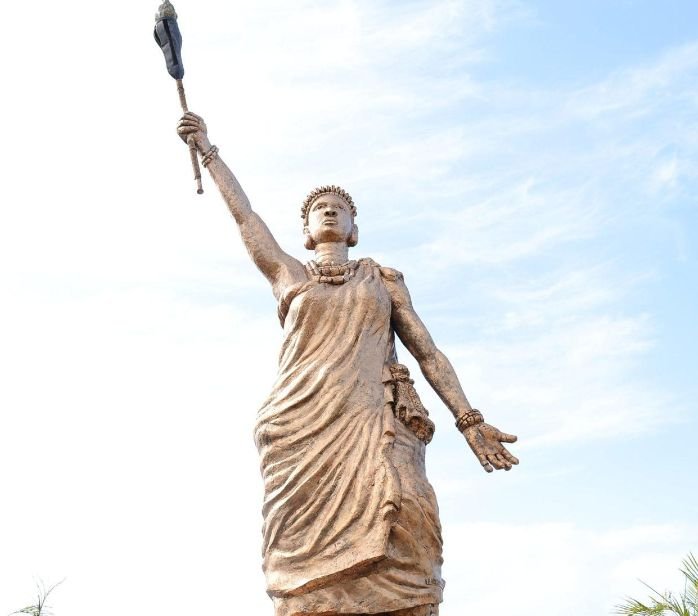
In Ile-Ife, Moremi is especially important. Her memory has been preserved through festivals, monuments, oral traditions and cultural celebrations.
Her name is also associated with the Moremi Ajasoro Festival, which celebrates her courage and contribution to the people of Ile-Ife.
The famous Moremi statue in Ile-Ife has also helped preserve her image for modern generations.
Legend or History?
One of the most interesting questions surrounding Moremi is whether she was a real historical person or a legendary figure whose story developed over centuries.
There is no simple answer.
Yoruba history was traditionally transmitted through oral accounts, praise poetry, genealogies and stories. Such traditions can preserve memories of real people and events, but they can also change as they are passed from one generation to another.
Consequently, some elements of Moremi’s story may reflect historical memories, while others belong to mythology and religious tradition.
Rather than dismissing the story because every detail cannot be independently verified, historians can examine what the legend tells us about Yoruba society, values and collective memory.
The enduring story of Moremi reveals the importance Yoruba society placed on courage, sacrifice, intelligence, loyalty and communal survival.
The Legacy of Moremi Ajasoro
Centuries after her story became part of Yoruba tradition, Moremi remains one of the most famous female figures associated with Yoruba history.
Her story has inspired festivals, literature, theatre, artwork and public monuments.
More importantly, she has become a symbol of female courage.
At a time when historical narratives often focus on kings, warriors and political leaders, Moremi’s story presents a woman whose intelligence and determination supposedly saved an entire community.
Her legacy is therefore not simply about the defeat of mysterious warriors. It is about the power of courage, strategy and sacrifice.
The Historabase Editorial Team is dedicated to exploring and sharing the stories that have shaped Africa and the wider world. Our work covers African history, ancient civilizations, empires, historical figures, wars, cultures, political movements, and important events from the past.
We aim to present history in a clear, engaging, and accessible way, combining historical records with careful research to help readers better understand the people, events, and civilizations that shaped our world.