Water has been associated with life, purification and sacred rituals for thousands of years. Long before the Christian practice of holy water developed, ancient societies used water in religious ceremonies, purification rituals and acts of devotion.
For many religious traditions, water represented more than physical cleanliness. It could symbolize renewal, purification, protection and a person’s transition from one spiritual state to another.
The Christian tradition of holy water developed within this much older history of ritual water, particularly through Jewish purification practices and the early Christian understanding of baptism.
Water Before Christianity
The idea of using water in religious purification did not begin with Christianity.
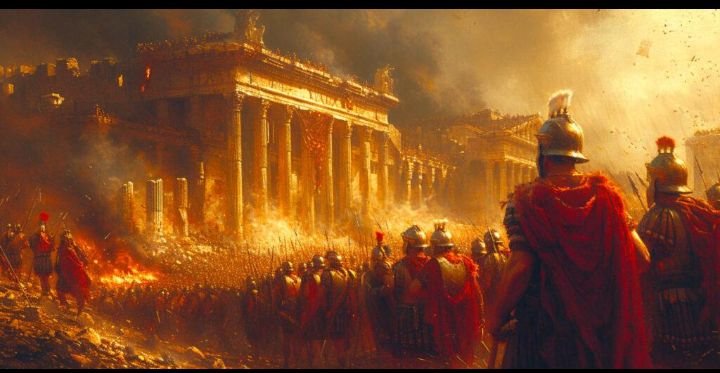
Archaeological and historical evidence shows that ritual washing existed in several ancient societies, including Egypt, Mesopotamia, Greece and Rome. Water could be used to remove ritual impurity from people, objects and places.
In ancient Judaism, purification through water was particularly significant. Various forms of ritual washing appear in biblical traditions, and archaeological discoveries have revealed numerous mikva’ot, ritual immersion baths associated with Jewish communities during the Second Temple period.
These practices provided an important cultural background for the water rituals that emerged within Christianity.
Water therefore already carried a powerful religious meaning when Christianity began.
Water as a Symbol of Purification
One of the most important meanings associated with sacred water was purification.
Ancient people understood purity in both physical and religious terms. Certain actions, illnesses, bodily conditions or contact with the dead could make a person ritually impure within particular religious systems.
Water provided a visible way of expressing the return from an impure state to a purified one.
According to research on early Jewish and Christian ritual, purification practices involving water were widespread, while early Christian writers increasingly interpreted baptism as a form of purification.
This helps explain why water became such a powerful Christian symbol.
The Jewish Roots of Christian Water Rituals
Christianity emerged from the Jewish religious environment of the first century, and its early water rituals developed within that context.
Jewish ritual immersion involved entering water as part of purification or other religious transitions. Archaeological evidence from sites such as Qumran demonstrates the importance of ritual immersion in some Jewish communities during the period.
John the Baptist’s practice of baptizing people in the Jordan River also took place within this broader Jewish tradition.
The earliest Christians subsequently made baptism one of the defining rituals of Christian initiation. Scholars describe baptism as both a purification ritual and a means of marking entry into the Christian community.
From Baptism to Holy Water
It is important to distinguish baptismal water from what later became known specifically as holy water.
Baptism involved the initiation of a person into Christianity. Holy water, in later Christian practice, became water that had been blessed and could be used repeatedly for religious purposes.
The historical development was gradual.
Evidence for the specific Christian practice of blessed water appears more clearly in sources from the later ancient period. The Apostolic Constitutions, a collection of Christian church orders compiled around the fourth century, contains material concerning blessed water. Historians therefore caution against assuming that the modern practice of holy-water fonts existed unchanged among the earliest Christians.
This distinction is important because it prevents the history of holy water from being pushed further back than the surviving evidence allows.
Why Did Christians Bless Water?
The blessing of water gave it a religious function.
Rather than simply being ordinary water, blessed water became a physical reminder of Christian beliefs about baptism, purification and God’s blessing.
In Catholic theology today, holy water is classified as a sacramental rather than one of the seven sacraments. The Catechism describes sacramentals as sacred signs associated with spiritual effects and says that sprinkling holy water recalls baptism.
The emphasis is therefore not simply on the physical substance of the water. Its meaning comes from the religious blessing and the faith associated with its use.
Holy Water and the Church Entrance
One of the most recognizable uses of holy water developed around entering a church.
Historical accounts describe Christians washing or using water as a symbolic act of purification before worship. In later Western Christianity, water containers were eventually placed near church entrances, allowing worshippers to use holy water when entering or leaving.
The historical development of these practices was gradual, and medieval traditions contributed significantly to the form familiar today.
A worshipper dipping their fingers into holy water and making the sign of the cross therefore performs a small ritual that recalls the much larger Christian ritual of baptism.
A Reminder of Baptism
For many Christians, this is the central spiritual meaning of holy water.
The water serves as a reminder: “I have been baptized.”
Catholic teaching explicitly connects the sprinkling of holy water with baptism. The Catechism also presents water as a rich symbol of God’s grace and associates it with creation, the Flood and other events understood as prefiguring baptism.
This explains why holy water is often encountered at the entrance to churches. The physical action of touching or receiving the water connects an ordinary moment with the believer’s baptism.
Protection and Spiritual Meaning
Over the centuries, holy water also became associated in Christian tradition with protection from evil and spiritual danger.
Historical sources show that blessed water was sometimes described in terms of protection, purification and healing. However, these beliefs should be understood as part of religious tradition rather than as scientific claims about water possessing supernatural physical properties.
The distinction matters.
For believers, holy water can have profound spiritual meaning. From a historical perspective, however, historians describe the beliefs and practices surrounding it rather than attempting to prove supernatural effects.
Holy Water in Different Christian Traditions
Holy water is not practiced identically across Christianity.
Roman Catholic, Eastern Orthodox, Oriental Orthodox and some Anglican traditions have developed distinctive ceremonies for blessing and using water.
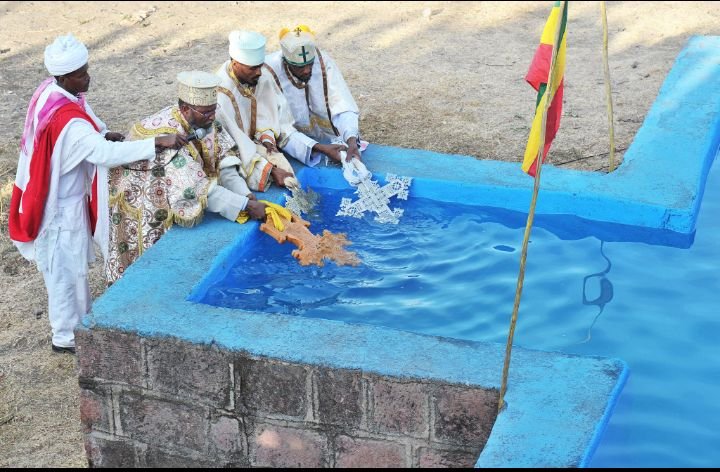
Ethiopian Orthodox Christianity, for example, has its own important traditions surrounding sacred water. Scholars studying holy water across Christianity and other religions have specifically examined Ethiopian Orthodox practices alongside European Christianity and Hindu traditions.
This demonstrates that there is no single universal meaning or method of using holy water.
The common theme is the symbolic importance of water, while the rituals surrounding it vary between communities.
Holy Water Beyond Christianity
The sacred use of water is not exclusive to Christianity.
Ritual water practices have existed across many religious cultures. Ancient Mediterranean religions used ritual ablutions, while Jewish purification traditions developed their own distinctive forms. In Hindu traditions, water has also played major roles in purification, healing and religious practice.
These traditions developed independently in different historical and cultural environments.
Their existence demonstrates a broader human pattern: water is uniquely suited to religious symbolism because it is necessary for life, physically cleanses the body and can visibly transform a person’s surroundings.
Why Water Became So Powerful a Religious Symbol
The spiritual importance of water is partly connected to everyday human experience.
People need water to survive.
Water cleans the body, nourishes plants and animals, supports agriculture and transforms landscapes. Rivers and springs historically determined where many communities could live.
At the same time, water can be destructive. Floods and storms can destroy settlements and take lives.
This combination of life-giving and destructive power made water a natural subject of religious symbolism.
In Christianity, the symbolism became particularly connected with death and new life through baptism.
A person enters the water, or has water poured or sprinkled upon them, and emerges symbolically renewed.
From Ancient Ritual to Modern Practice
The history of holy water is therefore not the story of a practice that appeared suddenly.
It developed within a much older human relationship with sacred water.
Ancient civilizations practiced ritual purification. Jewish communities developed extensive traditions of ritual washing and immersion. Early Christians adopted baptism within that religious environment and gave water a central role in Christian initiation. Over subsequent centuries, the practice of blessing water developed into the various traditions of holy water found in churches today.
Its meaning also expanded.
Holy water could represent purification, remembrance, blessing, protection and spiritual renewal.
The Meaning of Holy Water Today
For millions of Christians, holy water remains a tangible connection between ordinary life and religious faith.
A small amount of water can recall baptism, a church ceremony or a commitment to Christian belief. It can also serve as a physical reminder of purification and renewal.
Historically, however, its significance is even broader.
The story of holy water reveals how an ordinary substance can acquire extraordinary cultural meaning. Water began as something essential to human survival and became, across many religious traditions, a symbol of cleansing, life, transformation and holiness.
The next time holy water is encountered at the entrance of a church, it can therefore be understood not simply as water in a container, but as the continuation of a very old human tradition: using water to express the idea of becoming clean, renewed and spiritually prepared.
The Historabase Editorial Team is dedicated to exploring and sharing the stories that have shaped Africa and the wider world. Our work covers African history, ancient civilizations, empires, historical figures, wars, cultures, political movements, and important events from the past.
We aim to present history in a clear, engaging, and accessible way, combining historical records with careful research to help readers better understand the people, events, and civilizations that shaped our world.