Long before hospitals, laboratories and modern antimalarial drugs existed, African communities had developed their own ways of dealing with fever and other illnesses that are now understood to include malaria.
Malaria has been part of life in tropical Africa for centuries. Communities living in areas where mosquito-borne diseases were common relied heavily on knowledge passed from parents to children, healers, herbalists and midwives. Much of this knowledge was based on observations of local plants and their effects on the body.
Although ancient Africans did not understand that Plasmodium parasites transmitted by infected mosquitoes caused malaria, they recognized recurring patterns of fever, chills, weakness and other symptoms and developed traditional responses to them.
A Disease Without a Modern Name
The word “malaria” comes from the Italian mal aria, meaning “bad air.” Before the discovery of the malaria parasite, many societies around the world associated recurring fevers with environmental conditions, spirits or other causes.
In Africa, communities had their own explanations for illness. Some diseases were interpreted through spiritual or cultural beliefs, while others were treated through practical knowledge of plants, food, rest and other remedies.
Traditional African medicine was never a single system. Practices differed enormously from one region and ethnic group to another. A remedy used in West Africa could be completely different from one used in East or Southern Africa.
The World Health Organization describes traditional medicine as knowledge and practices originating from different cultures and used for maintaining health, preventing, diagnosing or treating illness. Herbal medicine has historically been one of the most widespread forms of traditional medicine in Africa.
The Forest and the Medicine Chest
For many communities, the surrounding environment was effectively a pharmacy.
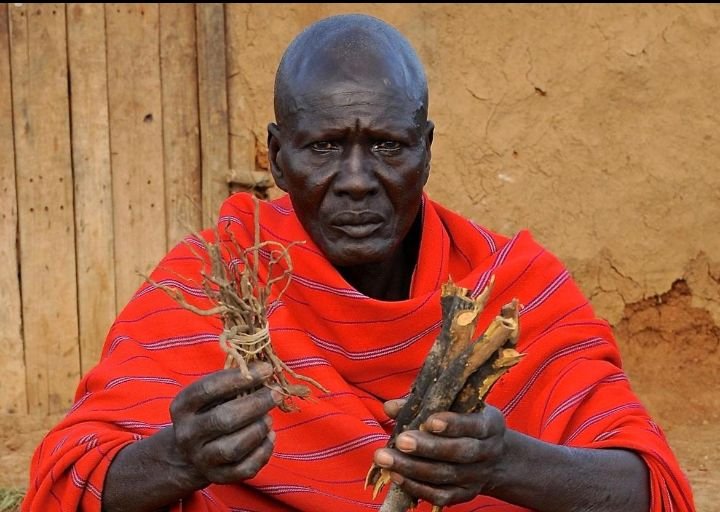
Leaves, roots, bark, seeds, fruits and other plant materials were collected and prepared in different ways. Some were boiled to produce decoctions, while others were crushed or soaked before being administered.
Historical ethnobotanical research shows that hundreds of African plant species have been investigated because of their traditional use against malaria.
A systematic review published in Malaria Journal examined 200 scientific articles covering medicinal plants used against malaria in Africa. The studies involved 502 plant species and research from 31 African countries. Nigeria accounted for the largest share of the studies reviewed.
This does not mean that all of these plants were proven malaria treatments. Much of the scientific evidence came from laboratory or animal experiments rather than controlled human clinical trials.
Nevertheless, the sheer diversity of plants documented demonstrates how extensive Africa’s traditional medicinal knowledge became.
Plants Used Against Malaria
Different African societies used different plants for illnesses associated with malaria-like symptoms.
In Ethiopia, for example, researchers have documented dozens of plants traditionally used against malaria, including garlic (Allium sativum), Croton macrostachyus, papaya (Carica papaya) and Lepidium sativum. Leaves were among the plant parts most commonly used.
Some of these plants have subsequently been investigated in laboratory and animal studies for activity against Plasmodium parasites.
Across the continent, researchers have also investigated plants including Azadirachta indica (neem), Vernonia amygdalina and Cryptolepis sanguinolenta, among many others.
A major review of African medicinal plants identified hundreds of species with reported antiplasmodial or antimalarial activity in laboratory or animal studies. However, it also found evidence of toxicity in some plants, demonstrating why traditional remedies cannot automatically be assumed to be safe simply because they are natural.
Knowledge Passed From Generation to Generation
Traditional medicine depended heavily on accumulated experience.
A healer did not have a microscope with which to identify Plasmodium. There were no blood tests to confirm infection and no laboratory measurements of parasite levels.
Instead, knowledge was often developed through observation.
Which plants appeared to reduce fever? Which preparations seemed to help sick people recover? Which plants caused unpleasant reactions? Which parts of a plant were used?
Over generations, such observations could become part of a community’s medical tradition.
Researchers studying African traditional medicine today are therefore interested not only in the plants themselves but also in the knowledge surrounding their preparation and use.
Traditional responses to malaria-like illness were not necessarily limited to plants.
Treatment could also involve rest, changes in diet, bathing, spiritual practices, prayers and other cultural practices. In some societies, illness was understood through both physical and spiritual frameworks.
This distinction is important because modern medicine separates biological causes from spiritual explanations in ways that traditional medical systems did not always do.
A person could therefore receive a plant preparation while simultaneously undergoing a spiritual or religious ritual intended to restore health.
These practices varied greatly across Africa, making it inaccurate to describe traditional African medicine as one uniform system.
The Mosquito Was Not Yet Known
One of the biggest differences between traditional and modern approaches was the absence of knowledge about malaria transmission.
Today, malaria is known to be caused by Plasmodium parasites and transmitted primarily through the bites of infected female Anopheles mosquitoes.
Ancient communities did not have this microbiological understanding.
They could recognize that certain environments were associated with recurring illness without knowing that mosquitoes were responsible for transmitting the parasite.
The modern understanding of malaria emerged much later, after scientific advances in parasitology and medicine.
Traditional Knowledge and Modern Medicine Meet
One of the most fascinating aspects of malaria history is that traditional medical knowledge has contributed to the search for modern medicines.
Two famous antimalarial drugs demonstrate the importance of traditional medicine in drug discovery.
Quinine was developed from the bark of Cinchona trees traditionally used in South America, while artemisinin was developed from Artemisia annua, a plant used in Chinese traditional medicine.
These examples did not come directly from ancient African medicine, but they demonstrate an important principle: traditional knowledge about medicinal plants can sometimes point researchers toward biologically active compounds.
African researchers have similarly investigated indigenous plants for compounds that could potentially contribute to future antimalarial medicines.
A review of African natural products identified hundreds of plant species and numerous isolated compounds with reported antiplasmodial activity. Researchers have described this biodiversity as a potential source of new drug candidates.
The Problem of Scientific Validation
There is an important difference between a plant being traditionally used for malaria and a medicine being scientifically proven to cure malaria.
A traditional remedy may have a long history of use, but determining whether it reliably treats malaria requires controlled studies involving identification of active compounds, appropriate dosing, safety testing and human clinical trials.
This is one of the major challenges facing research into African medicinal plants.
The 2021 systematic review of African antimalarial plants found that most of the studies it examined were laboratory experiments. Only a very small number involved human clinical research.
Consequently, researchers continue to investigate which traditional remedies contain genuinely useful antimalarial compounds and which may be ineffective or potentially harmful.
A Legacy That Survived Modern Medicine
The arrival of modern hospitals and pharmaceutical drugs did not completely replace traditional medicine in Africa.
Traditional healers and herbal remedies remain important in many communities, particularly where healthcare facilities or medicines are difficult to access. WHO’s African regional office notes the continued widespread use of traditional medicine in the region.
Modern researchers are now attempting to document this knowledge before it disappears, while also determining which traditional practices can withstand scientific testing.
The history of malaria treatment in Africa is therefore not simply a story of ancient remedies being replaced by modern drugs. It is also a story of accumulated indigenous knowledge, biodiversity and scientific investigation meeting centuries later.
The Historical Lesson
Ancient Africans did not know about Plasmodium, mosquito transmission or the molecular mechanisms targeted by modern antimalarial drugs.
But they were not without medical knowledge.
They observed disease, experimented with the natural resources around them and developed systems of healing that were passed between generations. Some of the plants used traditionally have since attracted serious scientific interest, while others have not been shown to provide reliable treatment.
The modern study of these remedies does not require accepting every traditional claim as fact. Instead, it offers an opportunity to investigate historical knowledge scientifically.
Africa’s long history of medicinal plant use remains an important part of the continent’s medical heritage, and potentially, a source of clues for future medicine.
The Historabase Editorial Team is dedicated to exploring and sharing the stories that have shaped Africa and the wider world. Our work covers African history, ancient civilizations, empires, historical figures, wars, cultures, political movements, and important events from the past.
We aim to present history in a clear, engaging, and accessible way, combining historical records with careful research to help readers better understand the people, events, and civilizations that shaped our world.





One Comment