Few stories in the history of Christianity are as extraordinary as that of Saint Denis of Paris, a Christian missionary traditionally regarded as the first bishop of Paris.
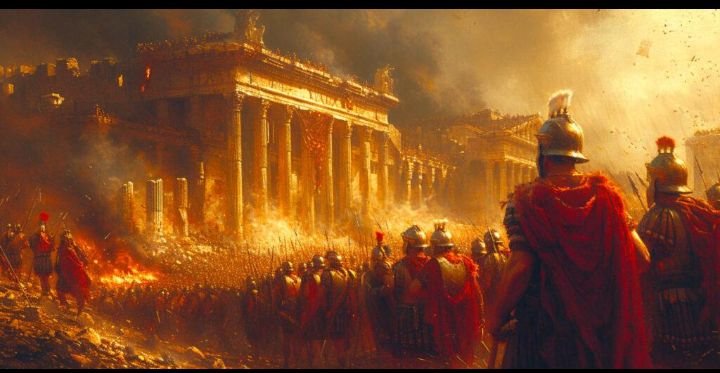
According to a centuries-old Christian tradition, Denis was arrested by Roman authorities because of his preaching. He was tortured and eventually taken to a hill outside ancient Paris, where he and two companions were beheaded.
But the story does not end with his death.
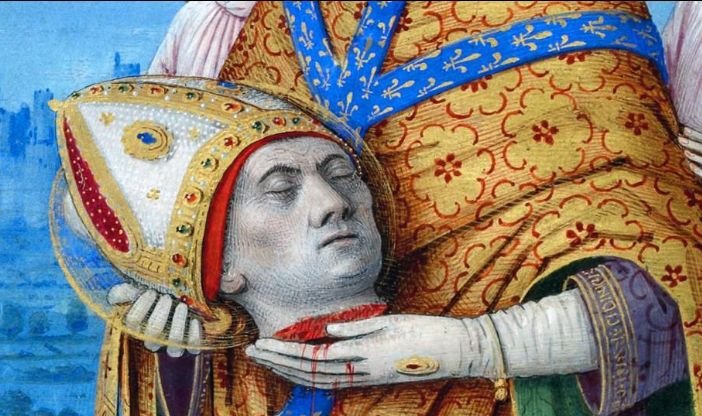
According to the legend, Denis picked up his own severed head and continued walking while preaching about his faith. The extraordinary story eventually made him one of the most recognizable saints in Christian art, where he is frequently depicted carrying his own head.
The historical evidence, however, requires an important distinction between what is known about Denis and what belongs to later tradition.
Who Was Saint Denis?
Saint Denis, also known as Dionysius of Paris, is traditionally identified as an early Christian missionary and the first bishop of Paris.
According to the archaeological and historical information presented by the Archaeological Service of the City of Saint-Denis, accounts of Denis are contradictory. One tradition places him in the first century, while another, associated with Gregory of Tours, places his mission and martyrdom during the third century, around the persecution of Christians under Emperor Decius.
Catholic tradition identifies Denis as a missionary bishop who traveled to Gaul, the Roman territory that included much of modern France. He was accompanied by two other Christians, Rusticus and Eleutherius.
Their mission was reportedly to spread Christianity among the inhabitants of the region.
Denis eventually became closely associated with Paris, where he is remembered as its first bishop and an important figure in the city’s early Christian history.
The Preaching That Angered His Opponents
According to the traditional accounts, Denis’s preaching attracted converts to Christianity.
This reportedly angered local pagan religious authorities, who viewed the spread of Christianity as a threat to the established religious order.
Denis, Rusticus and Eleutherius were eventually arrested.
Later accounts describe the three men suffering torture before being sentenced to death. The traditional location of their execution was the ancient hill known as the “Mont de Mercure,” now associated with Montmartre in Paris.
Archaeological evidence confirms that Montmartre was occupied during antiquity and that Roman religious structures existed in the area. However, the exact historical location of Denis’s martyrdom cannot be established with certainty.
The Beheading
The three Christians were eventually executed by decapitation.
For Denis, this was supposed to be the end of his life.
Instead, according to the legend that developed around him, something extraordinary happened.
After his execution, Denis supposedly took his severed head into his hands.
The story says that he then began walking away from the place of execution.
And he was not said to be walking silently.
He was reportedly still preaching.
This unusual type of saintly story later became associated with a term used for saints who are depicted carrying their own severed heads: cephalophores.
The Archaeological Service of Saint-Denis explains that the term refers to saints who, according to tradition, continued praising God after being decapitated.
The Journey With His Own Head
According to the legend of Saint Denis, he carried his head for a considerable distance, continuing to preach along the way.
Eventually, he reached a location where he collapsed.
A Christian woman named Catulla is traditionally said to have recovered or buried his body.
According to the medieval tradition, Denis and his companions were buried at the site that eventually became associated with Saint-Denis.
The official archaeological history of Saint-Denis describes the legend differently in some details: Denis is said to have picked up his head and, guided by two angels, reached a place where Catulla arranged for him and his companions to be buried.
Over time, the story became deeply connected with the identity of the saint.
Why Is Saint Denis Shown Holding His Own Head?
If you have ever seen medieval or religious artwork depicting a man standing while holding his own severed head, there is a good chance the figure is Saint Denis.
The unusual image became his defining symbol.
Catholic sources describe Denis as traditionally being represented with his head in his hands because of the story that his body carried his head after his execution.
The imagery became particularly powerful because it represented the belief that physical death could not overcome the martyr’s faith.
The saint’s severed head therefore became more than a gruesome image. In Christian symbolism, it represented perseverance and devotion even in the face of death.
But Did It Really Happen?
This is where the story becomes more complicated.
There is evidence for an early Christian community in Paris and for the long-standing veneration of Saint Denis. However, the surviving accounts about Denis were written centuries after the events they describe, and the details of his life became surrounded by legend.
The Archaeological Service of Saint-Denis explicitly notes that the limited and contradictory information about Denis contributed to the development of legends designed to enhance his prestige and connect him more closely with the beginnings of Christianity.
Even the identity of Denis became complicated during the Middle Ages. Some writers identified the Denis of Paris with Dionysius the Areopagite, a man mentioned in the New Testament as having been converted by the Apostle Paul.
Modern scholarship treats these as separate historical figures.
Therefore, the claim that Denis literally picked up his severed head and continued preaching cannot be established as a verified historical event.
It belongs to the tradition surrounding his martyrdom.
The Tomb of Saint Denis
The story did not end with the legend of his death.
The site associated with Denis eventually became one of the most important Christian religious centers in France.
A basilica was built over the traditional location of his burial. Archaeological excavations have subsequently investigated the area beneath the church.
Excavations conducted during the 20th century uncovered numerous ancient graves beneath the basilica. Archaeologists also discovered a large pit beneath the high altar in the area traditionally associated with Denis’s grave. However, no intact body was found there, and the interpretation of the pit remains disputed.
The site later became the Basilica of Saint-Denis, one of France’s most historically important churches and the burial place of generations of French monarchs.
A Story That Survived for Centuries
Whether viewed as a historical account, a religious tradition or a medieval legend, the story of Saint Denis has had an extraordinary afterlife.
His story was repeatedly reproduced in manuscripts, sculptures, paintings and church decorations.
Medieval artists depicted his execution and, most famously, his supposed journey while carrying his own head.
The Archaeological Service of Saint-Denis notes that representations of his decapitation and the traditional story appear in medieval works dating back many centuries.
The image is shocking even today: a bishop who has been beheaded, yet is portrayed standing and carrying his own head as he continues his final journey.
The Historabase Editorial Team is dedicated to exploring and sharing the stories that have shaped Africa and the wider world. Our work covers African history, ancient civilizations, empires, historical figures, wars, cultures, political movements, and important events from the past.
We aim to present history in a clear, engaging, and accessible way, combining historical records with careful research to help readers better understand the people, events, and civilizations that shaped our world.