In the history of Nigerian crime, few names became as mysterious and feared as Shina Rambo. During the early 1990s, the name was associated with armed robbery, carjacking and violent criminal activity across southwestern Nigeria and along the Lagos Cotonou corridor.
Unlike many criminals whose stories ended with a highly publicized arrest or execution, Shina Rambo disappeared from public view and became almost a legend. For years, some Nigerians even questioned whether the notorious figure actually existed or whether his reputation had grown into something larger than the man himself.
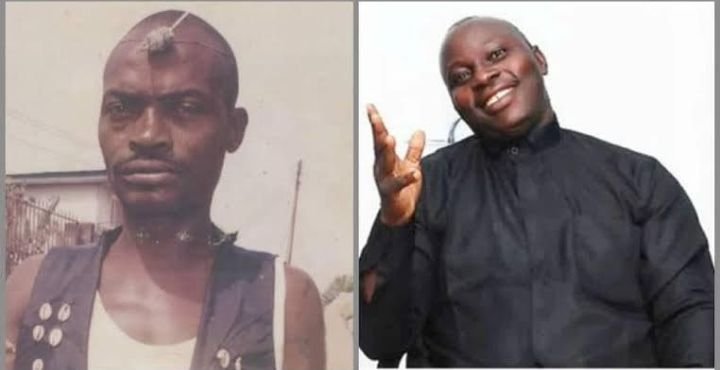
Years later, a man identifying himself as Oluwasina Oluwagbemiga publicly claimed to be the former criminal kingpin. His emergence transformed the story once again: the man once associated with fear and violence was now presenting himself as a preacher who had abandoned his criminal past.
Who Was Shina Rambo?
Shina Rambo was reportedly born Olusegun Adeshina Adisa Kuye, around 1958, in Abeokuta, Ogun State, although accounts of his early life and even his birth details vary.
He was raised partly in Benin City and had connections to different parts of southwestern Nigeria and the neighbouring Republic of Benin. This background would later become significant because his criminal activities reportedly extended beyond Nigeria’s borders.
His real identity was surrounded by confusion for years. Different accounts gave different names, places of origin and versions of his early life.
That uncertainty contributed to his mysterious reputation.
The nickname “Shina Rambo” itself became more famous than his birth name. The “Rambo” part was widely associated with the fictional action character portrayed by Sylvester Stallone, reflecting the image of a heavily armed and fearless criminal. Contemporary accounts described him as a flamboyant figure who deliberately cultivated a larger-than-life image.
The Rise of a Robbery Kingpin
By the early 1990s, Shina Rambo had emerged as one of the most notorious armed robbery figures in southwestern Nigeria.
His activities reportedly stretched across Lagos, Ogun and other parts of the Southwest, with his operations also extending into the Republic of Benin. His gang became particularly associated with car theft and armed robbery.
One reason he became so difficult to contain was the cross-border nature of the criminal network attributed to him.
Vehicles stolen in Nigeria could reportedly be moved toward Cotonou, creating another layer of difficulty for law enforcement.
Shina Rambo therefore represented something different from the earlier generation of Nigerian robbery kingpins. His operations reflected an increasingly interconnected criminal environment in West Africa. A 2009 Vanguard account described him as a cross-border bandit who operated along the Lagos–West Coast route.
The Lagos–Cotonou Connection
The route between Lagos and Cotonou became an important part of Shina Rambo’s legend.
The proximity between Nigeria and Benin made cross-border movement relatively practical, while criminal networks could exploit differences between jurisdictions.
According to accounts of his activities, stolen vehicles were transported from Nigeria toward Benin, where they could be sold or moved through other criminal networks.
This kind of operation required more than armed men. It required contacts, transportation, information and knowledge of routes.
That was one reason Shina Rambo became regarded as a criminal kingpin rather than simply a street robber.
A Criminal Who Became a Myth
Perhaps the most unusual part of the Shina Rambo story is the extent to which his reputation became detached from verifiable facts.
Stories about his gang became increasingly dramatic. Some accounts described enormous numbers of stolen vehicles, sophisticated weapons and daring operations carried out in broad daylight.
One later interview attributed extraordinary claims to Rambo, including the theft of dozens of luxury cars in a single day. However, such claims should be treated cautiously because many details surrounding his criminal career come from later interviews, newspaper recollections and popular retellings rather than independently verified records.
Shina Rambo became both a real criminal figure and a criminal legend.
Some people reportedly questioned whether the man described in stories actually existed. His name became so powerful that it sometimes appeared to represent an entire generation of armed robbers rather than one individual.
The Police Hunt
For Nigerian security agencies, Shina Rambo presented a serious challenge.
His reported movement across jurisdictions made conventional policing more difficult, while his reputation created fear among members of the public.
The media also played a role in identifying him.
A study examining the Nigerian press and crime reporting noted that descriptions of Shina Rambo published by the media helped police identify and track him in 1992. The report described him as a notorious kingpin and highlighted physical characteristics that assisted the authorities.
The eventual pursuit demonstrated how intelligence gathering, media reports and police operations could combine in the fight against organized crime.
One police officer associated with the campaign against Shina Rambo was Tunde Sobulo, who was involved in Operation Sweep, an effort targeting the cross-border robbery gang.
The Disappearance
Then, in 1992, Shina Rambo seemingly vanished.
His disappearance added another layer to the legend.
Rather than ending with a dramatic execution like some earlier Nigerian robbery kingpins, his story entered a period of uncertainty.
For years, Nigerians heard different accounts about what happened to him.
Was he dead?
Had he escaped?
Was the notorious Shina Rambo merely a name attached to several criminals?
The uncertainty kept the legend alive.
Eventually, accounts emerged that he had been arrested and imprisoned.
From Prison to a New Life
Years after his criminal career, Shina Rambo resurfaced with an extraordinary story of transformation.
He identified himself as Oluwasina Oluwagbemiga and acknowledged that he was the former criminal popularly known as Shina Rambo.
In a 2020 interview reported by Punch, he said he had been released from prison after serving a lengthy sentence and had subsequently embraced Christianity. He presented himself as a preacher involved in prison ministry and reform work.
His story therefore took an unexpected turn.
The man once described as a dangerous armed robber was now publicly speaking about repentance and rehabilitation.
His Confession
When Shina Rambo resurfaced, he spoke about his former criminal life and expressed regret over the violence associated with it.
He claimed that his activities had caused enormous suffering and described his conversion to Christianity as the turning point in his life.
He also spoke about the devastating consequences of his criminal past.
According to his account, his wife and three children were killed during an attempt by security personnel to arrest him when he was not present. This is his own recollection and should be treated as an allegation rather than an independently established fact.
His later interviews gave Nigerians an unusual opportunity to hear directly from a man who had previously existed largely through newspaper reports and criminal folklore.
From Criminal Kingpin to Preacher
Shina Rambo’s reported transformation became one of the most remarkable elements of his story.
After his release, he began presenting himself as a Christian preacher and speaking about his former life.
He reportedly visited prisons and reform centres, using his own experiences to warn young people about crime.
Whether viewed through a religious, social or historical lens, the transformation raises an important question:
Can someone responsible for serious crimes genuinely rebuild their life?
For victims and their families, redemption cannot erase the damage caused by crime. But from a historical perspective, the later life of Shina Rambo demonstrates how the trajectory of a notorious criminal can take an unexpected direction.
The Legacy of Shina Rambo
Shina Rambo belongs to a particular chapter in Nigeria’s history of armed robbery.
The 1970s had produced figures such as Ishola Oyenusi, while the 1980s were dominated by the notoriety of Lawrence Anini and his gang. In the 1990s, Shina Rambo became one of the names most associated with violent robbery in southwestern Nigeria.
The Historabase Editorial Team is dedicated to exploring and sharing the stories that have shaped Africa and the wider world. Our work covers African history, ancient civilizations, empires, historical figures, wars, cultures, political movements, and important events from the past.
We aim to present history in a clear, engaging, and accessible way, combining historical records with careful research to help readers better understand the people, events, and civilizations that shaped our world.











One Comment