Ikorodu, Lagos State, has witnessed some of the most disturbing criminal cases in Nigeria’s recent history. Among them are reports of ritual killings, suspected human-part trafficking and the activities of the notorious group popularly known as the Badoo Boys. But one cemetery-related case brought a different kind of horror: the alleged discovery of freshly harvested human parts taken from a grave.
The incident added another disturbing chapter to the history of ritual-related crime in Ikorodu, a rapidly developing area on the outskirts of Lagos.
It also raised an uncomfortable question: what could drive someone to disturb the dead in search of human body parts?
A Community Already Haunted by Fear
Long before the cemetery case, Ikorodu had become associated with a wave of violent crimes that terrified residents.
Between 2016 and 2018, the area experienced a notorious crime wave linked by residents and media reports to a group popularly called the Badoo Boys. Academic research later examined the phenomenon and described the group’s activities as a major source of insecurity and social disruption in Ikorodu.
The attacks attributed to Badoo created an atmosphere of fear.
Families worried about being attacked at night. Residents organised neighbourhood patrols and kept watch over their communities. Some people even considered leaving the area.
The brutality associated with some of the attacks also strengthened the belief among residents that ritual motives were involved.
However, it is important to distinguish the Badoo phenomenon from every ritual-related crime reported in Ikorodu. Not every suspected ritual killing in the area was proven to have been committed by Badoo members.
That distinction became especially important in later cases involving cemeteries.
The Cemetery Discovery
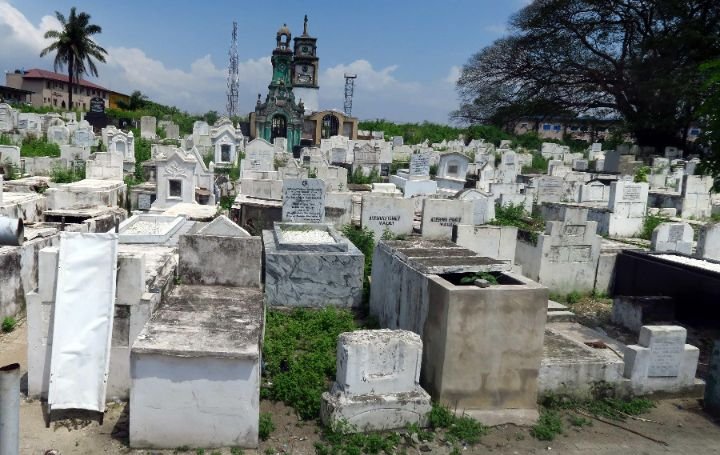
One of the most disturbing incidents occurred in January 2022, when police in Lagos reportedly arrested a suspected ritualist in Ikorodu after he was allegedly found with human body parts.
The suspect was identified in reports as Kolawole, and investigators alleged that the parts had been obtained from a grave.
Reports said the arrest involved a human hand and heart that were allegedly harvested from a cemetery in the Ikorodu area.
The incident immediately generated public outrage.
Unlike conventional violent crime, where the victim is attacked while alive, the alleged crime involved disturbing a grave and removing parts of a deceased person.
For families who had buried their loved ones believing they were finally at rest, the idea that a grave could be secretly opened and the body desecrated was deeply disturbing.
Why Would Anyone Steal Human Remains?
The alleged motive was connected in public discussions to money rituals and beliefs surrounding supernatural wealth.
Ritual-related crimes in Nigeria have a complicated history. Some perpetrators and suspects have claimed to believe that human body parts possess supernatural powers or can be used in rituals intended to produce wealth, protection or influence.
But these beliefs do not represent accepted religious teachings, and they certainly do not justify violence or the desecration of graves.
The criminal exploitation of such beliefs has created a dangerous market around human remains.
In some cases, criminals may seek body parts for alleged ritual purposes. In others, however, the supposed ritual explanation may simply be a cover for another criminal motive.
That is why investigators must establish the facts rather than rely on rumours.
The Badoo Shadow
To understand why the cemetery case generated so much fear, it is necessary to understand the reputation Ikorodu had acquired during the Badoo attacks.
The name Badoo initially became associated with a suspected individual arrested in Ibeshe in 2016. According to reports gathered at the time, residents had linked him to attacks involving rape and murder.
The name subsequently became associated with a wider group rather than just one individual.
Reports described attacks in which sleeping residents were allegedly assaulted with heavy household objects. The brutality of some of the murders led residents to believe that the attacks were connected to ritual practices.
The fear became so intense that residents organised vigilante patrols.
Some suspected criminals were even subjected to mob justice.
This created another serious problem: people could be accused of belonging to Badoo without sufficient evidence.
When Fear Turned Into Jungle Justice
The Badoo crisis demonstrated how dangerous public panic can become.
As residents became increasingly frightened, some communities began conducting night patrols and confronting people they considered suspicious.
In several incidents, suspected members of the gang were reportedly beaten or killed by mobs before police could investigate them properly.
Security agencies were forced to conduct raids and arrest large numbers of suspects.
One major operation in July 2017 reportedly resulted in about 138 suspects being taken into custody for questioning.
But arresting someone is not the same as proving their guilt.
The distinction is crucial in historical accounts of the Ikorodu crime wave because the fear surrounding Badoo sometimes caused rumours to spread faster than verified information.
The Cemetery Horror Was Different
The later cemetery incident had no established basis for automatically connecting it to the Badoo gang.
Instead, it reflected another disturbing aspect of ritual-related crime: the alleged use of graves as sources of human remains.
Forensic investigators and police therefore had to determine the circumstances surrounding the remains, establish where they came from and identify anyone else who might have been involved.
The discovery also highlighted a weakness that is often overlooked in discussions of violent crime: cemeteries can become crime scenes too.
A grave may appear protected because it is a sacred place, but an isolated cemetery can provide criminals with privacy and time.
The Dark Business of Human Parts
Nigeria has periodically witnessed cases involving the alleged possession or trafficking of human body parts.
In some instances, suspects have been accused of killing people to obtain parts. In others, investigators have alleged that body parts were obtained from corpses after death.
The motives can vary.
Some cases involve supposed money rituals. Others involve traditional medicine, trafficking or personal beliefs.
But regardless of the claimed purpose, the trade in human remains creates victims beyond the person whose body is violated.
There are grieving families.
There are communities living in fear.
And there is a wider social cost when people begin to believe that anyone could become a victim.
Why Ikorodu Became a Symbol
Ikorodu’s rapid development, large population and sprawling communities have contributed to its unique security challenges.
Academic research into the Badoo phenomenon found that the crime wave affected not only residents’ sense of security but also economic and social activities within the area.
Businesses were affected.
Residents became reluctant to move around at night.
Communities organised security arrangements.
And rumours became powerful.
The cemetery case therefore appeared against a background in which residents were already highly sensitive to stories involving ritual killings.
For many people, it confirmed their worst fears.
The Danger of Rumours
One of the most important lessons from Ikorodu’s history of ritual-related crime is the need to separate confirmed criminal evidence from community speculation.
Stories involving ritual killings can spread rapidly because they are frightening and emotionally powerful.
But a claim that someone is a ritual killer is extremely serious.
It can lead to mob violence, wrongful accusations and the destruction of innocent people’s lives.
The Badoo crisis provided a clear example of this danger.
Authorities therefore have an important responsibility: investigate allegations professionally, preserve evidence, identify victims and prosecute suspects through the legal system.
Communities also have a responsibility not to replace the courts with mob justice.
A Disturbing Chapter in Nigerian Crime History
The Ikorodu cemetery case may not be as widely remembered as the Badoo killings, but it represents another disturbing dimension of Nigeria’s struggle with ritual-related crime.
The alleged removal of human remains from a grave shocked people because it crossed a boundary that many consider sacred.
Death is traditionally regarded as the end of a person’s earthly suffering.
A cemetery is supposed to be a place of rest.
The idea that criminals could enter such a place searching for human remains therefore creates a uniquely disturbing form of fear.
The Lesson From Ikorodu
The history of Ikorodu’s ritual-crime scares is ultimately about more than mysterious killings.
It is about poverty, desperation, superstition, organised crime, public fear and the dangerous belief that wealth can be obtained through shortcuts.
The Badoo attacks were real and caused genuine terror. The cemetery case involving alleged possession of human parts was also serious. But not every rumour surrounding these incidents should automatically be accepted as fact.
The Historabase Editorial Team is dedicated to exploring and sharing the stories that have shaped Africa and the wider world. Our work covers African history, ancient civilizations, empires, historical figures, wars, cultures, political movements, and important events from the past.
We aim to present history in a clear, engaging, and accessible way, combining historical records with careful research to help readers better understand the people, events, and civilizations that shaped our world.











One Comment