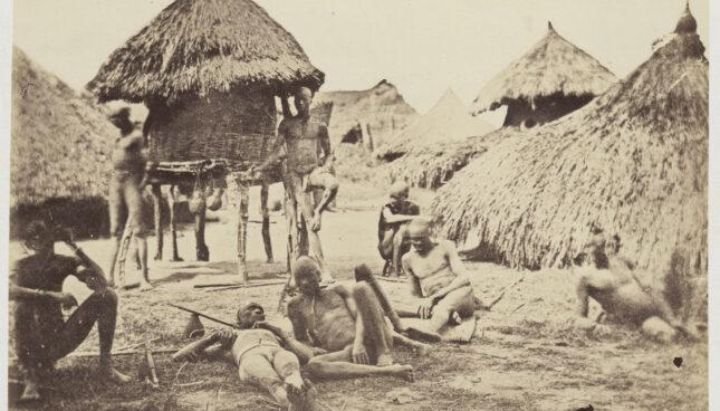
Long before electric lighting and modern security systems, sunset marked an important change in daily life across many traditional African societies. Darkness affected movement, farming, security, ceremonies and social activities. As a result, communities developed customs and taboos that regulated what people could do after sunset.
These rules were not identical across Africa. They differed from one society to another and were influenced by local religion, security concerns, social organisation and cultural traditions. In some communities, the restrictions were practical; in others, they were connected to religious beliefs and sacred institutions.
Nightfall and Community Security
In precolonial Igboland, household compounds were designed partly with security in mind. Historical research records that the main entrance of a compound could be locked around sunset and kept closed throughout the night. People were generally not expected to visit other households at night except in emergencies.
Such practices reflected the importance of protecting families and property after dark. Without modern street lighting, telecommunications or organised modern policing, nighttime movement could present greater risks than movement during the day.
Other African societies similarly associated darkness with increased vulnerability. Research into traditional communities in Uganda, for example, records the view that nighttime was unsuitable for ordinary outdoor activity because darkness could facilitate criminal activity and encounters with wild animals. At the same time, people who studied the stars and moon for traditional calendars continued to go outside at night for specific purposes.
This shows that traditional rules about nighttime were not necessarily absolute. Certain people could have recognised reasons for being outside after sunset.
The Prohibition Against Children Walking at Night
Among the Tsonga people of southern Africa, one documented taboo stated that children should not walk at night. Researchers studying traditional Tsonga taboos recorded the rule as part of the community’s system of social restrictions.
The explanation associated with the taboo included protecting young people from dangers believed to be associated with nighttime, including sexual misconduct and exposure to drinking. In this context, the rule functioned as a form of social control over children and young people.
This example demonstrates how a traditional taboo could serve more than one purpose. It could carry a religious or cultural meaning while simultaneously restricting behaviour that elders considered dangerous or inappropriate.
Restrictions During Sacred Night Ceremonies
Some of the strictest nighttime restrictions were connected to traditional religious ceremonies.
Among the Yoruba, the Oro institution provides a well-documented example. During Oro ceremonies, movement could be restricted and non-initiates were expected to stay away from the procession. Historical and contemporary research on the practice records restrictions particularly affecting women, who were traditionally prohibited from witnessing Oro ceremonies.
One documented account describes a dusk-to-dawn restriction during Oro observances. The restriction meant that people who were not members of the institution were expected to remain indoors while the ceremony was taking place.
The practice demonstrates how sunset could become more than simply the end of the working day. In certain circumstances, it marked the beginning of a period during which ordinary movement was restricted because a sacred ceremony was taking place.
Night Masquerades and Restricted Movement
Night masquerades were also associated with special rules in parts of Nigeria.
Among some Yoruba communities, night masquerades were traditionally connected with religious and social institutions. Academic research has documented restrictions on women viewing certain masquerades and the existence of nighttime rules surrounding these ceremonies.
Similar traditions existed in parts of Igboland. Recent historical research on the Omabu night masquerade among the Oghe people of Enugu State describes the cultural importance of nighttime masquerading and its connection with traditional beliefs concerning ancestors and masquerades.
Because these ceremonies belonged to particular traditional institutions, the rules surrounding them were not simply ordinary household laws. They were part of the religious and social structure of the communities that observed them.
Whistling After Dark
Some traditional communities also developed specific taboos concerning activities that could appear harmless during the day.
A study of taboos in Igbo society records a traditional prohibition against whistling at night. According to the documented belief, nighttime whistling could attract snakes or evil spirits.
The important historical point is that such rules formed part of a broader system of taboos through which elders communicated acceptable behaviour to younger generations.
Taboos could therefore regulate ordinary activities, where people went, what they said, what they touched and what they did, without necessarily existing as written laws.
The Night Was Not Always a Forbidden Time
Despite the restrictions associated with darkness, traditional African societies did not simply stop all activities after sunset.
Some communities deliberately used nighttime for specific social, religious and security activities.
Among the Ogu (Egun) people of Badagry, Nigeria, for example, the Zangbeto institution traditionally served a nighttime security function. Research describes Zangbeto as a traditional night-watch institution whose activities included policing, securing the community and maintaining peace.
The existence of such night watchers demonstrates an important distinction: while ordinary people could be discouraged from moving around after dark, certain members of the community had recognised responsibilities that required them to operate at night.
Nighttime could therefore be restricted for some people while being an important working period for others.
The Moon and the Regulation of Community Life
The night sky also played a role in regulating traditional life.
Research on African cultural astronomy records that the moon and stars were historically important to many communities for determining seasons, agricultural activities, festivals and other social events. In parts of southern Nigeria, observations of the moon were connected with the timing of social and religious activities.
This meant that the night was not simply regarded as a period of darkness. The moon, stars and changes in the night sky could provide information used to organise community life.
In some societies, people with particular knowledge of celestial patterns therefore had reasons to remain active after sunset.
Why These Traditional Rules Mattered
Traditional nighttime restrictions served different purposes depending on the society.
Some helped protect children and households. Others reinforced respect for elders and traditional institutions. Certain restrictions were connected to religious ceremonies, while others reflected concerns about crime, wild animals or inappropriate behaviour.
African traditional societies did not operate under one universal set of nighttime laws. Instead, individual communities developed their own customs, taboos and institutions.
These rules were usually transmitted orally through families, elders and traditional institutions rather than through written legal codes.
For generations, such customs helped define the boundaries between activities considered appropriate during the day and those reserved for particular times or circumstances after sunset.
A History Written Into the Night
Before modern electricity transformed nighttime life, sunset represented a significant transition in many African communities. Darkness affected how people travelled, protected their homes, conducted ceremonies and organised social activities.
The resulting traditions ranged from simple household restrictions to strict ceremonial curfews.
Some rules were created around practical concerns, while others were deeply connected to traditional religious beliefs. In both cases, they reveal how African societies developed systems for regulating community life long before modern institutions of policing, lighting and written legislation became widespread.
The traditional laws and taboos surrounding nighttime therefore form an important part of the social history of African communities, and they varied considerably from one people and region to another.
The Historabase Editorial Team is dedicated to exploring and sharing the stories that have shaped Africa and the wider world. Our work covers African history, ancient civilizations, empires, historical figures, wars, cultures, political movements, and important events from the past.
We aim to present history in a clear, engaging, and accessible way, combining historical records with careful research to help readers better understand the people, events, and civilizations that shaped our world.








One Comment