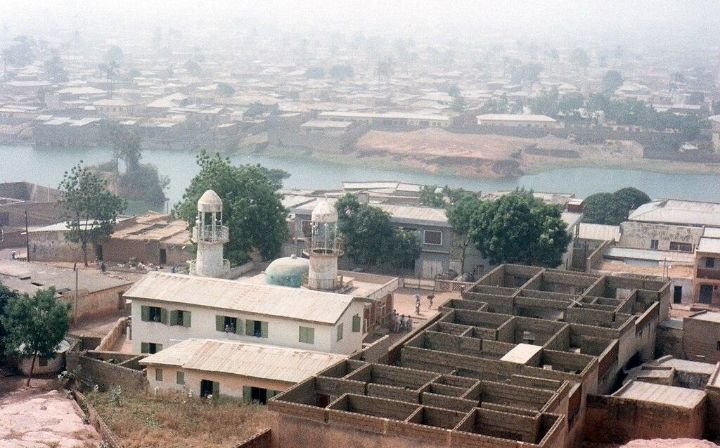
Kano, 1982. Nigeria was still struggling to recover from the devastating Maitatsine uprising that had torn through Kano less than two years earlier when another wave of religious tension erupted in the ancient city.
This time, the immediate flashpoint was not a bomb attack or an armed invasion. It was a dispute surrounding a church in Fagge, and what followed became one of the disturbing episodes in Nigeria’s early post-independence history of religious conflict.
The events of October 1982 demonstrated how quickly religious disagreements, political tensions and public suspicion could transform into violence.
A City Already Living With Tension
Kano had long been one of West Africa’s most important centres of Islamic scholarship, commerce and culture. By the early 1980s, however, the city was experiencing significant social and political pressure.
The December 1980 Maitatsine uprising had left thousands dead according to official figures, with some historical sources putting the death toll at approximately 4,000 or more. The violence had involved followers of the radical preacher Mohammed Marwa, popularly known as Maitatsine, fighting security forces and other residents.
The uprising profoundly affected Kano. It demonstrated the destructive potential of religious extremism and left authorities deeply concerned about further unrest.
Yet the tensions did not disappear after Maitatsine’s defeat.
Instead, religious suspicion continued to grow.
The Church at Fagge
One of the major points of controversy in 1982 was St. George’s Anglican Church in Fagge, an area of Kano with a long history of religious and commercial interaction.
According to historical accounts, Muslim protesters objected to the church’s location close to the Fagge Central Mosque.
The controversy was particularly striking because the church had reportedly existed since the 1930s, while the mosque was constructed decades later, around the late 1960s or early 1970s.
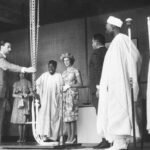
The dispute intensified after the Archbishop of Canterbury, Robert Runcie, visited Kano in April 1982 and participated in the foundation-laying ceremony for a new church building.
To Christian communities, the development was part of the normal expansion of their religious activities.
To some Muslim groups, however, the growing visibility of Christian missionary activity in Kano was viewed with suspicion.
The disagreement soon moved beyond the question of one building.
October 30, 1982
On October 30, 1982, members of the Muslim Students’ Society reportedly went on a rampage and attempted to burn St. George’s Anglican Church.
The police intervened and succeeded in protecting the church itself, but the violence did not end there.
Anger spread to other Christian properties and places of worship around the city. Several churches were attacked, while homes and other properties were also damaged. Historical accounts describe significant destruction and residents fleeing areas affected by the violence.
The incident shocked Kano because it occurred in a city still dealing with the trauma of the 1980 Maitatsine uprising.
For many residents, it was another reminder that religious tension could quickly turn into deadly communal violence.
More Than a Dispute Over a Building
Although the church controversy became the immediate trigger, historians have placed the 1982 violence within a much wider environment of religious and political tension.
The early 1980s were a turbulent period in Northern Nigeria.
Religious movements were becoming increasingly influential, while Christian missionary activity and the presence of Christian communities in predominantly Muslim areas sometimes became sources of controversy.
The government was also struggling to manage competing religious interests while maintaining public order.
This broader environment meant that relatively local disputes could acquire much greater significance.
A disagreement over the location of a church could therefore become a symbol of a much larger struggle over identity, religious influence and the future character of Northern Nigerian society.
The Shadow of Maitatsine
The Kano violence of 1982 cannot be completely separated from the Maitatsine crisis.
The Maitatsine movement had emerged as a radical Islamic movement under Mohammed Marwa. Its followers rejected aspects of contemporary Nigerian society and developed a confrontational relationship with authorities.
The December 1980 Kano uprising became one of the most devastating religious conflicts in Nigeria’s history. Academic research notes that subsequent Maitatsine-related confrontations occurred in other northern cities, including Maiduguri and Kaduna in 1982, followed by violence in Jimeta-Yola in 1984 and Gombe in 1985.
The movement’s influence therefore extended beyond the death of its founder.
In 1982, authorities were again confronted with the challenge of containing radical religious movements and preventing local disputes from developing into larger uprisings.
In fact, the Maitatsine crisis resurfaced dramatically around Maiduguri in October 1982. Historical accounts describe police attempts to arrest followers of the movement, followed by armed resistance and major fighting.
These events occurred at roughly the same time as the violence in Kano, contributing to an atmosphere of insecurity across parts of Northern Nigeria.
A Warning the Country Could Not Ignore
The Kano violence exposed a difficult reality.
Nigeria’s religious diversity was not simply a matter of different faiths living side by side. In certain circumstances, religious identity could become connected to politics, ethnicity, access to public space and fears about cultural change.
Once those fears were mobilised, violence could spread rapidly.
The 1982 Kano crisis also demonstrated the importance of responsible government intervention. Religious disputes that were allowed to escalate could quickly move beyond the original issue and affect entire communities.
The destruction of churches and other property did not resolve the disagreement. Instead, it deepened mistrust between communities.
The Legacy of Kano’s 1982 Violence
The events of 1982 became part of a longer history of religious conflict in Northern Nigeria.
Kano would experience further episodes of communal and religious violence in later decades. The city would eventually become associated with some of the most devastating terrorist attacks in modern Nigerian history.
But it is important not to treat every later incident as a direct continuation of the 1982 crisis.
The causes and organisations involved were different, and Nigeria’s security environment changed dramatically over time.
What connects these episodes is the recurring danger posed when religious divisions become heavily politicised and when local grievances are allowed to escalate into communal confrontation.
The Historabase Editorial Team is dedicated to exploring and sharing the stories that have shaped Africa and the wider world. Our work covers African history, ancient civilizations, empires, historical figures, wars, cultures, political movements, and important events from the past.
We aim to present history in a clear, engaging, and accessible way, combining historical records with careful research to help readers better understand the people, events, and civilizations that shaped our world.




One Comment