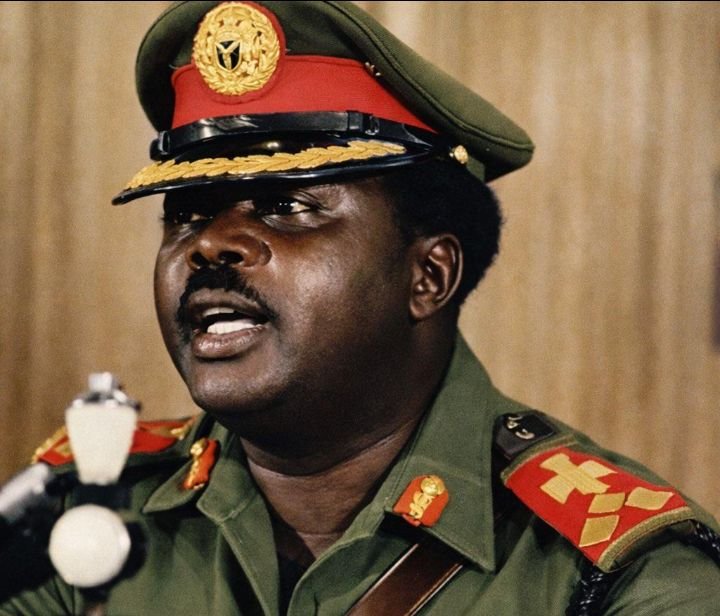
On the morning of February 13, 1976, Nigeria was plunged into one of the darkest moments in its political history. General Murtala Ramat Mohammed, the country’s Head of State, was travelling to his office in Lagos when his official Mercedes-Benz was ambushed by armed soldiers.
Within minutes, Nigeria’s leader was dead.
The attack was part of an attempted military coup led by Lieutenant Colonel Bukar Suka Dimka. Although the coup itself failed within hours, the assassination permanently changed the course of Nigeria’s political history.
Murtala had been in power for only about seven months.
His government had already begun introducing major political and administrative reforms, including plans for the creation of new states, a new constitution and a return to civilian rule.
His sudden death therefore created a political shock that extended far beyond the assassination itself.
Who Was Murtala Mohammed?
Murtala Mohammed was born on November 8, 1938, in Kano. He joined the Nigerian Army and received military training in Britain before rising through the ranks. He later served in the Congo and played an important role during the Nigerian Civil War.
On July 29, 1975, Murtala became Head of State after a military coup removed General Yakubu Gowon from power.
His leadership style was markedly different from that of the previous government. He introduced a series of reforms designed to reorganize the Nigerian state and military establishment.
Among his government’s major plans were the creation of additional states, constitutional reforms and preparations for Nigeria’s eventual return to civilian government in 1979. His administration also began the process that eventually resulted in Abuja replacing Lagos as Nigeria’s federal capital.
Murtala’s government also adopted an assertive foreign policy, particularly on African liberation struggles.
The Nigerian military was enormous after the Civil War. Murtala’s administration believed that the armed forces needed to be reorganized and reduced.
The planned demobilization of thousands of soldiers created resentment among some military personnel. There were also disagreements over promotions, retirements and the direction of the government.
According to an account of the coup investigation, two separate groups of conspirators eventually emerged.
One group consisted largely of middle-ranking officers associated with Dimka. Another involved senior officers linked to Major General I.D. Bisalla, then Minister of Defence. The groups eventually became connected through the wider conspiracy.
The conspirators also accused Murtala’s government of moving Nigeria towards communism, while other grievances concerned military demobilization and promotions.
The coup plotters eventually selected February 13, 1976 as the day to strike.
Their objective was not simply to assassinate Murtala. They intended to overthrow the government.
The Morning of the Assassination
Murtala followed a relatively predictable routine.
On the morning of February 13, he left his residence in Lagos and travelled towards Dodan Barracks, the military headquarters and seat of government.
His official car entered the busy Lagos traffic around Ikoyi.
The route would soon become the scene of one of the most famous political assassinations in Nigerian history.
According to historical accounts, soldiers involved in Dimka’s coup emerged and attacked the vehicle. Murtala’s car was caught in traffic, leaving him highly vulnerable.
The attackers opened fire.
Murtala Mohammed was killed.
His aide-de-camp, Lieutenant Akintunde Akinsehinwa, was also killed in the attack.
The assassination happened only a short distance from the government’s military headquarters.
The Head of State had been killed in his own capital, during his journey to work.
Dimka Announces a Coup
After the assassination, Lieutenant Colonel Bukar Suka Dimka moved to the Nigerian Broadcasting Corporation.
The plotters intended to use radio broadcasting to convince the country that the government had been overthrown.
Dimka eventually went on air and announced that a group of what he described as “young revolutionaries” had taken control of Nigeria. The broadcast was an attempt to establish the impression that the coup had succeeded.
But the announcement did not produce the response Dimka expected.
Across the country, senior military commanders refused to support the coup.
The government’s remaining leadership began organizing resistance.
The attempted takeover was beginning to collapse.
The Coup Falls Apart
Murtala’s assassination was successful, but the wider coup was not.
Loyal military units moved against the rebels and gradually regained control of key installations.
The radio station, which was crucial to the plotters’ strategy, was eventually retaken by government forces. Historical accounts describe the coup as being crushed within hours.
Dimka escaped Lagos and went into hiding.
The country, however, was left without its Head of State.
The responsibility of keeping the government functioning now fell to the surviving members of the military leadership.
Obasanjo Takes Over
Following Murtala’s assassination, Lieutenant General Olusegun Obasanjo became Head of State.
The transition was announced on February 13, the same day Murtala was killed. The Nigerian State House records Murtala’s tenure as ending on February 13, 1976, with Obasanjo succeeding him from that date.
Obasanjo did not abandon Murtala’s political programme.
Instead, his administration continued many of the reforms initiated by Murtala and maintained the plan to return Nigeria to civilian government.
This meant that although the assassination removed Murtala personally, it did not completely destroy the political programme he had started.
The Hunt for the Plotters
After the failed coup, authorities launched a massive investigation.
Hundreds of people were arrested in connection with the conspiracy. A subsequent government statement reported that 219 military personnel and civilians were arrested, while numerous suspects were investigated and prosecuted.
The investigation also produced controversial allegations about possible connections between some plotters and former Head of State General Yakubu Gowon, who was living outside Nigeria at the time.
The Nigerian government later declared Gowon wanted, although he denied involvement in the coup. The question of how much senior figures knew about the conspiracy became one of the enduring controversies surrounding the episode.
The investigation ultimately resulted in numerous convictions.
The Execution of Dimka
Dimka was eventually captured and brought before a military tribunal.
He was convicted for his role in the coup and assassination.
On May 15, 1976, Lieutenant Colonel Bukar Suka Dimka and six other convicted coup plotters were executed by firing squad. Former Benue-Plateau State governor Joseph Gomwalk was among those executed. Several others received life imprisonment or lesser sentences.
The executions marked the brutal end of the conspiracy that had begun with the assassination of Murtala Mohammed.
But questions surrounding the coup did not disappear.
Why Was Murtala’s Death So Significant?
Murtala Mohammed had ruled Nigeria for only about seven months, yet his short administration left a significant mark on the country.
His government created new states, reorganized government institutions and pursued plans for a return to civilian rule. It also initiated the process that eventually led to Abuja becoming the federal capital.
His assassination therefore came at a crucial moment in Nigeria’s political development.
It also demonstrated how vulnerable Nigeria’s government remained to military conspiracies less than a decade after the Civil War.
Perhaps most importantly, Murtala’s assassination became a defining event in Nigeria’s long history of military coups and political violence.
The government responded by strengthening internal security. Nigeria’s Department of State Services notes that the 1976 coup attempt and Murtala’s assassination led to the establishment of the Nigerian Security Organization (NSO) under Decree No. 16 of 1976.
A Leader Remembered
Murtala Mohammed’s political career ended violently, but his influence survived his death.
His portrait eventually appeared on Nigeria’s ₦20 note, and the federal government has continued to recognize him as one of the country’s most significant military-era leaders.
His assassination remains particularly striking because of its circumstances.
Nigeria’s Head of State was not killed inside the presidential residence or during a major military battle. He was killed while travelling through ordinary Lagos traffic on his way to work.
The attackers succeeded in their most important objective: they killed the country’s leader.
But they failed in the larger mission.
The government did not fall.
The coup collapsed.
And Nigeria continued along the political path Murtala Mohammed had begun before his death.
More than five decades later, the events of February 13, 1976 remain one of the darkest chapters in Nigerian history, a story of military rivalry, political ambition, betrayal and an assassination that changed the country’s leadership in a matter of hours.
The Historabase Editorial Team is dedicated to exploring and sharing the stories that have shaped Africa and the wider world. Our work covers African history, ancient civilizations, empires, historical figures, wars, cultures, political movements, and important events from the past.
We aim to present history in a clear, engaging, and accessible way, combining historical records with careful research to help readers better understand the people, events, and civilizations that shaped our world.



One Comment