In the history of religious and communal violence in Nigeria, few cases remain as disturbing as the killing of Gideon Akaluka, an Igbo Christian trader who was murdered in Kano in the mid-1990s after being accused of desecrating the Qur’an.
The Allegation Against Akaluka
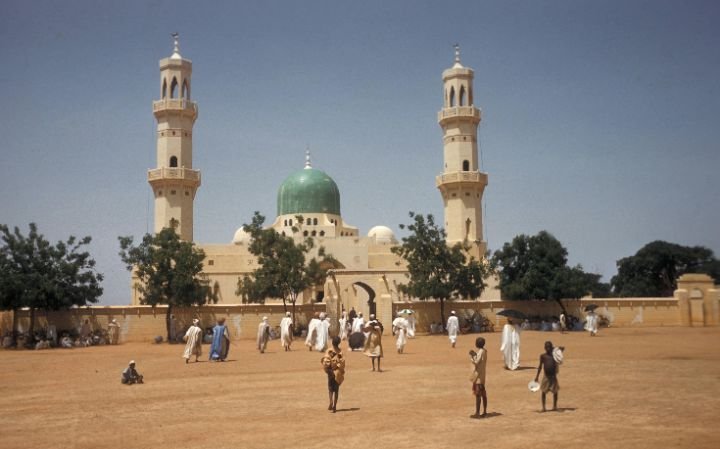
Gideon Akaluka was an Igbo trader living in Kano, a major commercial centre in northern Nigeria where large communities from different ethnic and religious backgrounds lived alongside one another.
The allegation that ultimately led to his arrest involved the alleged desecration of the Qur’an. However, the precise circumstances remain unclear.
One commonly repeated version says that a woman connected to Akaluka’s household allegedly used a piece of paper believed to contain Qur’anic writing while cleaning a baby. News of the incident reportedly spread and Akaluka became associated with the alleged desecration.
Other accounts give different explanations. A scholarly study of the history of Shi’a Islam in Kano notes that some people questioned whether the paper involved was actually a page of the Qur’an. It also reports that Akaluka’s lawyer obtained affidavits challenging aspects of the accusation and the identification of the woman involved.
This uncertainty is important. The accusation became widely repeated over the years, but the available historical record does not establish a single uncontested version of exactly how the alleged desecration occurred.
Akaluka Was Taken Into Custody
Following the accusation, Akaluka was detained by the authorities.
Accounts differ on some details of his detention and the location involved, but historical sources consistently describe him as being in police custody when the attackers reached him.
According to the Irish Times, police officers had detained Akaluka ostensibly for his protection. The report says that a mob subsequently broke into the jail and attacked him.
A person accused of a religious offence had been placed in the custody of the state. Instead of remaining under legal protection while the allegation was investigated, he became vulnerable to an armed group that was able to reach him inside detention.
The Prison Break
The incident escalated when a group of religious extremists reportedly stormed the facility where Akaluka was being held.
Historical accounts describe the attackers overpowering or bypassing prison personnel before taking Akaluka from custody. He was then killed and beheaded.
A 1996 Canadian government refugee documentation report examined the case and referred to contemporary media reports concerning Akaluka’s killing and the wider religious violence in Kano.
The killing was not simply an attack carried out somewhere on the streets. The fact that the attackers were able to enter a place of detention and reach a prisoner became one of the most disturbing aspects of the case.
The Parade Through Kano
The brutality did not end with Akaluka’s death.
Several historical accounts report that his severed head was displayed or carried through parts of Kano.
The Irish Times reported that the attackers marched around Kano carrying Akaluka’s severed head on a pole.
Other historical accounts similarly describe his head being displayed publicly. The incident therefore became more than an individual murder. The public nature of the act made it a powerful symbol of the breakdown of law and order surrounding religious tensions at the time.
Akaluka’s killing shocked many Nigerians, particularly members of the Igbo and Christian communities who feared that religious accusations could result in violence against members of minority communities in northern cities.
Why the Case Became So Controversial
The case raised several questions about the rule of law.
First was the question of how a prisoner could be removed from official custody and killed by a mob.
Second was the question of whether the original accusation against Akaluka had ever been properly established.
And third was the question of accountability.
Contemporary and later accounts have differed over what happened to people alleged to have been involved in the killing. Some sources have reported arrests following the incident, while other accounts have maintained that those responsible were never successfully prosecuted.
The Canadian government documentation from the 1990s specifically noted that information available to its researchers was limited and referred readers to contemporary media reports.
That limitation is important because many stories about Akaluka’s death have been repeated over decades, sometimes with additional details that are difficult to independently verify.
Kano’s Religious Tensions
Akaluka’s killing occurred against the background of longstanding religious and ethnic tensions in Kano.
The city had previously experienced serious clashes involving Muslim and Christian communities. Tensions between Hausa and Igbo communities had also contributed to periods of instability.
A historical study of Kano’s religious conflicts identifies Akaluka’s killing as an important event preceding the violence that erupted in the city in 1995.
Another academic account argues that the failure to adequately resolve the circumstances surrounding Akaluka’s death contributed to the atmosphere of anger and mistrust that later exploded into wider conflict.
This does not mean that Akaluka’s death alone caused subsequent violence. Kano’s conflicts had multiple political, ethnic, economic and religious causes. But his killing became one of the events remembered as a particularly powerful symbol of the period.
The Historabase Editorial Team is dedicated to exploring and sharing the stories that have shaped Africa and the wider world. Our work covers African history, ancient civilizations, empires, historical figures, wars, cultures, political movements, and important events from the past.
We aim to present history in a clear, engaging, and accessible way, combining historical records with careful research to help readers better understand the people, events, and civilizations that shaped our world.