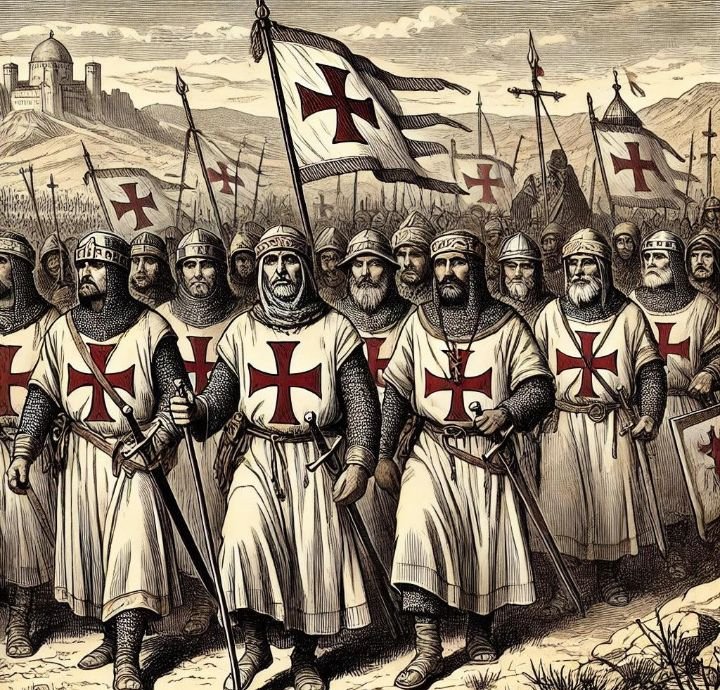
The Crusades were a series of religiously motivated military campaigns that shaped the history of Europe, the Middle East and the Mediterranean for centuries. They are often remembered simply as wars between Christians and Muslims, but the reality was far more complicated.
Beginning in the late 11th century, crusading movements brought together kings, knights, nobles, merchants and ordinary people from across Europe. Their goals varied from campaign to campaign, and religion was only one part of the story.
Some crusades were fought to capture Jerusalem and other Christian holy sites. Others targeted political enemies, rival Christian groups or territories in Europe. The campaigns produced battles, massacres, shifting alliances and cultural exchanges that left a lasting impact on both Christian and Muslim societies.
So, what really happened during the Crusades?
How Did the Crusades Begin?
The story of the Crusades is usually traced to 1095, when Pope Urban II called for a military expedition to help Eastern Christians and recover Jerusalem and other holy places from Muslim rule.
At the time, the Byzantine Empire was facing pressure from the Seljuk Turks, who had taken large areas of territory in Anatolia.
Emperor Alexios I Komnenos appealed to Western European Christians for military assistance.
Pope Urban II responded at the Council of Clermont in France. He encouraged Western Christians to take up arms and travel east.
The response was enormous.
Thousands of people, including knights, nobles and ordinary peasants, began preparing for the journey.
The idea of fighting for a religious cause was powerful in medieval Europe. Participants were promised spiritual benefits, including remission of sins associated with their pilgrimage and military service.
The First Crusade had begun.
The First Crusade and the Capture of Jerusalem
The First Crusade, which began in 1096, was the most successful of the major Crusades.
Several armies travelled from Western Europe toward the eastern Mediterranean. They faced difficult journeys, hunger, disease and resistance from Muslim forces.
Along the way, crusader armies captured important cities, including Antioch.
In 1099, the Crusaders reached Jerusalem.
After a siege, they captured the city in July 1099.
The conquest was followed by a massacre of many inhabitants, including Muslims and Jews. Medieval sources describe extensive bloodshed, although the precise scale of the deaths remains debated by historians.
The Crusaders established several territories in the eastern Mediterranean, including the Kingdom of Jerusalem.
For the first time, Western European Christian rulers controlled Jerusalem and significant areas of the Levant.
The Crusader States
The First Crusade did not end the conflict.
The Crusaders established a collection of territories known as the Crusader States.
These included the Kingdom of Jerusalem, the County of Tripoli, the Principality of Antioch and the County of Edessa.
The states were surrounded by powerful Muslim rulers and depended heavily on reinforcements and supplies from Europe.
Their survival therefore became a major concern for Western Christian leaders.
When Muslim forces began recovering territory, European rulers launched additional crusades.
The Second Crusade
The Second Crusade began after the fall of the County of Edessa to Muslim forces in 1144.
European leaders responded by organizing another major expedition.
The crusade was led by powerful rulers, including King Louis VII of France and Emperor Conrad III of Germany.
However, the campaign failed to achieve its main objectives.
The Crusaders eventually attacked Damascus in 1148, but the siege collapsed after only a short period.
The failure weakened confidence in the crusading movement.
Meanwhile, a new Muslim leader was emerging who would dramatically change the balance of power.
Saladin and the Fall of Jerusalem
One of the most famous figures associated with the Crusades was Saladin, the Muslim ruler who united Egypt and Syria and built a powerful state.
Saladin presented himself as a defender of Muslim lands against the Crusader states.
In 1187, his forces defeated a large Crusader army at the Battle of Hattin.
The defeat destroyed much of the military strength of the Kingdom of Jerusalem.
Saladin subsequently captured Jerusalem.
Unlike the massacre that followed the Crusader conquest of 1099, Saladin generally allowed many of the city’s Christian inhabitants to leave after paying ransoms or through negotiated arrangements.
The loss of Jerusalem shocked Europe and led to another major campaign.
The Third Crusade
The Third Crusade, launched in 1189, became one of the most famous Crusades.
It included three powerful European rulers:
Richard I of England, known as Richard the Lionheart
Philip II of France
Frederick I Barbarossa, Holy Roman Emperor
Frederick died during the journey, while Philip eventually returned to France.
Richard continued the campaign and won several important battles against Saladin.
Despite his military successes, Richard failed to retake Jerusalem.
Instead, Richard and Saladin eventually reached an agreement in 1192.
Jerusalem remained under Muslim control, but Christian pilgrims were allowed access to the city and other holy sites.
The Third Crusade demonstrated that the Crusades were not always simple struggles between two completely united sides. Political interests often mattered as much as religion.
The Fourth Crusade: Christians Attack Christians
One of the most surprising episodes in Crusading history was the Fourth Crusade.
The expedition began in 1202 with the intention of reaching the Holy Land.
Instead, political and financial problems redirected the Crusaders.
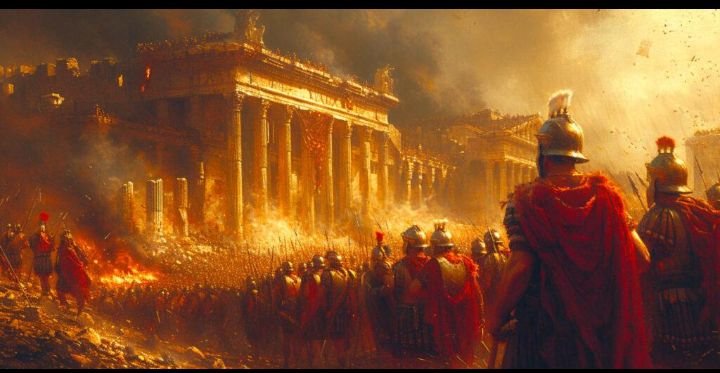
In 1204, they attacked and captured Constantinople, the capital of the Byzantine Empire.
Constantinople was a Christian city.
The Crusaders looted the city and established the Latin Empire.
The attack caused enormous damage and deepened the division between Western Catholic Christianity and Eastern Orthodox Christianity.
The Fourth Crusade demonstrated how political ambitions, financial interests and rivalries could completely change the direction of a crusade.
Crusades Beyond the Holy Land
The Crusades were not limited to the Middle East.
Military campaigns described as crusades were also launched against Muslims in Spain, pagan peoples in northeastern Europe and Christian political opponents in Europe.
The Albigensian Crusade in southern France, for example, targeted the Cathar religious movement and lasted from 1209 to 1229.
There were also campaigns in the Baltic region against non-Christian peoples.
This shows why it is misleading to think of the Crusades as one single war.
They were part of a much broader medieval religious and political movement.
The Children’s Crusade
One of the most famous stories associated with the Crusades is the Children’s Crusade of 1212.
According to later accounts, large groups of children and young people attempted to travel toward the Holy Land.
However, historians have found that the traditional story has been heavily exaggerated.
There was no single organized army of children marching to Jerusalem as popular legends sometimes suggest.
Instead, the movement appears to have involved groups of poor people, young participants and religious pilgrims who became caught up in a wider wave of popular enthusiasm.
The story illustrates how powerful crusading ideas had become in medieval Europe.
The Later Crusades
Several more crusades were launched during the 13th century.
The Fifth Crusade targeted Egypt because European leaders believed controlling Egypt could provide leverage over Jerusalem.
The campaign initially captured the important port city of Damietta but eventually failed.
The Sixth Crusade, led by Emperor Frederick II, was unusual because Frederick relied heavily on diplomacy rather than large-scale warfare. Through negotiation, he temporarily regained Jerusalem and other territories for the Crusaders.
The Seventh and Eighth Crusades, associated with French King Louis IX, also failed to achieve lasting territorial gains.
By the late 13th century, the Crusader states were collapsing.
In 1291, Muslim forces captured Acre, the last major Crusader stronghold in the Holy Land.
This effectively ended the era of large-scale Crusader states in the eastern Mediterranean.
Why Did People Join the Crusades?
Religion was a major motivation, but it was not the only one.
Some participants sincerely believed they were defending Christianity and wanted to visit or recover sacred places.
Others hoped to gain land, wealth, political influence or social status.
For knights and nobles, crusading could provide opportunities for military glory.
For younger sons who would not inherit family estates, overseas adventures could also offer opportunities unavailable at home.
There were also economic interests.
Italian maritime powers such as Venice and Genoa became heavily involved in Mediterranean trade and sometimes supported crusading campaigns when they benefited commercially.
The motivations of individual participants therefore varied enormously.
Were the Crusades Just Religious Wars?
Not entirely.
Religion provided the central ideological framework, but medieval politics played an enormous role.
European rulers competed with one another for territory and influence. Muslim rulers also had competing interests and did not always cooperate against the Crusaders.
In fact, Muslim states sometimes formed temporary alliances with Christian powers against other Muslim or Christian enemies.
The Crusades were therefore characterized by shifting alliances.
Religion could unite people, but political survival and economic interests frequently determined what rulers actually did.
The Impact on Europe and the Middle East
The Crusades had lasting consequences.
In Europe, they strengthened some monarchies and increased contact between Western Europe and the eastern Mediterranean.
Trade expanded, particularly in Mediterranean ports.
Europeans encountered new goods, technologies and intellectual traditions, although the popular idea that the Crusades simply “brought civilization” to Europe is an oversimplification.
The Byzantine Empire suffered greatly, especially after the Fourth Crusade.
In the Middle East, the Crusader states became part of a long period of warfare and political competition.
The memory of the Crusades also remained important in Muslim societies long after the Crusader states disappeared.
The Legacy of the Crusades
The Crusades left behind a complicated legacy.
They produced religious devotion, military violence, political change, trade and cultural contact at the same time.
They also left memories of massacres and destruction that continued to influence relations between Christian and Muslim societies.
Modern interpretations sometimes portray the Crusades as a simple clash between Christianity and Islam. Medieval reality was far more complex.
Christians fought Christians. Muslims fought Muslims. Alliances crossed religious boundaries. Political ambitions frequently competed with religious goals.
Conclusion
The Crusades were not a single war but a centuries-long series of military campaigns shaped by religion, politics, economics and personal ambition.
They began with the call to defend Eastern Christianity and recover Jerusalem, but their objectives changed repeatedly.
The First Crusade succeeded in capturing Jerusalem, while later campaigns struggled to maintain the Crusader states. Saladin’s victory at Hattin and recovery of Jerusalem became major turning points, while the Fourth Crusade’s destruction of Constantinople revealed how far political interests could divert a supposedly religious campaign.
By 1291, the Crusader states in the Holy Land had largely disappeared, but the consequences of the Crusades continued for centuries.
The Historabase Editorial Team is dedicated to exploring and sharing the stories that have shaped Africa and the wider world. Our work covers African history, ancient civilizations, empires, historical figures, wars, cultures, political movements, and important events from the past.
We aim to present history in a clear, engaging, and accessible way, combining historical records with careful research to help readers better understand the people, events, and civilizations that shaped our world.