In the spring of 1803, a group of enslaved Africans made a desperate choice on the coast of Georgia.
They had been violently removed from West Africa, carried across the Atlantic and sold into slavery in Savannah. Their destination was the plantations of St. Simons Island. But before they could be forced into plantation life, the captives rebelled.
They took control of the vessel carrying them, overpowered their captors and reached a creek on St. Simons Island.
There, according to historical records and generations of oral tradition, many of them walked into the water rather than return to slavery.
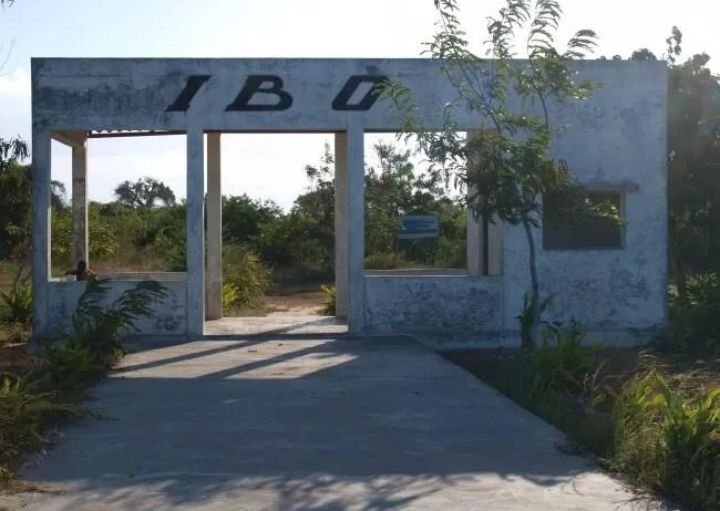
The place became known as Igbo Landing, or Ebo Landing.
For more than two centuries, the story has survived as one of the most powerful accounts of resistance to slavery in the African diaspora. It is also the foundation of the famous African-American tradition of the “Flying Africans”—enslaved people who were said to have gained the power to fly back to Africa rather than live in bondage.
Who Were the Igbo?
The people at the center of the story were Igbo, an ethnic group from what is now southeastern Nigeria.
In the late eighteenth and early nineteenth centuries, large numbers of Africans were being forcibly transported across the Atlantic through the transatlantic slave trade.
The captives who eventually became associated with Igbo Landing had survived the horrific Middle Passage before arriving in Savannah, Georgia.
Historical accounts indicate that approximately 75 Igbo captives were purchased in Savannah by agents connected to plantation owners John Couper and Thomas Spalding. They were then placed aboard a small vessel and transported toward plantations on St. Simons Island.
They were not travelling voluntarily.
They were human beings being transported as property.
The Rebellion Begins
During the voyage down the Georgia coast, the captives rebelled.
According to historical accounts, the Igbo overpowered their captors. The white men responsible for transporting them were thrown or jumped overboard and drowned.
The enslaved Africans then gained control of the vessel.
They sailed into Dunbar Creek, a narrow waterway on St. Simons Island.
For a brief moment, they had achieved something extraordinary: they had escaped the immediate control of their captors.
But freedom presented another terrifying problem.
They were surrounded by an unfamiliar land where they faced the possibility of being captured and enslaved again.
The Choice at Dunbar Creek
What happened next has been preserved through both historical records and African-American oral tradition.
According to the account of Roswell King, a white overseer on a nearby plantation, the Igbo reached the shore and then “took to the swamp.” The implication was that they deliberately drowned themselves rather than submit to slavery.
The National Park Service similarly records the longstanding account that the captives entered the waters of Dunbar Creek and died rather than return to bondage.
The surviving historical evidence does not allow historians to establish every detail of what happened that day.
But the central event that an Igbo group rebelled and that a number of them drowned at Dunbar Creek, has strong historical foundations.
Why Would They Choose Death?
To understand the story, it is important to understand the world in which these people found themselves.
They had already been forcibly removed from their homeland, transported thousands of miles across the Atlantic and sold as property.
Returning to Africa by sea was practically impossible.
Remaining on St. Simons Island meant the possibility of being recaptured and forced into slavery.
Their decision, as preserved in historical memory, therefore became a powerful expression of resistance.
They could not control the system that had enslaved them.
But, in the traditional interpretation of the story, they believed they could control what happened to their own bodies.
Their decision has consequently been remembered not simply as an act of despair, but as an ultimate rejection of slavery.
The Story of the Flying Africans
Over time, the historical event became intertwined with one of the most enduring legends in African-American folklore: the Flying Africans.
According to the tradition, the enslaved Africans at Igbo Landing possessed supernatural powers.
Rather than submit to slavery, they rose into the sky and flew back to Africa.
Other versions say that they transformed into birds or otherwise escaped through supernatural means.
The details varied from community to community.
The New Georgia Encyclopedia explains that the Flying Africans story developed from the historical rebellion and became a powerful metaphor for courage, freedom and the desire to return to Africa.
This distinction between history and legend is important.
There is historical evidence for the rebellion and deaths at Dunbar Creek.
The supernatural story of people physically flying away belongs to the realm of oral tradition and folklore.
But that does not make the legend insignificant.
For generations of African Americans living under slavery and later racial oppression, the idea that enslaved people could simply fly away represented a profound form of freedom.
A Story Passed From Generation to Generation
The story survived largely through oral tradition.
Enslaved and formerly enslaved communities along the Georgia and South Carolina coast passed the account from one generation to another.
By the twentieth century, different versions of the story were being recorded by researchers.
In the late 1930s, the Federal Writers’ Project collected oral histories from African-American communities in the Georgia Sea Islands. One elderly man, Wallace Quarterman, recalled a version in which the enslaved people transformed into birds and flew back to Africa.
These accounts demonstrate how historical events can evolve through oral storytelling.
The basic event remained recognizable, but supernatural elements became part of the cultural memory.
The story was no longer simply about a group of enslaved people who drowned.
It had become a story about Africans who could not be permanently separated from their homeland.
The White Account and the Black Memory
One of the most interesting aspects of Igbo Landing is the contrast between the surviving written account and the later oral tradition.
Roswell King’s account viewed the event primarily from the perspective of plantation owners who had lost enslaved people considered valuable property.
The African-American tradition remembered something very different.
It emphasized resistance.
This difference reveals how historical events can be remembered differently by people on opposite sides of an oppressive system.
For plantation owners, the event represented the loss of enslaved labor.
For generations of African Americans, it became a story of people who refused to accept the condition imposed upon them.
The Meaning of Igbo Landing
Igbo Landing became much more than a location.
It became a symbol.
The story represented the refusal to accept slavery as an unquestionable condition of life.
It also preserved a cultural connection between African Americans and Africa.
The people in the story had been physically removed from their homeland, but the oral tradition insisted that they could never truly be separated from it.
The idea of “flying home” became especially powerful because slavery had attempted to erase African identities.
Igbo Landing offered the opposite message: Africa remained home.
Its Influence on African-American Culture
The story of the Flying Africans has influenced generations of writers, artists and filmmakers.
Children’s books have retold the story, while authors and filmmakers have incorporated it into larger explorations of African-American identity.
One of the most famous literary uses came from Nobel Prize-winning author Toni Morrison, who drew on the Flying Africans tradition in her novel Song of Solomon.
Filmmaker Julie Dash also incorporated the memory of Igbo Landing into her acclaimed 1991 film Daughters of the Dust.
Through these works, a relatively obscure historical event became part of a much broader cultural conversation about slavery, ancestry, memory and freedom.
Remembering the Dead
Igbo Landing has increasingly received formal recognition.
The site is located on St. Simons Island, Georgia, and became an important place of remembrance for African-American and Igbo communities.
In 2002, an African-American heritage gathering included an Igbo spiritual ceremony intended to honor the people who died there and symbolically reconnect them with Igboland.
A historical marker was eventually established in 2022, helping give the site a more visible place in the public history of Georgia.
The location itself remains privately owned, and public access is restricted.
A Nigerian Connection Across the Atlantic
For Nigerians, the story carries a particularly powerful meaning.
The people remembered at Igbo Landing were not simply anonymous Africans. Historical sources identify them as Igbo people from the region that is now southeastern Nigeria.
Their journey illustrates one of the darkest connections between Nigerian history and the history of the Americas.
They left Africa through violence.
Their descendants and cultural legacy survived an ocean away.
And centuries later, their story continues to connect communities in Nigeria, the United States and across the African diaspora.
Igbo Landing therefore belongs to both African-American history and the broader history of Nigeria.
What Really Happened?
Despite the strength of the tradition, historians must distinguish between established evidence and later legend.
There is evidence that an Igbo group arrived in Georgia in 1803, rebelled against their captors and reached Dunbar Creek.
There is also historical evidence that members of the group drowned themselves rather than submit to enslavement.
However, many details surrounding the event have been passed down through oral tradition and vary between accounts.
The famous story of the captives literally flying back to Africa cannot be treated as a documented historical event.
But its cultural meaning is undeniable.
The Legacy of Igbo Landing
More than two centuries later, Igbo Landing remains one of the most haunting stories associated with the history of slavery.
It is a story of violence, captivity and death—but also of resistance.
The enslaved people who reached Dunbar Creek had been stripped of their freedom, separated from their homeland and treated as property.
Yet their story survived.
Their names may have been lost.
Their individual voices were largely erased from the historical record.
But the community remembered them.
Through oral tradition, folklore, literature and historical research, the story travelled across generations.
The Flying Africans became a symbol of the idea that slavery could imprison the body but could never completely control the human desire for freedom.
Today, Igbo Landing stands as a painful reminder of the millions of Africans who were carried across the Atlantic against their will.
It is also a reminder that enslaved people were never simply passive victims of history.
They resisted.
They rebelled.
They escaped when they could.
And, in the case of the people remembered at Igbo Landing, some chose death rather than return to a life of enslavement.
The Historabase Editorial Team is dedicated to exploring and sharing the stories that have shaped Africa and the wider world. Our work covers African history, ancient civilizations, empires, historical figures, wars, cultures, political movements, and important events from the past.
We aim to present history in a clear, engaging, and accessible way, combining historical records with careful research to help readers better understand the people, events, and civilizations that shaped our world.









One Comment