Long before modern psychology attempted to explain why people dream, ancient civilizations treated dreams as events that could carry religious, political or supernatural significance.
In several ancient cultures, dreams were not simply regarded as private experiences that disappeared after waking. They could be interpreted as signs, warnings or messages. This led to the development of traditions governing how dreams should be understood, who was qualified to interpret them, and how people should respond to dreams considered dangerous or significant.
These practices were especially developed in ancient Egypt and Mesopotamia, while religious laws in the ancient Hebrew tradition also placed restrictions on people who claimed to receive or interpret divine messages through dreams.
Ancient Egypt Had Written Rules for Interpreting Dreams
One of the clearest surviving examples comes from ancient Egypt.
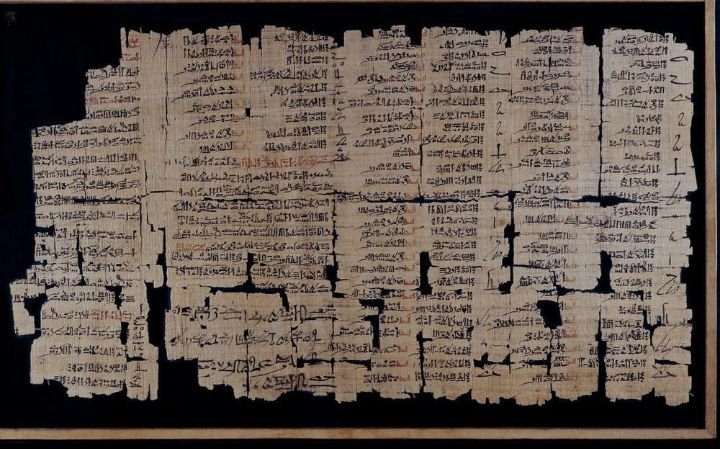
The Chester Beatty III papyrus, dating to approximately 1220 BC, contains a dream book written in hieratic script. The British Museum describes its recto as a manual for interpreting dreams. It was discovered at Deir el-Medina, near ancient Thebes, and dates to Egypt’s 19th Dynasty.
The existence of this manuscript demonstrates that dream interpretation was sufficiently established in ancient Egypt to be recorded in writing.
The Egyptian dream book organized dreams according to what the dreamer experienced and provided interpretations for them. In other words, dreams could be treated as signs with particular meanings rather than as completely random nighttime experiences.
The manuscript is therefore one of the earliest surviving pieces of evidence for a systematic tradition of dream interpretation.
Mesopotamians Treated Dreams as Omens
Dream interpretation was also important in ancient Mesopotamia.
Mesopotamian scholars developed extensive traditions of divination in which events or experiences could be interpreted as signs concerning the future. Dreams formed part of this wider system.
A University of Chicago study of ancient Mesopotamia explains that a dream could function as an omen, with its meaning depending upon correct interpretation by an expert. Dream interpreters used collections of dream omens, and fragments of such a dream book were found in the library of the Assyrian king Ashurbanipal.
The dream omen tradition covered many different experiences. Ancient texts included dreams involving eating and drinking, travelling, receiving objects, losing teeth, quarrelling with family members, flying and journeys to the underworld.
The interpretation was not necessarily obvious from the dream itself. The same study notes that the associations between a particular dream and its predicted outcome can be difficult for modern scholars to understand.
Dream Interpretation Could Be a Specialized Role
Ancient Mesopotamian literature also provides evidence that dream interpretation could involve specialists.
A study published in the Journal of Cuneiform Studies examines dream interpretation in Sumerian and Akkadian literature, including the Epic of Gilgamesh, Dumuzi’s Dream, the Curse of Agade and the Cylinders of Gudea.
The study notes that characters who experienced prophetic dreams sometimes sought out a dream interpreter. In several of these literary traditions, the interpreter was a woman connected to the dreamer, although other figures could also interpret dreams.
This shows that dream interpretation was not necessarily treated as something every person could automatically perform. In some ancient traditions, interpreting dreams was associated with learned knowledge.
Bad Dreams Could Require Ritual Responses
Ancient Mesopotamian traditions also contained rituals intended to deal with threatening dreams.
The University of Chicago’s Ancient Mesopotamia explains that the Mesopotamian dream-omen series included rituals designed to ward off the consequences of bad dreams, particularly dreams believed to predict disaster or other misfortunes.
Other rituals were intended to protect sleeping people against ominous dreams.
This is important because it shows that the ancient system did not stop at interpreting a dream. A dream considered dangerous could lead to a ritual response.
The wider Mesopotamian system of divination similarly included methods for responding to ominous signs. Scholars describe rituals known as Namburbi, which were intended to counteract the effects of unfavorable omens.
Dreams Were Not Automatically Accepted as Divine Truth
An important historical distinction appears in the ancient Hebrew tradition.
Deuteronomy 13 specifically addresses a person described as a prophet or “dreamer of dreams.” The passage presents a situation in which such a person produces a sign or wonder and then uses it to encourage people to follow other gods.
The instruction is that the community should not accept the dreamer’s message simply because the sign or prediction appears to come true. The dream or prophecy was to be judged against the religious law already recognized by the community.
This created a significant religious principle: a dream was not automatically considered legitimate simply because it appeared supernatural or came true.
The passage goes further and prescribes a severe punishment for a dreamer or prophet who attempted to lead people away from the worship commanded by the law.
Thus, within this ancient legal-religious tradition, there was a rule governing the authority that could be given to dreams.
Ancient Greece Also Developed Dream-Interpretation Literature
Dream interpretation continued to develop in the Greek world.
One of the most important surviving works is the Oneirocritica, or Interpretation of Dreams, by Artemidorus of Daldis, who lived in the second century AD.
The Perseus Digital Library identifies Artemidorus as a dream interpreter and records his Oneirocritica as a five-book work devoted to dreams. It is described as the only ancient treatise on dream interpretation that has survived completely.
Artemidorus’ work demonstrates how seriously dream interpretation had developed as a specialized body of knowledge in the ancient Mediterranean world.
Rather than treating every dream as having one universal meaning, the tradition examined the circumstances surrounding the dream and the person who experienced it.
The Ancient “Law” Was Often a Rule of Interpretation
It is important to understand what is meant by spiritual laws about dreams in a historical context.
Ancient societies did not necessarily have one universal legal code saying exactly what every dream meant.
Instead, there were different kinds of rules:
Rules about who could interpret dreams.
Rules about which dreams were considered meaningful.
Rules for interpreting particular dream symbols.
Religious restrictions on accepting certain dream messages.
Rituals intended to counteract threatening dreams.
Traditions concerning dreams believed to contain warnings.
Religious rules determining whether a supposed supernatural message should be obeyed.
These systems differed considerably from one civilization to another.
Dreams Were Part of a Much Larger World of Divination
Dream interpretation also belonged to a much broader ancient practice of divination.
Mesopotamian civilizations interpreted many different signs, including celestial events, physical phenomena and observations made during rituals. The University of Chicago notes that the concept of signs indicating future events was extensively developed in ancient Mesopotamian texts and influenced traditions beyond Mesopotamia.
Dreams therefore occupied one part of a much larger religious system in which people attempted to understand signs believed to connect the human and divine worlds.
Conclusion
For ancient people, dreams could occupy a position far beyond ordinary nighttime experiences.
In ancient Egypt, written dream manuals existed by around 1220 BC. In Mesopotamia, dreams could be treated as omens requiring expert interpretation, and rituals existed to deal with dreams believed to predict misfortune. In the ancient Hebrew tradition, religious law explicitly addressed dreamers and warned against accepting a supernatural message that contradicted established religious commandments. In the Greek world, Artemidorus eventually produced a major surviving treatise devoted entirely to dream interpretation.
The historical evidence therefore shows that ancient societies developed sophisticated traditions surrounding dreams. But these traditions were not identical across cultures. What one civilization regarded as a meaningful omen could have a completely different interpretation elsewhere.
The Historabase Editorial Team is dedicated to exploring and sharing the stories that have shaped Africa and the wider world. Our work covers African history, ancient civilizations, empires, historical figures, wars, cultures, political movements, and important events from the past.
We aim to present history in a clear, engaging, and accessible way, combining historical records with careful research to help readers better understand the people, events, and civilizations that shaped our world.