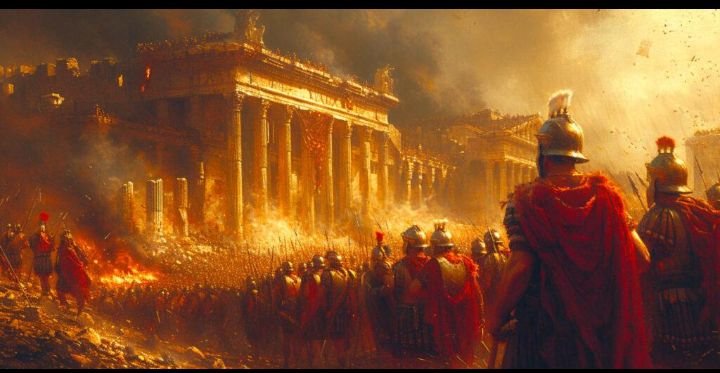
In the early weeks of the First World War, British soldiers found themselves facing a powerful German army in Belgium. What followed was a desperate retreat, exhaustion and heavy fighting around the Belgian town of Mons.
But as the British forces withdrew from the battlefield in August 1914, a strange story began to emerge.
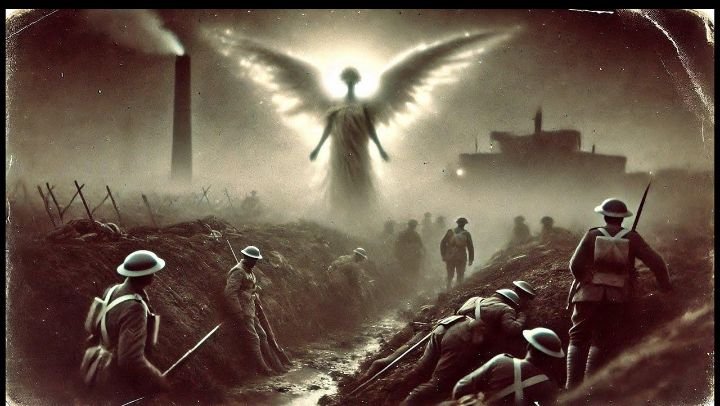
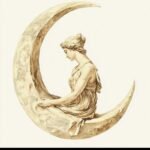
Some people claimed that supernatural figures had appeared in the sky or on the battlefield, seemingly protecting the exhausted British soldiers from the advancing German forces.
The figures became known as the Angels of Mons.
For more than a century, the story has remained one of the most famous supernatural legends associated with the First World War.
The Battle of Mons
The British Expeditionary Force entered the Battle of Mons on 23 August 1914. British troops were heavily outnumbered by the advancing German forces and eventually received orders to retreat.
The retreat became a gruelling experience. Soldiers marched for long periods, often under extreme physical and psychological pressure.
It was during and after this period that stories about supernatural assistance began circulating.
According to later versions of the legend, mysterious figures appeared before or around the retreating British soldiers.
Some accounts described them as winged angels. Other versions identified the figures as Saint George, the patron saint of England, or even ghostly English archers resembling warriors from the medieval Battle of Agincourt.
The supposed apparition was said to have appeared between the British and German forces.
One version of the story claimed that the supernatural figures frightened or confused the German troops, allowing the British soldiers to escape.
However, the historical evidence for such an event is far less certain than the legend suggests.
How the Story Became Famous
The story became widely known in Britain several months after the Battle of Mons.
A major part of the story’s development was connected to Welsh writer Arthur Machen.
On 29 September 1914, Machen published a fictional story called “The Bowmen” in the London newspaper The Evening News.
The story imagined supernatural English archers appearing during a battle and helping British soldiers. Machen intended the story as fiction.
However, the story later became associated with claims that supernatural beings had actually appeared at Mons.
As the war continued, stories circulated about soldiers supposedly witnessing mysterious figures during the retreat.
By 1915, the Angels of Mons had become widely discussed in newspapers and magazines.
The Imperial War Museums notes that there are no first-hand accounts from soldiers directly describing the angels. Instead, many of the stories came through soldiers saying that a friend or another soldier had seen the figures.
This distinction is important because the legend is sometimes presented today as though hundreds of British soldiers personally witnessed angels on the battlefield.
The surviving historical evidence does not establish that.
Some versions described the figures as shining or luminous beings resembling traditional angels.
Other accounts described soldiers seeing Saint George, while another version spoke of ghostly English archers.
The Imperial War Museums describes the legend as involving winged figures, but notes that versions of the story also included Saint George and archers associated with Agincourt.
This changing description suggests that the story developed as it travelled from one person to another.
Rather than one universally recorded vision, there appears to have been a collection of related supernatural stories that eventually became known collectively as the Angels of Mons.
The Role of Exhaustion
There was another factor that may have influenced reports of unusual experiences.
The retreat from Mons was physically devastating.
British soldiers experienced prolonged marching, little sleep, hunger, fear and the constant threat of death.
The Imperial War Museums records the recollections of Private Frank Richards of the Royal Welch Fusiliers, who described soldiers marching for days with almost no sleep. Richards recalled that men began seeing things that were not actually there because they were so exhausted.
This does not prove that every unusual experience reported during the retreat was caused by exhaustion.
However, it provides historical evidence that extreme fatigue and psychological strain were realities facing the soldiers at the time.
Why Did People Believe the Story?
The First World War created an environment in which stories of supernatural intervention could spread rapidly.
Britain had entered the war expecting a relatively short conflict. Instead, the country soon witnessed enormous casualties and increasingly frightening reports from the Western Front.
By 1915, trench warfare had developed, chemical weapons had appeared on the battlefield and German air raids were bringing the war closer to British civilians.
In such circumstances, stories offering hope could have powerful emotional appeal.
The Angels of Mons provided a comforting interpretation of the retreat: perhaps the British soldiers had not survived through luck, strategy and sacrifice alone. Perhaps, the story suggested, they had been protected by something beyond the battlefield.
Was There Really an Angel at Mons?
There is no reliable historical evidence that proves angels physically appeared above the battlefield at Mons.
At the same time, the legend itself is historically significant.
The story became sufficiently influential that representations of the supposed miracle appeared in British memorial culture.
For example, the Imperial War Museums’ War Memorials Register records a stained-glass window commemorating the First Army Corps. The window includes a depiction of the “Miracle of Mons,” showing a soldier looking toward the reported vision during the battle, together with angelic imagery.
This demonstrates how deeply the story became embedded in the memory of the First World War.
The legend was therefore not simply a battlefield rumour. It became part of the cultural memory surrounding the men who fought at Mons.
A Legend Born From War
The Angels of Mons occupy an unusual place between history, folklore and wartime belief.
The Battle of Mons was real. The British retreat was real. The soldiers endured extraordinary physical and psychological hardship.
The supernatural intervention, however, remains unproven.
What can be documented is the rapid development and spread of the story during the war, its connection to Arthur Machen’s fictional The Bowmen, the later reports attributed to soldiers and the lasting impact the legend had on British wartime culture.
The Historabase Editorial Team is dedicated to exploring and sharing the stories that have shaped Africa and the wider world. Our work covers African history, ancient civilizations, empires, historical figures, wars, cultures, political movements, and important events from the past.
We aim to present history in a clear, engaging, and accessible way, combining historical records with careful research to help readers better understand the people, events, and civilizations that shaped our world.