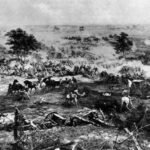
In the spring of 1846, a group of American pioneers left the Midwest in search of a better life in California. They dreamed of fertile land, new opportunities, and a future far from the hardships they had experienced back home. However, their journey would become one of the most horrifying survival stories in American history.
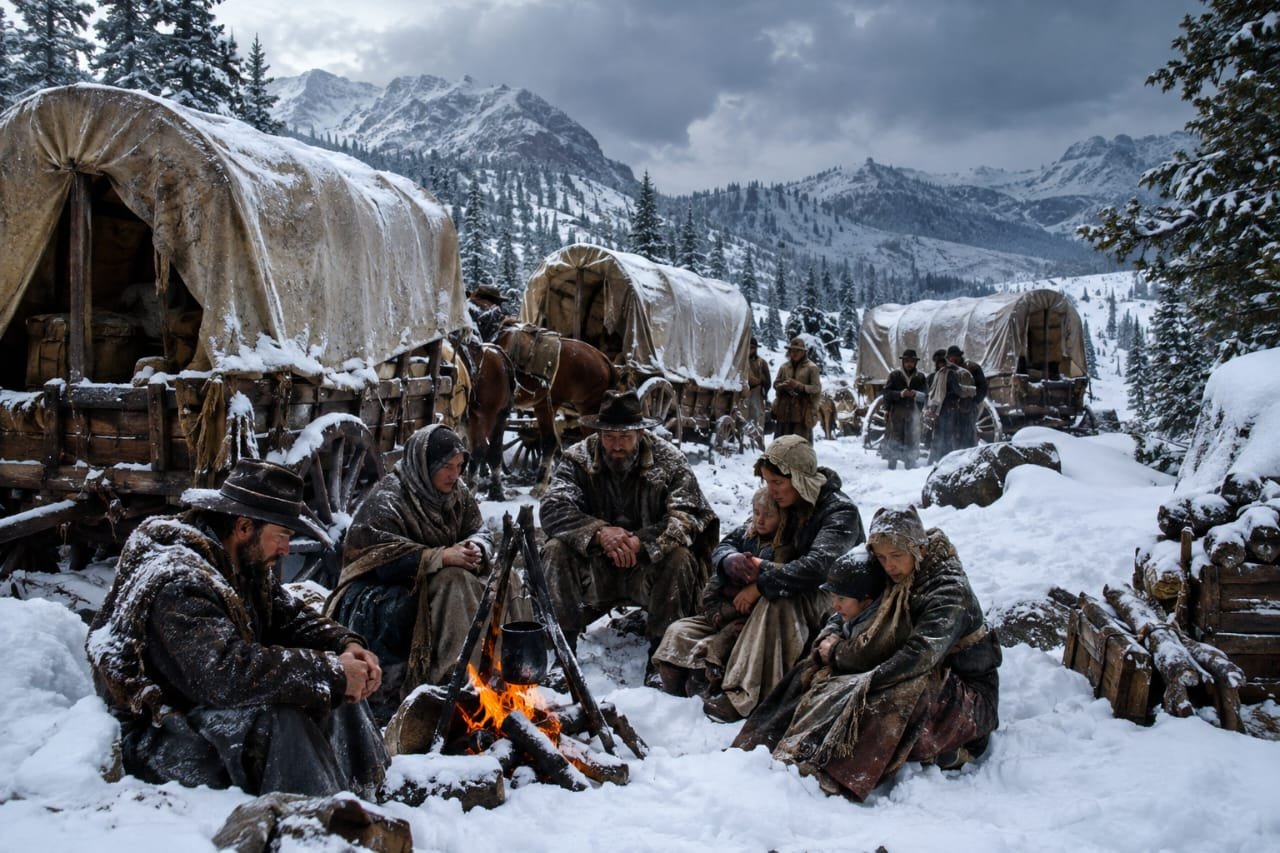
Known as the Donner Party, the group consisted of dozens of men, women, and children who became trapped in the Sierra Nevada mountains during one of the harshest winters of the 19th century. With food supplies exhausted, freezing temperatures closing in, and rescue efforts struggling to reach them, some members resorted to desperate measures to stay alive.
Their ordeal became a chilling example of how a promising journey could turn into a fight for survival. Even today, the Donner Party remains one of the most disturbing and widely discussed episodes in the history of America’s westward expansion.
Who Were the Donner Party?
The Donner Party was a group of American pioneers who travelled westward in 1846, hoping to settle in California. The group was named after brothers George and Jacob Donner, who became its leaders during the journey.
At the time, thousands of Americans were moving west in search of farmland, economic opportunities, and new beginnings. California, which was then part of Mexico, attracted settlers with its fertile valleys and promising future.
The Donner Party included families, single men, women, and children. Many had sold their possessions and left their former homes behind, believing the journey would lead to a better life.
However, travelling across the American frontier was dangerous. There were no modern highways, reliable weather forecasts, or emergency services. Pioneers travelled in covered wagons, carrying food, clothing, tools, and other essential supplies.
Their survival depended on careful planning, favourable weather, and the ability to overcome unexpected obstacles.
Unfortunately, a decision made early in their journey would contribute to their eventual disaster.
The Fatal Decision to Follow the Hastings Cutoff
The Donner Party began its westward journey in the spring of 1846. Like many pioneers travelling to California, the group followed established emigrant routes across the American frontier.
Their journey took a dangerous turn when they decided to use an alternative route known as the Hastings Cutoff.
Promoted by Lansford Hastings, the route was presented as a potentially faster way to reach California. Hastings claimed it could save travellers time compared with the established California Trail.
However, the shortcut was largely untested by wagon parties, and its difficulties were underestimated.
The route required travellers to cross challenging terrain, including the Wasatch Mountains in present-day Utah and the Great Salt Lake Desert. Instead of saving time, the Donner Party encountered serious obstacles that slowed its progress.
The pioneers struggled through rough mountain passages, cut through dense vegetation, and crossed dry, difficult terrain. Their wagons and animals faced exhausting conditions, while food supplies steadily diminished.
The delay proved disastrous.
By the time the group reached the Sierra Nevada mountains, the season was advancing rapidly. Winter was approaching, and the mountain passes could soon become impassable.
The decision to take the Hastings Cutoff had cost the pioneers valuable time they could not afford to lose.
Trapped in the Sierra Nevada Mountains
By late October 1846, the Donner Party was approaching the Sierra Nevada mountain range, which separates California from Nevada.
The group attempted to cross the mountains before winter completely closed the passes. However, heavy snowfall blocked their route, leaving many of the travellers stranded near what is now known as Donner Lake.
Other members of the party became trapped near Alder Creek, several miles away.
The conditions quickly deteriorated. Snow accumulated around their camps, covering the landscape and making travel increasingly difficult. The pioneers had limited shelter, dwindling food supplies, and few practical ways to escape the mountains.
The situation became particularly dangerous because the group had expected to reach California before the worst winter weather arrived.
Instead, they found themselves surrounded by snow, with freezing temperatures threatening their lives.
Their livestock and remaining food became increasingly difficult to access. Hunting was unreliable, and travelling through the deep snow was exhausting.
Families who had left home believing they were beginning a promising new chapter were suddenly fighting to survive each day.
As winter tightened its grip, the Donner Party’s struggle became a desperate battle against hunger, cold, and isolation.
Hunger, Freezing Temperatures, and Desperation
Food shortages became one of the greatest threats to the stranded pioneers.
The group had not carried enough provisions to survive an extended winter in the mountains. As supplies disappeared, the travellers were forced to consume whatever food remained.
Some ate hides and other materials that could provide limited nourishment. Others attempted to survive on small amounts of meat obtained from animals that had died or been slaughtered.
As the winter continued, the situation grew more desperate.
Children and adults became weak from hunger, while the freezing conditions made even ordinary tasks difficult. Illness, exhaustion, and malnutrition further reduced the group’s chances of survival.
The pioneers also faced the psychological burden of being trapped far from help. They had little idea when rescuers might arrive, and each passing day made their situation more dangerous.
The snow prevented easy movement between camps and made it difficult for anyone to leave in search of food.
For many, survival depended on the hope that someone would eventually reach California and organise a rescue.
But that hope did not immediately solve the problem of getting through the winter.
The Terrifying Reality of Cannibalism
One of the most disturbing aspects of the Donner Party tragedy was the reported use of cannibalism by some survivors.
As starvation became extreme, some members of the group consumed the bodies of people who had already died. Historical accounts indicate that this occurred only after the survivors faced severe food shortages and other means of obtaining nourishment had largely failed.
Cannibalism became associated with the Donner Party because it illustrated the extraordinary conditions the pioneers endured.
However, popular retellings sometimes exaggerate or oversimplify what happened. Not every member of the party engaged in cannibalism, and the circumstances varied among the stranded groups.
The historical record indicates that some people died from starvation and exposure, while others survived until rescuers arrived. Accounts of the tragedy must distinguish documented events from sensationalised stories that developed later.
The survivors were not simply characters in a horror story. They were ordinary people caught in an extraordinary disaster, struggling to stay alive in circumstances that left them with few options.
Their experience remains a troubling reminder of the extreme consequences of inadequate preparation, dangerous travel decisions, and prolonged isolation.
The Rescue Missions That Saved the Survivors
News of the Donner Party’s predicament eventually reached people in California, prompting efforts to rescue the stranded emigrants.
The first relief expedition reached the camps in February 1847. Rescuers discovered survivors weakened by hunger and the harsh winter conditions.
However, saving everyone at once was impossible. Deep snow and difficult terrain made travel dangerous, and the rescuers could carry only limited supplies.
The evacuation therefore took place in stages.
Some survivors were able to leave with the early rescue parties, while others had to remain behind until additional expeditions arrived. The rescuers faced many of the same environmental challenges that had trapped the pioneers in the first place.
The final survivors were brought out of the mountains in April 1847, months after the party had become stranded.
Although the rescue missions saved many lives, they could not undo the suffering the pioneers had endured.
By the time the ordeal ended, approximately half of the original group had died.
The survivors returned to a world in which their journey had become a tragedy, and many had lost relatives, friends, and children.
How Many People Died in the Donner Party Tragedy?
The Donner Party originally consisted of approximately 87 people, although historical estimates can vary depending on how members of the travelling group are counted.
About 40 to 45 people died during the ordeal, meaning that roughly half of the party failed to survive.
Deaths resulted from starvation, exposure, illness, and other hardships associated with being trapped in the mountains.
The exact number of people who died is not always stated consistently in historical accounts, but the scale of the disaster is clear.
Families were devastated, and the survivors carried the consequences of the experience for the rest of their lives.
The tragedy also demonstrated the dangers faced by pioneers travelling west during the 19th century. Even groups with wagons, supplies, and experienced travellers could find themselves helpless when weather and geography worked against them.
For the Donner Party, the combination of a delayed journey, insufficient provisions for an extended winter, and heavy snowfall proved fatal for dozens of people.
What Happened to the Survivors?
The survivors gradually returned to settled communities in California and elsewhere.
Some attempted to rebuild their lives, while others struggled with the physical and emotional consequences of the ordeal. Those who had lost family members faced the difficult task of beginning again after months of suffering.
Survivor accounts later helped historians understand what had happened in the mountains. Their testimonies described the journey, the failed attempt to cross the Sierra Nevada, the struggle against starvation, and the rescue expeditions.
These accounts also contributed to the enduring public fascination with the Donner Party.
Over time, the story appeared in books, newspapers, historical studies, documentaries, and other forms of popular culture.
Although cannibalism became the most sensationalised element of the tragedy, the broader historical lesson concerns the dangers of westward migration and the consequences of making risky decisions without reliable information.
The Donner Party’s experience also reminds us that survival depended not only on individual courage but on cooperation, access to supplies, and the ability to respond to rapidly changing conditions.
Today, the Donner Party is remembered as one of the most tragic episodes in American pioneer history.
The events surrounding the disaster have become a cautionary tale about the risks of untested shortcuts, the importance of preparation, and the unpredictability of nature.
The story also provides insight into the hardships faced by emigrants travelling across the American West during the 1840s. Many pioneers had little knowledge of the terrain ahead and relied on travel guides, reports from other settlers, and information that was not always accurate.
The Historabase Editorial Team is dedicated to exploring and sharing the stories that have shaped Africa and the wider world. Our work covers African history, ancient civilizations, empires, historical figures, wars, cultures, political movements, and important events from the past.
We aim to present history in a clear, engaging, and accessible way, combining historical records with careful research to help readers better understand the people, events, and civilizations that shaped our world.