Long before Nigeria became an independent country, powerful African kingdoms controlled large territories, built sophisticated political systems and maintained their own armies, economies and diplomatic relationships.
One of the most powerful was the Kingdom of Benin, ruled by the Oba.
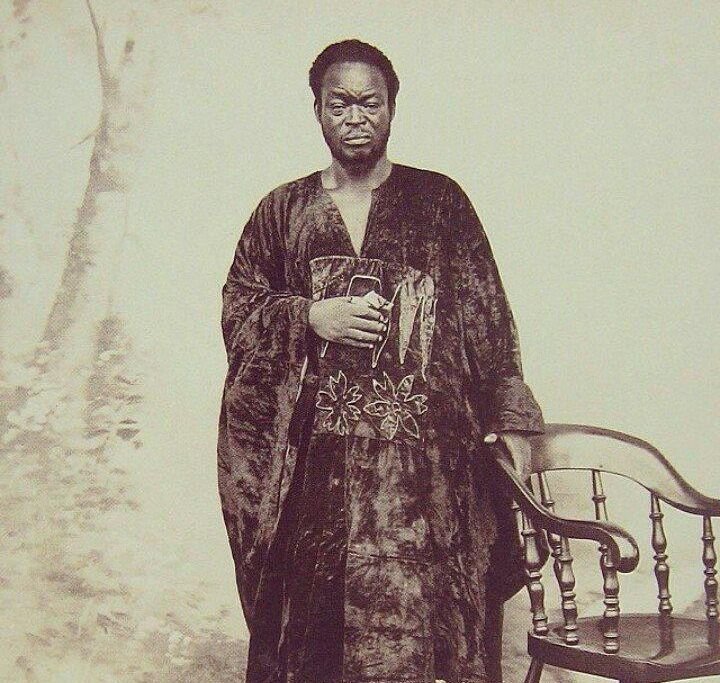
At the centre of one of the most dramatic episodes of British colonial expansion in West Africa was Oba Ovonramwen Nogbaisi, the last independent ruler of the Kingdom of Benin.
But there is an important correction to the popular version of his story: Ovonramwen was not hanged by the British. He was captured, deposed and exiled to Calabar, where he died in 1914. It was one of his prominent military commanders, Ologbosere, who was later tried and hanged by the British.
His story, however, remains one of the most shocking chapters in Nigerian colonial history.
Who Was Ovonramwen?
Ovonramwen became Oba of Benin in 1888, succeeding his father, Oba Adolo.
He inherited a kingdom with a long history and a powerful royal institution. Benin was not an isolated village society. It had a highly organised court, specialised craftsmen, long-distance trade networks and a military system capable of defending its territory.
The royal palace was also home to extraordinary works of art, including the famous brass plaques, commemorative heads and carved ivory objects that would later become known around the world as the Benin Bronzes.
The British Museum identifies Ovonramwen as the last ruler of the independent Kingdom of Benin, reigning from 1888 until his deposition in 1897.
But during his reign, European powers were rapidly expanding their control over Africa.
Britain wanted greater access to the region’s trade and resources, particularly palm oil. Benin’s independence increasingly stood in the way of British ambitions.
The Conflict With Britain
Relations between Benin and British officials deteriorated during the 1890s.
The British wanted Benin to open itself more fully to their commercial and political influence. Ovonramwen resisted attempts that threatened his authority and the sovereignty of his kingdom.
The crisis reached a dramatic point in January 1897.
A British-led delegation headed by Acting Consul-General James Phillips travelled towards Benin City. Ovonramwen had reportedly asked that the visit be postponed because of important traditional ceremonies.
The delegation nevertheless continued towards Benin.
Near Benin City, the party was ambushed by Edo forces. Phillips and most of the members of his expedition were killed. Historical accounts indicate that the attack was carried out without Ovonramwen’s direct knowledge, although the incident became the immediate justification for Britain’s military response.
Britain now had the excuse it needed.
Britain Invades Benin
The British government responded with what became known as the Benin Punitive Expedition of 1897.
A large British force commanded by Sir Harry Rawson marched towards Benin City.
The military imbalance was enormous.
Benin’s defenders fought with determination, but they were facing a modern imperial force equipped with superior firearms and military organisation.
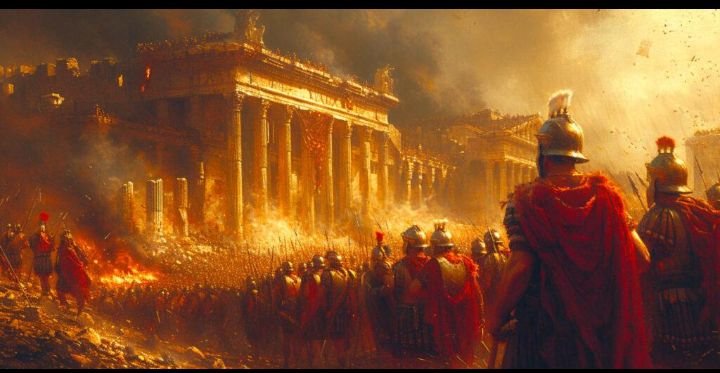
In February 1897, British troops captured Benin City.
The consequences were devastating.
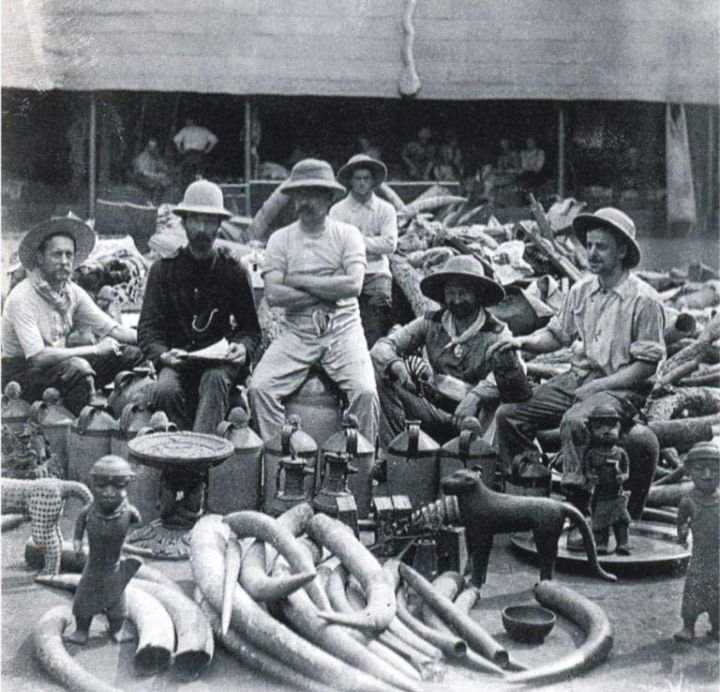
The city was burned and the royal palace was looted. British troops removed thousands of cultural objects, including bronze plaques, royal heads, ivory carvings and other treasures.
Research held by Oxford University notes that more than 3,000 artworks were seized and taken away following the expedition.
The destruction effectively ended the independence of the Kingdom of Benin.
Ovonramwen Refused to Surrender Immediately
Ovonramwen did not simply hand himself over when Benin City fell.
He escaped into the surrounding forests with followers and remained there for months.
Eventually, after approximately six months in hiding, he decided to surrender.
On 5 August 1897, Ovonramwen formally surrendered to the British. Accounts describe him arriving in magnificent royal clothing, decorated with coral beads and accompanied by hundreds of followers.
He was subsequently detained and sent into exile.
A surviving photograph held by the British Museum shows the captured Oba sitting in a chair with British soldiers around him, his feet shackled in chains. The photograph was taken in 1897 as he was being transported towards Old Calabar.
For a man who had once commanded a powerful kingdom, the image represented the complete collapse of Benin’s independence.
Was Ovonramwen Sentenced to Death?
This is where the popular story becomes misleading.
There were British discussions and orders concerning the possibility of executing Ovonramwen. Historical scholarship shows that British authorities had threatened him with hanging if he attempted to escape after his deposition.
However, Ovonramwen himself was not hanged.
Instead, the British removed him from his kingdom and sent him into exile in Calabar, then known as Old Calabar.
The British Museum records that he lived in exile until his death in 1914, making his exile effectively a life sentence away from the kingdom he had ruled.
The Men Who Were Actually Hanged
Other Benin leaders paid with their lives.
Several chiefs were held responsible for the killing of members of Phillips’ expedition.
After the British takeover, some were tried by colonial authorities. Two chiefs were executed by firing squad in September 1897.
One of the most famous was Chief Ologbosere, a leading military commander and loyal supporter of Ovonramwen.
Ologbosere continued resisting British control after the fall of Benin.
Eventually captured, he was tried and sentenced to death. He was hanged in June 1899.
His execution became another symbol of the violent destruction of the old Benin political order.
The End of an Independent Kingdom
Ovonramwen’s exile was more than the removal of one king.
It marked the end of an independent African kingdom that had existed for centuries.
The British incorporated Benin into their expanding colonial administration. The Oba’s political authority was dramatically reduced, while British officials established their own system of government.
Ovonramwen’s son later became Eweka II, but he ruled under British colonial authority rather than as the sovereign ruler of an independent Benin Kingdom.
The palace survived, and the Benin royal institution eventually returned to prominence, but the political independence that existed before 1897 was gone.
The Legacy of Ovonramwen
Ovonramwen’s story is still remembered because it captures one of the defining struggles of African history: the confrontation between established African kingdoms and expanding European colonial powers.
His reign ended in defeat, but his name survived.
The British could remove him from his throne. They could exile him thousands of kilometres from his kingdom. They could seize the treasures of his palace.
But they could not erase the history of Benin.
Today, the Benin Bronzes remain among the most famous examples of African art, while debates continue over the return of objects taken during the 1897 expedition.
Ovonramwen died in exile in 1914, but his story remains deeply connected to Benin’s identity and to the wider history of colonialism in Nigeria.
The Truth Behind the Headline
So, was “The Nigerian King Who Was Hanged by the British” really Ovonramwen?
No.
The more historically accurate and perhaps even more powerful story is this:
Britain conquered his kingdom, destroyed his capital, looted its royal treasures, removed him from his throne and sent him into lifelong exile.
And while Ovonramwen survived, some of the men who fought for his kingdom were eventually executed, including his loyal commander, Ologbosere.
Ovonramwen died in exile in 1914, but the kingdom he fought to protect never disappeared from history.
The Historabase Editorial Team is dedicated to exploring and sharing the stories that have shaped Africa and the wider world. Our work covers African history, ancient civilizations, empires, historical figures, wars, cultures, political movements, and important events from the past.
We aim to present history in a clear, engaging, and accessible way, combining historical records with careful research to help readers better understand the people, events, and civilizations that shaped our world.