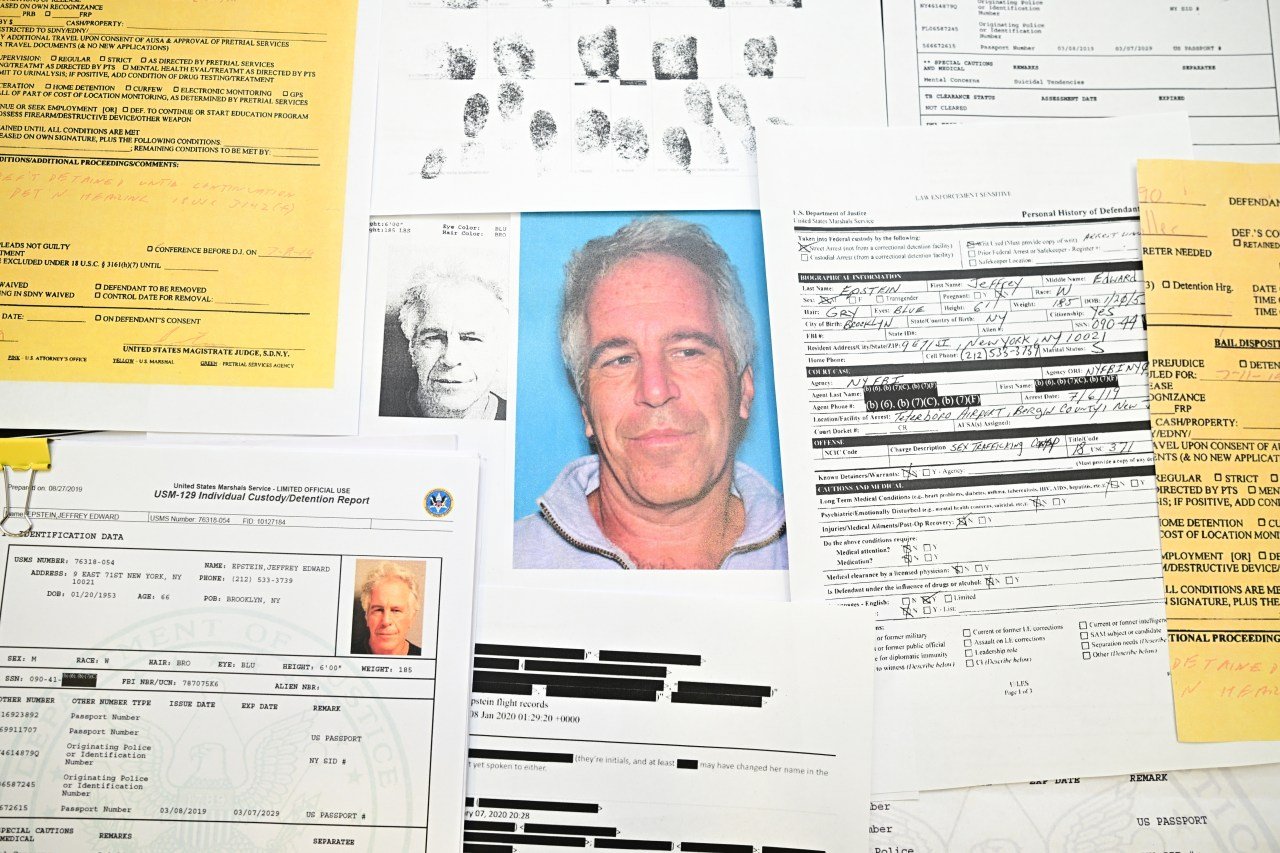
The Jeffrey Epstein case became one of the most consequential criminal scandals in modern American history, exposing allegations of sexual exploitation involving underage girls, a controversial plea agreement, failures in the criminal justice system, and the connections between a wealthy financier and influential figures. The case attracted international attention following Epstein’s arrest in 2019 and intensified after his death in federal custody.
The documents commonly described as the Epstein files include court records, witness statements, depositions, flight logs, contact information, and investigative materials connected to Epstein and his associates. Although these records have revealed important details about his activities and relationships, they do not constitute a single, definitive list of people involved in criminal conduct.
Jeffrey Epstein’s Rise to Wealth and Influence
Jeffrey Edward Epstein was born on January 20, 1953, in Brooklyn, New York. He began his professional career as a teacher at the Dalton School in Manhattan before moving into the financial industry in the 1970s.
Epstein subsequently worked at the investment bank Bear Stearns before establishing his own financial business. He cultivated relationships with wealthy individuals, business executives, politicians, academics, and members of royal circles.
His financial arrangements and the precise origins of some of his wealth attracted scrutiny over the years. Nevertheless, his connections helped him establish an influential social network that extended across the United States and internationally.
Epstein owned properties in New York, Florida, New Mexico, Paris, and the Caribbean. His private island, Little Saint James, in the U.S. Virgin Islands later became a major focus of public attention because of allegations concerning sexual abuse and exploitation.
The Allegations of Sexual Abuse
Investigations into Epstein revealed allegations that he recruited and sexually abused underage girls over an extended period.
According to federal prosecutors, Epstein used payments and a recruitment system to bring girls, some as young as 14, to his properties under the pretext of providing massages. Prosecutors alleged that some victims were subsequently sexually abused and that certain girls were paid to recruit additional victims.
Survivors described experiences involving manipulation, financial incentives, and exploitation. Their accounts became central to criminal investigations and civil litigation involving Epstein and people associated with him.
In 2005, authorities in Palm Beach, Florida, began investigating Epstein after the family of a teenage girl reported allegations of sexual abuse. The investigation expanded as police identified additional potential victims.
The case raised questions about how Epstein had continued operating despite allegations and whether the authorities had responded adequately to the evidence available to them.
The Controversial 2007–2008 Plea Agreement
One of the most controversial episodes in the Epstein case was the federal non-prosecution agreement negotiated in Florida in 2007.
Under the agreement, federal prosecutors in the Southern District of Florida agreed not to prosecute Epstein federally in exchange for his guilty plea to state charges. The arrangement also included protections for certain potential co-conspirators.
In June 2008, Epstein pleaded guilty in Florida state court to soliciting prostitution and procuring a person under 18 for prostitution.
He received an 18-month county-jail sentence but served approximately 13 months. He was permitted to leave custody for work under a controversial work-release arrangement.
The agreement attracted severe criticism because of the limited punishment, the treatment of victims, and the secrecy surrounding the negotiations. Victims later challenged the way the agreement had been handled.
In 2019, a federal judge ruled that prosecutors had violated the Crime Victims’ Rights Act by failing to properly inform victims about the agreement before it was finalized. Subsequent litigation examined the scope of the victims’ rights and the legal consequences of the agreement.
The case became a prominent example in debates about unequal treatment within the criminal justice system and the influence of wealth and status on criminal proceedings.
The 2019 Federal Arrest
On July 6, 2019, federal authorities arrested Epstein in New Jersey after he returned to the United States from France.
The U.S. Attorney’s Office for the Southern District of New York charged him with sex trafficking of minors and conspiracy to commit sex trafficking of minors. The indictment alleged that Epstein had sexually exploited dozens of underage girls in New York and Florida between 2002 and 2005.
Prosecutors alleged that he paid victims for sexual encounters and used a network of individuals to recruit additional girls.
Epstein pleaded not guilty to the federal charges. A judge denied his request for release on bail, and he remained in federal custody while awaiting trial.
The arrest renewed scrutiny of his earlier Florida prosecution and raised questions about why federal charges had not been pursued more aggressively years earlier.
However, Epstein died before the 2019 federal case could go to trial. The charges in that indictment were therefore never adjudicated against him.
Epstein’s Death in Federal Custody
On August 10, 2019, Epstein was found unresponsive in his cell at the Metropolitan Correctional Center in Manhattan. He was pronounced dead, and New York City’s medical examiner ruled the death a suicide by hanging.
His death occurred while he was awaiting trial and prevented the federal criminal proceedings against him from reaching a verdict.
An investigation by the U.S. Department of Justice’s Office of the Inspector General subsequently documented serious failures at the jail. These included staffing shortages, failures to conduct required checks, falsified records, and problems with the facility’s surveillance system.
The investigation found that significant lapses in supervision had allowed Epstein to remain unmonitored for extended periods.
The circumstances of his death generated widespread speculation and conspiracy theories. However, the official medical determination was suicide, and the documented failures at the jail did not, by themselves, establish that he had been murdered.
Epstein’s death left victims without the opportunity to see the federal criminal case against him proceed to trial.
The Epstein Files and the Names of Powerful Individuals
The term Epstein files refers broadly to various records connected to criminal investigations, civil lawsuits, witness testimony, and Epstein’s personal and professional relationships.
These materials include flight logs from aircraft associated with Epstein, address books, depositions, emails, court filings, and documents released through litigation.
They have attracted particular attention because Epstein maintained relationships with prominent figures in politics, business, entertainment, academia, and international society.
However, the records must be interpreted carefully. A person’s name appearing in a contact book, flight log, deposition, or court document does not automatically establish that the individual committed a crime or knew about Epstein’s abuse.
Some individuals were mentioned as witnesses, acquaintances, employees, alleged victims, or people discussed during testimony. Others faced specific allegations, which must be assessed according to the available evidence and relevant legal outcomes.
The distinction between a documented association and evidence of criminal conduct remains essential to understanding the case.
The January 2024 Document Release
In December 2023, a federal judge ordered the unsealing of certain records connected to a civil defamation lawsuit brought by Virginia Giuffre against Ghislaine Maxwell.
The documents began to be released publicly in January 2024.
They contained depositions, references to individuals connected to Epstein, allegations, and testimony previously unavailable to the public in that form. The release renewed international attention and generated extensive media coverage.
The records were not a newly discovered, verified list of criminal clients. Many names and details had already appeared in earlier reporting or court proceedings, while some individuals were mentioned without being accused of wrongdoing.
The release also did not establish that every allegation contained in testimony was proven. Court documents can contain disputed claims, witness recollections, and statements that have not been independently verified.
Their historical significance lies in the additional public access they provided to evidence and testimony associated with Epstein’s relationships and the legal proceedings surrounding his activities.
Ghislaine Maxwell’s Conviction
Ghislaine Maxwell, a longtime associate of Epstein, became a central figure in the criminal proceedings following his death.
Federal prosecutors alleged that Maxwell helped recruit and groom underage girls for Epstein’s sexual abuse. Her trial examined testimony from women who described being recruited when they were minors and subsequently abused.
In December 2021, a federal jury in New York convicted Maxwell on five counts related to the sexual exploitation and trafficking of minors.
On June 28, 2022, she was sentenced to 20 years in federal prison.
Maxwell’s conviction established her criminal responsibility for the offenses covered by the jury’s verdict. It also provided a criminal trial in which survivors testified publicly about aspects of the abuse associated with Epstein.
Her case was separate from the federal charges filed against Epstein in 2019, which ended without a trial because of his death.
Civil Litigation and Victims’ Compensation
Following Epstein’s death, civil proceedings continued against his estate and other parties.
In 2020, Epstein’s estate established a compensation program for eligible survivors. The program eventually awarded more than $120 million to approximately 135 claimants, according to publicly reported figures.
The compensation process provided a route for eligible survivors to seek financial redress without pursuing conventional litigation against the estate.
The U.S. Virgin Islands also pursued civil action concerning Epstein’s activities and financial arrangements in the territory. In 2022, JPMorgan Chase agreed to pay $75 million to settle a lawsuit brought by the U.S. Virgin Islands alleging that the bank had facilitated Epstein’s trafficking operation. The settlement did not constitute an admission of liability by the bank.
Separately, JPMorgan Chase agreed in 2023 to pay $290 million to settle a class-action lawsuit brought by Epstein’s accusers. Deutsche Bank also agreed in 2023 to pay $75 million to settle a lawsuit brought by Epstein accusers.
These settlements resolved civil claims under their respective terms. They should not be confused with criminal convictions.
The continued litigation demonstrated that the legal consequences of the Epstein case extended beyond the criminal proceedings against Epstein himself.
What the Epstein Files Established, and What Remains Unproven
The records associated with Epstein have helped establish a detailed chronology of allegations, investigations, criminal proceedings, and relationships surrounding the case.
Epstein’s 2008 Florida conviction, the 2019 federal indictment, Maxwell’s 2021 conviction, and the documented failures in Epstein’s jail supervision are matters supported by official legal or investigative records.
The documents have also provided evidence of Epstein’s extensive social connections and helped investigators, journalists, and the public examine how his activities intersected with institutions and individuals.
Epstein’s death prevented a trial on the 2019 federal charges. The appearance of a person’s name in the files does not establish criminal involvement. Civil settlements do not automatically constitute admissions of wrongdoing, and allegations in court documents are not equivalent to proven facts.
The release of records has also not resolved every question about who knew of Epstein’s abuse, who may have assisted him, and whether all relevant evidence has become public.
These unresolved issues should be assessed through documented evidence rather than speculation.
Conclusion
The Jeffrey Epstein case exposed serious failures in the handling of sexual abuse allegations, raised questions about accountability for wealthy and influential individuals, and produced criminal and civil proceedings that continued after Epstein’s death.
The controversial 2008 plea agreement, the 2019 federal prosecution, the failures identified at the Metropolitan Correctional Center, Ghislaine Maxwell’s conviction, and the subsequent release of court documents form the central historical record of the scandal.
The Epstein files remain significant because they provide access to testimony, evidence, and legal records concerning a case that affected numerous survivors and institutions.
Their importance lies not in treating every named individual as guilty, but in examining what the evidence establishes, what the courts have decided, and what remains unresolved.
The Historabase Editorial Team is dedicated to exploring and sharing the stories that have shaped Africa and the wider world. Our work covers African history, ancient civilizations, empires, historical figures, wars, cultures, political movements, and important events from the past.
We aim to present history in a clear, engaging, and accessible way, combining historical records with careful research to help readers better understand the people, events, and civilizations that shaped our world.