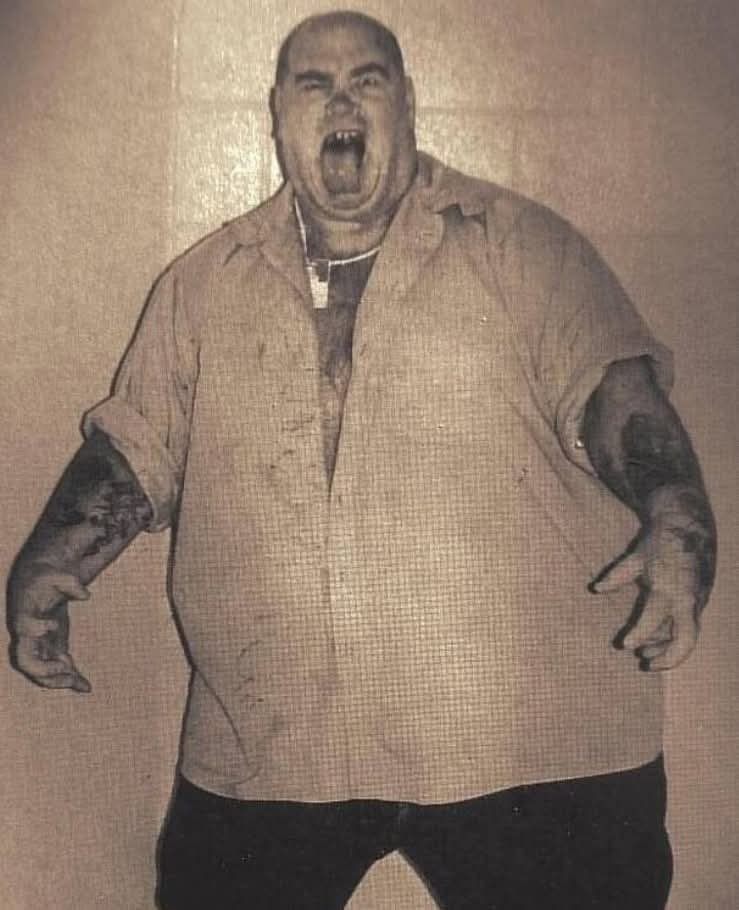
Joe Metheny remains one of the most disturbing figures in American criminal history. A Baltimore-area killer, Metheny was convicted of murdering multiple people in the 1990s, and his case became infamous not only because of the violence involved but also because of his grotesque claim that he disposed of victims by mixing their remains with meat and selling it as barbecue.
His story has since circulated widely online, sometimes with sensational details that are difficult to verify. Behind the infamous nickname and gruesome allegations, however, was a troubled man whose criminal history culminated in a series of murders that shocked Maryland.
A Troubled Beginning
Joseph Roy Metheny was born in Maryland in 1955. Accounts of his early life describe a difficult childhood and a troubled adulthood. He later struggled with alcohol and drug addiction and spent periods of his life working around industrial areas near Baltimore.
Metheny’s life became increasingly unstable after his marriage broke down. According to accounts associated with his case, his wife left him and took their young son. Metheny later blamed several people for the collapse of his life, particularly a man he believed had taken his wife away from him.
That resentment became central to the story he later told about his crimes.
However, anger, addiction and personal difficulties do not by themselves explain murder. Metheny ultimately made deliberate choices that resulted in the deaths of other people.
The Murders
In 1994, Metheny became involved in a series of violent attacks in the Baltimore area.
One of the victims was a woman named Catherine Magaziner, who disappeared in July 1994. Metheny was later convicted of her murder.
He was also convicted in connection with the killing of another woman, who was found dead in the same general area.
Metheny’s crimes were eventually uncovered after one of his intended victims survived an attack.
The survivor, identified in reports as a woman who worked as a prostitute, escaped after Metheny attacked her. Her survival helped investigators connect Metheny to the killings.
The Infamous Burger Story
The most horrifying part of Metheny’s story came from his own account of what he claimed to have done with his victims’ bodies.
Metheny told investigators that he had disposed of human remains by mixing them with pork and beef and serving the mixture as barbecue sandwiches from a roadside stand.
He claimed that customers unknowingly ate the meat.
This allegation transformed the case from a series of murders into one of America’s most notorious true-crime stories.
But there is an important distinction between what Metheny claimed and what investigators were able to establish.
Although his statements about turning victims into hamburger meat have been repeated in countless articles and documentaries, the sensational claim that he actually sold human meat to unsuspecting customers has not been established with the same certainty as his murder convictions.
The story therefore needs to be treated carefully rather than presented as an unquestioned fact.
Why Did He Call It Revenge?
Metheny portrayed his killings as acts of revenge.
He blamed people whom he believed had contributed to the breakdown of his personal life. In his own account, anger over his wife leaving him and taking their child played a major role in his thinking.
But the victims of his murders were not simply people responsible for his problems.
His case illustrates how a perpetrator can construct a personal justification for extreme violence. Metheny’s explanation became part of the mythology surrounding his crimes, but it does not establish a legitimate motive for killing.
Capture and Trial
Metheny was eventually arrested after investigators connected him to the murders.
During questioning, he provided disturbing accounts of the killings and the disposal of the bodies. His statements helped investigators understand parts of the case, although some of his more sensational claims remain disputed or uncorroborated.
He was subsequently prosecuted and convicted of two murders.
A jury sentenced him to death, but that sentence was later changed to life imprisonment after Maryland’s death-penalty system changed.
Metheny remained incarcerated for the rest of his life.
His Final Years
Metheny died in prison in 2017 at the age of 62.
By then, his name had become closely associated with one of the most grotesque stories in American true crime. His case appeared in books, documentaries, websites and countless online discussions.
Yet the most sensational part of the story often overshadowed the victims themselves.
Catherine Magaziner and the other people killed by Metheny were real human beings whose lives ended violently. The macabre details surrounding the case should not erase that fact.
The Dark Legacy of Joe Metheny
Joe Metheny’s case continues to attract attention because it combines several elements that make true-crime stories particularly disturbing: multiple murders, revenge, addiction, disturbing statements by the perpetrator and an extraordinary claim about what happened to the victims’ remains.
But separating established facts from Metheny’s own sensational claims is essential.
He was convicted of murder. His victims were real. His violence was real. His statements about disposing of human remains became a defining part of his notoriety.
The claim that he routinely turned his victims into burgers and sold human meat to customers, however, should not automatically be repeated as established fact.
That distinction matters because history is not simply about repeating the most shocking version of a story. It is about examining what happened, what was documented, what was claimed and what remains uncertain.
Metheny’s story ultimately stands as a grim reminder of how personal resentment, violence and criminal behavior can intersect, and how the mythology surrounding a notorious crime can sometimes become almost as enduring as the crime itself.
The Historabase Editorial Team is dedicated to exploring and sharing the stories that have shaped Africa and the wider world. Our work covers African history, ancient civilizations, empires, historical figures, wars, cultures, political movements, and important events from the past.
We aim to present history in a clear, engaging, and accessible way, combining historical records with careful research to help readers better understand the people, events, and civilizations that shaped our world.







One Comment