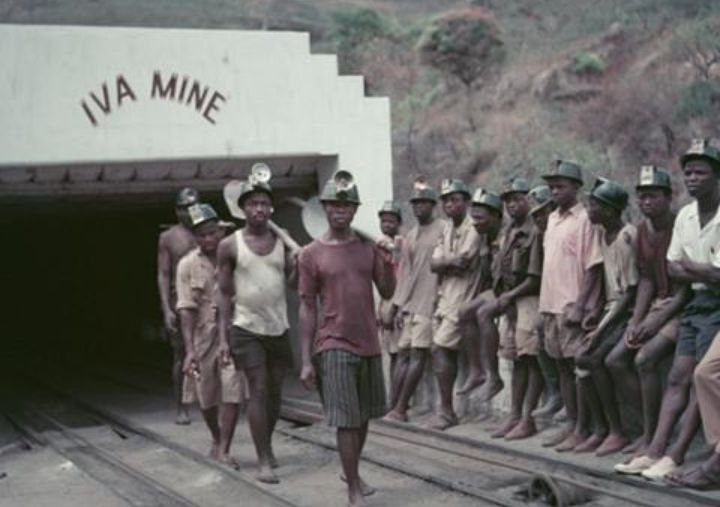
On 18 November 1949, colonial police opened fire on striking coal miners at the Iva Valley Colliery in Enugu, killing 21 workers and injuring dozens more. The shooting became one of the most significant labour conflicts of colonial Nigeria and intensified opposition to British rule.
The Coal Industry and Working Conditions
Coal mining had become an important part of Nigeria’s colonial economy. Enugu’s coal supplied the railway system and other industries, making the miners essential to the colonial administration.
The workers, however, faced difficult working conditions and complained about wages, allowances and employment practices. By 1949, dissatisfaction among the miners had become serious.
The miners demanded improvements in pay and working conditions, including payment of outstanding claims and allowances. They also opposed what they considered unfair treatment by the colliery management.
When negotiations failed, the workers began industrial action.
The 1949 Strike
The dispute escalated through a series of protests and work stoppages. The miners first adopted a go-slow before moving toward a sit-down strike.
Management responded by dismissing workers, increasing tensions between the miners and authorities.
The colonial government became increasingly concerned about the situation, particularly because explosives were stored at the colliery. Authorities decided to send armed police to the mine to remove the explosives.
That decision set the stage for the confrontation.
The Iva Valley Shooting
On 18 November, police arrived at the Iva Valley mine under the command of British police officer F.S. Philip.
A confrontation developed between the police and the miners. The exact sequence of events remains disputed.
The colonial authorities claimed that the police were surrounded by miners carrying weapons and that officers opened fire in self-defence.
Nigerian workers and nationalist leaders disputed the official justification and regarded the shooting as excessive use of force against striking workers.
When the shooting ended, 21 miners were dead and about 50 others had been wounded.
The incident became known as the Enugu Colliery Massacre or Iva Valley Shooting.
The Political Consequences
The killings immediately transformed the labour dispute into a national political issue.
News of the massacre spread across Nigeria, producing widespread anger. Nationalist politicians and labour leaders condemned the colonial administration and used the killings as evidence of the unequal treatment of Nigerians under British rule.
The incident strengthened cooperation between the labour movement and nationalist organisations.
For many Nigerians, the massacre demonstrated that colonial authorities could use armed force against workers demanding better conditions. It therefore became part of the growing argument that Nigerians needed political control over their own affairs.
The massacre was particularly significant in the Eastern Region, where Enugu was an important centre of nationalist politics.
The Victims
The 21 miners killed at Iva Valley were at the centre of the dispute. They were ordinary workers who had participated in industrial action over wages and employment conditions.
Their deaths affected families across Enugu and became a lasting symbol of the dangers faced by Nigerian workers under colonial rule.
The wounded miners also carried the consequences of the shooting beyond the day of the massacre.
A Turning Point for Nigerian Labour
The Iva Valley massacre became an important event in the development of Nigeria’s labour movement.
It showed the potential consequences of industrial disputes under colonial rule and strengthened workers’ determination to organise collectively.
It also demonstrated the political power of labour unrest. A dispute that began over wages and working conditions had become a national controversy over colonial authority and Nigerian rights.
The massacre consequently contributed to the wider political climate that eventually produced Nigeria’s independence in 1960.
The Fight for Recognition
The events of 1949 continued to affect the victims’ families decades after Nigerian independence.
In 2025, relatives of the miners pursued legal action seeking compensation and recognition for the deaths.
In February 2026, the Enugu State High Court ordered the British government to pay £420 million to the families of the 21 miners and ordered a formal apology. The British government was not represented in the proceedings and had not accepted the ruling.
The legal case revived public attention on the massacre more than 76 years after the shooting.
The Enugu Coal Miners’ Massacre was more than a violent strike-breaking operation. It became a major confrontation between Nigerian workers and the colonial state.
The miners were demanding better wages and working conditions. The colonial authorities responded to the escalating dispute with armed force, resulting in 21 deaths.
The shooting intensified nationalist opposition to British rule and became a lasting symbol of colonial repression.
The coal mines eventually declined, but the memory of the workers killed at Iva Valley remains an important part of Nigeria’s labour and independence history.
The Historabase Editorial Team is dedicated to exploring and sharing the stories that have shaped Africa and the wider world. Our work covers African history, ancient civilizations, empires, historical figures, wars, cultures, political movements, and important events from the past.
We aim to present history in a clear, engaging, and accessible way, combining historical records with careful research to help readers better understand the people, events, and civilizations that shaped our world.








One Comment