Long before Nigeria became an independent country, the British colonial authorities encountered institutions they struggled to understand.
Among the most mysterious was the Ogboni Society, a powerful Yoruba institution whose origins predated British rule. To outsiders, its secrecy, ceremonies and influence over traditional government created an aura of mystery. To its members, however, it was an established institution connected to governance, justice, religion and the authority of elders.
Over time, stories began circulating about secret punishments, mysterious deaths and killings allegedly connected to Ogboni membership.
But how much of the frightening reputation was fact, and how much was colonial suspicion, local rivalry and sensational storytelling?
The answer is more complicated than the legends suggest.
What Was the Ogboni Society?
The Ogboni was an influential institution among the Yoruba of southwestern Nigeria.
Its precise origins are uncertain. One historical source notes that the earliest known written reference to the society dates to 1884, although the institution itself was considerably older. Scholars generally describe it as an assembly of elders that had important political, judicial and religious functions.
In several Yoruba communities, Ogboni members participated in decision-making and exercised considerable influence over traditional rulers.
The institution was particularly important because the power of a king was not always absolute. Ogboni elders could act as a counterweight to royal authority.
In other words, the Ogboni was not originally a criminal gang hiding in the shadows.
It was an important part of traditional Yoruba political and social organisation.
Why Were They Called a Secret Society?
Secrecy was an important part of Ogboni life.
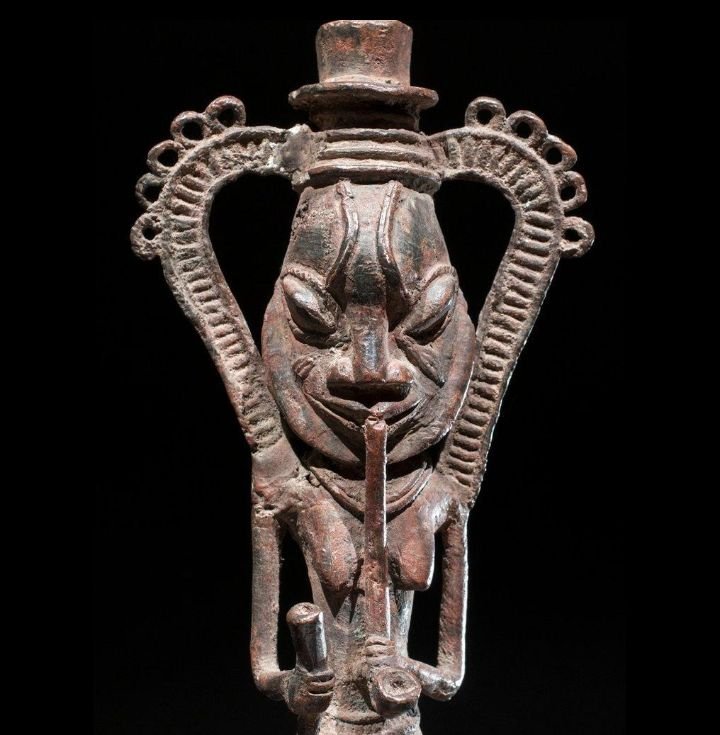
Members had their own ceremonies, symbols, rules and methods of recognition. Outsiders were not expected to know everything about the organisation.
That secrecy naturally created speculation.
European missionaries and colonial officials encountered institutions whose beliefs and practices they did not fully understand. Some described secret societies in highly negative terms, while others recognised that they played important roles in traditional administration.
Academic research has warned that colonial writers sometimes exaggerated the danger supposedly posed by secret societies.
This is important because many later stories about the Ogboni were influenced by those early descriptions.
The Ogboni and Traditional Justice
One of the most significant aspects of the institution was its relationship with justice.
Before British colonial courts became dominant, Yoruba communities had their own systems for settling disputes and punishing serious offences.
Historical research into Nigerian judicial systems notes that Ogboni societies in many Yoruba communities handled serious criminal matters and could be responsible for enforcing their judgments.
This meant that the Ogboni possessed powers that could appear extraordinary to colonial officials.
Punishments in pre-colonial societies could also be severe.
Historical records describe cases in which criminals were executed following decisions by traditional authorities. One account based on earlier records states that three criminals were executed at an Ogboni council house in Abeokuta in 1853.
Such accounts later contributed to the image of the Ogboni as an organisation capable of deciding who lived and who died.
But this should be understood within the context of pre-colonial justice rather than automatically interpreted as evidence of secret murder.
When the British Arrived
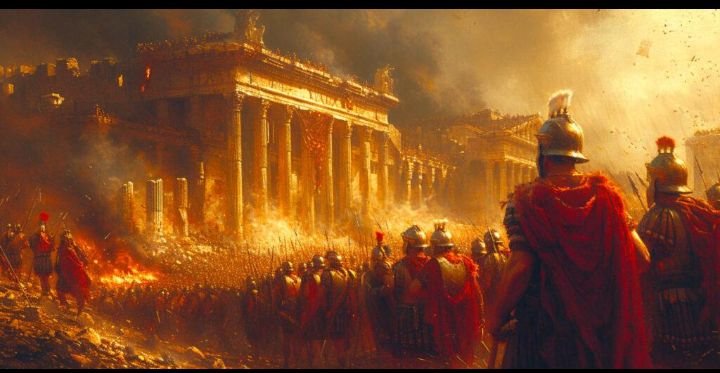
British colonial expansion dramatically changed the balance of power.
As British authority spread across Yorubaland, colonial officials increasingly attempted to replace or subordinate traditional judicial and political institutions.
The Ogboni was particularly significant because it operated outside direct colonial control.
In some areas, the British viewed powerful traditional institutions with suspicion because they could challenge colonial authority.
Historical accounts indicate that after the British conquest of Ijebu in 1892, colonial authorities took action against the traditional Ogboni institution there, including the destruction of its meeting house. In Abeokuta, the institution also lost much of its governmental role following political changes in the late nineteenth century.
The decline of its political authority did not mean that Ogboni traditions immediately disappeared.
Instead, the institution adapted to a changing Nigeria.
Where Did the Murder Stories Come From?
This is where history becomes difficult to separate from legend.
Because Ogboni ceremonies and internal affairs were secret, outsiders often had limited reliable information about what happened inside the organisation.
That lack of information created fertile ground for rumours.
Stories emerged about people being punished for revealing secrets, members being mysteriously killed, and enemies allegedly being eliminated through supernatural means.
Some accounts even portrayed the organisation as a hidden criminal network controlling political and economic life.
However, modern research has repeatedly pointed out that concrete evidence about the Ogboni is limited, particularly concerning the more sensational allegations surrounding secret killings. A Canadian government research review noted that much information about the society was speculative and that reliable sources were difficult to obtain because of its secrecy.
That does not mean every historical allegation was false.
It means that claims of secret murder must be examined individually rather than treated as established facts simply because they involve the Ogboni name.
The Mystery of Secret Punishment
The Ogboni’s reputation was partly connected to the concept of punishment.
Traditional Yoruba political institutions had mechanisms for dealing with individuals considered dangerous to the community.
Some historical accounts describe the Ogboni as having authority to enforce serious decisions.
Over time, however, these traditional powers became mixed with stories about supernatural punishment.
The secrecy surrounding the institution made it almost impossible for outsiders to determine where traditional authority ended and folklore began.
A person who disappeared after being accused of an offence could easily become the subject of speculation.
If the person was connected to an Ogboni dispute, rumours could transform a political or judicial conflict into a story of ritual murder.
Colonial Fear and the “Secret Society” Label
The British colonial period also produced a broader problem.
European officials frequently used the term “secret society” to describe African institutions whose membership, ceremonies and internal rules were restricted.
Some of these organisations were genuinely secretive. But secrecy did not automatically mean criminality.
Research into secret societies during colonial Nigeria shows that colonial officials sometimes viewed them as threats to colonial order and encouraged their suppression. At the same time, colonial administrations sometimes relied upon traditional institutions to maintain local government.
The Ogboni therefore occupied an uncomfortable position.
It was powerful enough to matter, traditional enough to command respect and secretive enough to generate suspicion.
The Power Behind the Throne
One reason the Ogboni became such a fascinating subject was its relationship with traditional rulers.
In some Yoruba political systems, kings were powerful but were not completely independent.
The Ogboni and other titled groups could serve as checks on royal authority.
This created a political structure in which power was distributed rather than concentrated entirely in the hands of the king.
European observers sometimes interpreted this hidden influence as evidence of conspiracy.
But historians have increasingly recognised that the institution was part of a sophisticated indigenous system of governance.
The Ogboni was not simply a mysterious organisation controlling kings from the shadows.
It was part of the political architecture of several Yoruba societies.
Did the Ogboni Commit Murder?
This is the question at the heart of the mystery.
The safest historical answer is: there were allegations and traditions involving severe punishments, but sweeping claims that the Ogboni was a secret murder organisation are not supported by sufficient reliable evidence.
Some sources have characterised the Ogboni as a criminal organisation, but other researchers have found insufficient corroborating evidence for that classification.
The historical record is therefore much more complicated than popular stories suggest.
There were real systems of traditional justice.
There were real punishments.
There were certainly murders in colonial Nigeria.
And there were accusations involving secret societies.
But connecting every unexplained death to the Ogboni would go beyond the evidence.
The Ogboni’s Declining Influence
As colonial institutions expanded, the traditional political authority of the Ogboni weakened.
British courts, police forces and administrative structures increasingly took over functions previously handled by traditional authorities.
Christianity also introduced new religious ideas that sometimes conflicted with aspects of traditional Yoruba institutions.
In the early twentieth century, a separate organisation known as the Reformed Ogboni Fraternity emerged among Christians. It should not be confused with the traditional Ogboni institution.
The existence of this later organisation added another layer of confusion to an already mysterious subject.
Stories about the traditional Ogboni, the Reformed Ogboni and other secret organisations were sometimes mixed together.
Why the Mystery Survived
The Ogboni’s reputation survived because secrecy is naturally attractive to storytellers.
When an organisation has hidden ceremonies, private meetings and influential members, rumours can flourish.
Over generations, stories about supernatural powers and mysterious deaths became part of popular culture.
Some modern Nigerians still associate the word “Ogboni” with secret rituals, powerful elites and mysterious killings.
Yet historians must distinguish cultural reputation from documented history.
The lack of easily accessible records about the organisation has made that task particularly difficult.
A More Complicated History
The real story of the Ogboni is arguably more fascinating than the legend.
It was an indigenous institution that existed before colonial rule and played important roles in Yoruba governance, religion and justice.
It survived the arrival of the British, although its political authority was gradually weakened.
Its secrecy created suspicion, while colonial attitudes toward African institutions sometimes exaggerated the dangers associated with secret societies.
And over time, stories about punishment and mysterious deaths became attached to its name.
The result is one of Nigeria’s most enduring historical mysteries.
The Legacy of the Ogboni
Today, the Ogboni remains a subject of fascination, controversy and debate.
For some, it represents an important part of Yoruba traditional governance and cultural history.
For others, its secrecy continues to inspire stories about hidden power and ritual crime.
The truth lies somewhere more complicated.
The Ogboni was neither simply the sinister murder organisation portrayed in some popular stories nor an institution whose history contains nothing controversial.
It was a powerful traditional institution operating within a very different political and legal system from modern Nigeria.
The Historabase Editorial Team is dedicated to exploring and sharing the stories that have shaped Africa and the wider world. Our work covers African history, ancient civilizations, empires, historical figures, wars, cultures, political movements, and important events from the past.
We aim to present history in a clear, engaging, and accessible way, combining historical records with careful research to help readers better understand the people, events, and civilizations that shaped our world.










One Comment