In July 1984, an extraordinary political drama unfolded between Nigeria and Britain.
A former Nigerian government minister was kidnapped from the streets of London, drugged and hidden inside a large wooden crate. The apparent plan was to secretly transport him back to Nigeria.
When British authorities discovered the plot, the incident triggered an international diplomatic crisis.
Then, thousands of kilometres away, a British passenger aircraft was detained at Lagos Airport by Nigerian authorities.
What followed became one of the strangest episodes in Nigeria’s international history and one of the most notorious political kidnapping attempts of the twentieth century.
Nigeria After the 1983 Coup
To understand the crisis, it is necessary to understand Nigeria’s political situation at the time.
On December 31, 1983, the military overthrew the civilian government of President Shehu Shagari.
Major General Muhammadu Buhari became head of the new military government.
The coup brought several former government officials under investigation for corruption. Some fled Nigeria, including Umaru Dikko, a former Minister of Transport and one of the most prominent figures associated with the previous administration.
Dikko settled in Britain.
From exile, he became a fierce critic of the Buhari government.
Nigerian authorities accused him of involvement in corruption and wanted him brought back to Nigeria to face the new government’s allegations.
Dikko, however, remained in Britain.
The disagreement would eventually lead to an extraordinary attempt to bring him home.
The Kidnapping of Umaru Dikko
On July 4, 1984, Dikko left his home in London.
He was approached and forced into a vehicle.
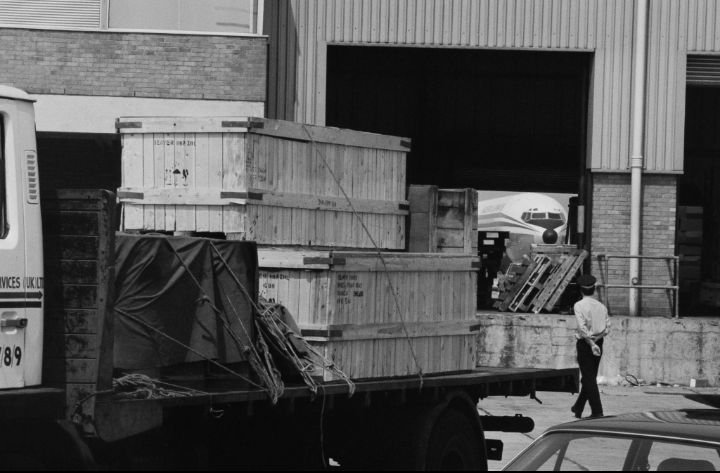
The operation had been carefully organised. Dikko was reportedly drugged and placed inside a large wooden crate.
The plan was to transport him to an airport and put him aboard an aircraft bound for Nigeria.
British authorities, however, became suspicious.
The crates were described as diplomatic baggage and were destined for Lagos. But their unusual circumstances attracted attention at Stansted Airport.
British customs officers eventually opened the crates.
Inside one of them was Umaru Dikko.
He was alive but heavily sedated.
The operation had failed.
British authorities subsequently arrested several people connected to the kidnapping attempt, including Nigerians and Israelis. British investigators later charged three Israelis and a Nigerian diplomat in connection with the kidnapping.
The Mysterious Nigerian Connection
The discovery immediately raised a much bigger question.
Who had ordered the kidnapping?
The British investigation focused on whether the operation had been organised by individuals acting independently or whether people connected to the Nigerian government were involved.
The Nigerian government denied responsibility for the kidnapping.
British officials were cautious at first, saying investigations would have to establish whether the Nigerian government had been involved.
The issue was extraordinarily sensitive.
If Nigerian government officials had organised the kidnapping of a political opponent on British soil, it would represent a major violation of British law and international norms.
If the kidnappers had acted independently, the political implications would have been very different.
The uncertainty intensified the crisis.
The Lagos Airport Retaliation
While Britain investigated the kidnapping, the crisis moved to Lagos.
A British Caledonian aircraft was detained at Lagos Airport by Nigerian authorities.
The aircraft had more than 200 passengers and crew aboard. British officials described its detention as unlawful and protested strongly to the Nigerian government.
The timing was impossible to ignore.
Britain had just uncovered a plot to abduct a Nigerian political opponent.
Now Nigeria had detained a British aircraft.
The situation looked like retaliation.
The aircraft remained at Lagos Airport from July 5 until July 7, 1984.
Passengers were reportedly held for an extended period before the aircraft was finally released.
The Nigerian government also detained a Nigerian Airways aircraft in Britain during the confrontation, creating a bizarre diplomatic standoff involving two countries and their national airlines.
A Diplomatic Crisis
The affair quickly became an international story.
British politicians demanded answers.
Questions were raised in the British Parliament about the kidnapping attempt, the involvement of Nigerian officials and the detention of the British aircraft in Lagos.
On July 9, Foreign Secretary Geoffrey Howe told the House of Commons that Britain had protested strongly against the detention of the British Caledonian aircraft and the treatment of its passengers.
The aircraft was eventually released and returned to Britain.
The immediate crisis was over.
But the questions surrounding the kidnapping remained.
Why Was Dikko Targeted?
Umaru Dikko was not an ordinary political exile.
He had been a powerful figure in the Shagari administration and was closely associated with the former political establishment.
The Buhari government accused former officials of corruption and sought to recover money allegedly stolen during the civilian administration.
Dikko rejected the accusations against him.
His position as a prominent opponent of the military government made him politically significant.
Bringing him back to Nigeria would have been a major victory for the Buhari administration.
But attempting to abduct him from Britain turned the matter into an international scandal.
The Crates That Became Famous
Perhaps the most unforgettable element of the entire affair was the wooden crate.
The plan depended on hiding a living human being inside what appeared to be diplomatic cargo.
The crates were marked as diplomatic baggage and were destined for Nigeria.
But British officials became suspicious and opened them.
Inside was Dikko.
The bizarre circumstances made international headlines.
What might have remained a secret operation became a highly publicised diplomatic embarrassment.
The episode later became known as the “Dikko affair.”
The Israeli Connection
The involvement of Israeli nationals added another layer of mystery.
British authorities charged three Israelis in connection with the kidnapping. One was an anaesthetist, who was accused of helping keep Dikko sedated during the operation.
Israel strongly denied any government involvement.
British Foreign Secretary Geoffrey Howe also said there was no evidence of Israeli government involvement in the plot.
The involvement of individuals from different countries made the operation appear highly organised.
It also raised questions about who recruited them and who ultimately financed or authorised the mission.
Was the Nigerian Government Behind It?
This remains one of the most intriguing questions surrounding the affair.
The Nigerian government denied involvement.
British investigators, however, found circumstances that raised serious suspicions about connections to Nigerian officials.
The crates were addressed to Nigeria’s Ministry of External Affairs in Lagos, and Nigerian embassy-related personnel became part of the British investigation.
One of those arrested was described by British authorities as a Nigerian diplomat, although officials questioned his diplomatic status.
The evidence created a strong political controversy.
But separating direct government authorisation from the actions of individuals connected to the Nigerian state proved difficult.
That uncertainty has remained an important part of the story.
The Price of the Failed Operation
The failed kidnapping had consequences beyond the embarrassment of the Nigerian government.
Nigeria’s diplomatic relationship with Britain was damaged.
The detention of the British aircraft generated anger in London.
British officials considered possible diplomatic measures if evidence demonstrated direct Nigerian government involvement.
The episode also demonstrated how political rivalries could cross international borders.
The Buhari government had come to power promising discipline and accountability.
Yet the attempt to forcibly return a political opponent from another country created a completely different image of the new military regime internationally.
Dikko Survived
The most important fact was that Umaru Dikko survived.
British authorities rescued him before the aircraft could leave.
He was taken to hospital after being found heavily sedated.
The kidnappers failed to accomplish their objective.
Dikko remained in Britain and continued his political life.
The man who was supposed to disappear quietly inside a crate instead became the central figure in an international scandal.
The Mystery That Remains
The Dikko affair remains fascinating because many aspects of the operation are documented, while other questions have never been completely resolved.
Who gave the final order?
How extensively were Nigerian officials involved?
Who recruited the foreign specialists?
How was the operation financed?
And how confident were the organisers that British authorities would never inspect the crates?
The available evidence established a kidnapping conspiracy and resulted in criminal charges.
But the wider political chain of responsibility remained the subject of controversy.
A Warning From History
The Dikko affair was more than an unusual kidnapping story.
It was a demonstration of what can happen when political conflict becomes personal and governments attempt to pursue opponents beyond their borders.
The episode also showed the limits of power.
A military government could overthrow a civilian administration and control the machinery of state inside Nigeria.
A secret operation that might have been possible inside a military dictatorship became dramatically more difficult when it crossed into another sovereign country.
The wooden crate became a symbol of the entire affair: an extraordinary attempt to hide a political prisoner in plain sight.
The Legacy of the Dikko Affair
More than four decades later, the Dikko affair remains one of the strangest episodes in Nigeria’s political history.
There was no confirmed “Lagos Airport bombing” behind the crisis. The real story was arguably even more extraordinary: a former Nigerian minister was kidnapped in London, hidden inside a crate and almost transported to Nigeria, while the resulting confrontation led Nigerian authorities to detain a British passenger aircraft at Lagos Airport.
It was a story of politics, espionage, international law and failed secrecy.
And at the centre of it all was Umaru Dikko, the man who was supposed to disappear inside a wooden box but instead became the face of one of the most bizarre diplomatic scandals in Nigeria’s
The Historabase Editorial Team is dedicated to exploring and sharing the stories that have shaped Africa and the wider world. Our work covers African history, ancient civilizations, empires, historical figures, wars, cultures, political movements, and important events from the past.
We aim to present history in a clear, engaging, and accessible way, combining historical records with careful research to help readers better understand the people, events, and civilizations that shaped our world.





One Comment