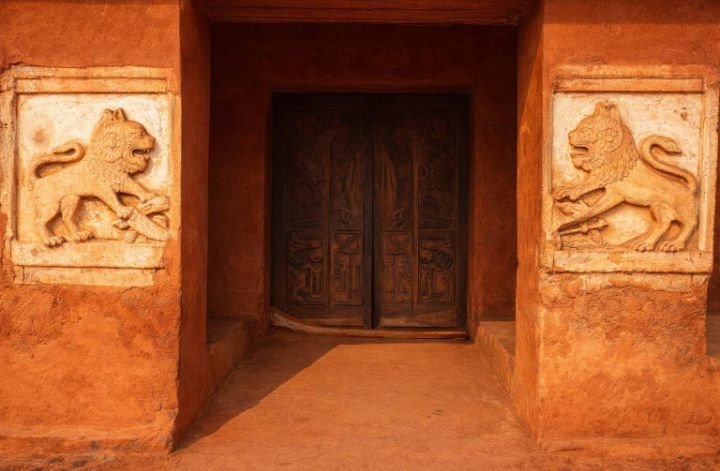
Long before the modern Republic of Benin existed, the Kingdom of Dahomey emerged as one of the most powerful states in West Africa. Based in the city of Abomey, Dahomey developed a highly centralized monarchy, a formidable army and an economy deeply connected to regional and Atlantic trade.
But Dahomey’s history also contains one of its darkest chapters: human sacrifice.
For centuries, the Dahomean monarchy incorporated human sacrifice into certain royal and religious ceremonies. The practice was particularly associated with the kingdom’s famous Annual Customs, as well as ceremonies performed following the death of a king.
These rituals were not simply acts of violence. Within Dahomey’s religious and political system, they were connected to the belief that the dead king continued to exist in the spiritual world and required attendants, offerings and recognition from the living. At the same time, the ceremonies demonstrated the power of the monarchy over life, death and the kingdom itself.
The Rise of Dahomey
The Kingdom of Dahomey developed in what is now southern Benin and became a major regional power between the seventeenth and nineteenth centuries.
Its capital, Abomey, was the center of political, military and religious authority. The king, known as the Dahomey ruler or king, controlled an elaborate royal court and a powerful military establishment.
Dahomey’s expansion brought it into conflict with neighboring states. Captives taken during warfare became an important part of the kingdom’s economy and, in some cases, were among those selected for ritual sacrifice.
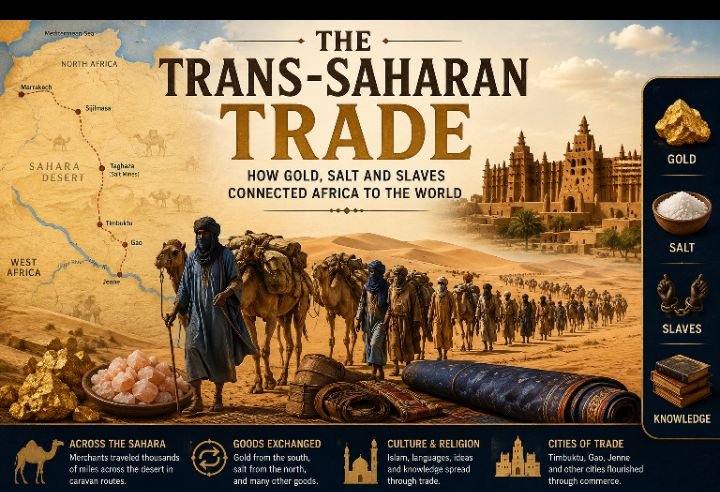
The kingdom also became deeply involved in the Atlantic slave trade, selling captives through coastal ports such as Ouidah. This warfare, commerce and political centralization helped make Dahomey one of the most influential states in the region.
Its power was therefore not based solely on religion. It rested on a combination of military strength, political organization, trade and royal authority.
One of the most important ceremonies in Dahomey was known as the Annual Customs, or Xwetanu/Huetanu.
The event was held at Abomey and combined religion, politics and royal ceremony. It included the presentation and redistribution of gifts and tribute, military displays, political discussions and ceremonies honoring the royal ancestors.
Human sacrifice formed part of these ceremonies.
The central religious purpose was connected to the relationship between the living king and the royal ancestors. Dahomean beliefs held that deceased rulers remained important in the spiritual world. Maintaining the relationship between the living monarchy and its dead predecessors was therefore considered essential to the kingdom’s stability.
The ceremonies also reinforced the king’s political authority. The monarch was not merely a political ruler; he stood at the center of the kingdom’s religious system.
This concentration of religious authority in the monarchy was part of a broader process in which the Dahomean kings strengthened royal control over rituals that had previously been associated with individual family lineages.
Why Were People Sacrificed?
The victims were not necessarily selected at random.
Historical accounts indicate that prisoners of war were frequently used. People captured during military campaigns could become slaves, and some were eventually chosen for royal rituals.
The practice was connected to the belief that the dead king required attendants in the afterlife. When a king died, ceremonies were therefore performed to accompany him into the spiritual world.
Human sacrifice could also be associated with other religious purposes, including ceremonies intended to communicate with spiritual powers and ancestors.
In this worldview, the sacrifice was not understood by its participants in the same way modern societies understand murder. It was considered a religious offering and a political act.
That distinction is important when studying the practice historically. Understanding the belief system behind an act does not mean approving of it; it explains why people and rulers considered the ceremony meaningful.
The Death of a King Could Bring a Terrifying Ceremony
The most dramatic sacrifices were associated with royal funerals.
Historical accounts describe a “Grand Custom” following the death of a king. The ceremony was intended to provide the deceased monarch with attendants and other necessities in the spiritual world.
European observers reported that large numbers of people were killed during some royal ceremonies. One nineteenth-century account claimed that hundreds, and sometimes thousands, could be sacrificed.
However, historians have warned that some of the numbers found in older European accounts were exaggerated.
For example, accounts of enormous massacres sometimes circulated among European visitors and writers who viewed Dahomey through the lens of colonial-era assumptions and sensational reporting.
This does not mean that human sacrifice did not occur. There is substantial historical evidence that it did. Rather, the exact number of victims at particular ceremonies should be treated carefully.
The Ritual Was Also a Display of Royal Power
The Annual Customs were about more than religion.
They were also a public demonstration of the king’s authority.
Military units appeared in elaborate ceremonies. Tribute was presented. Officials and dignitaries gathered. Political matters were discussed, and the monarchy displayed its wealth and military strength.
Human sacrifice existed within this larger spectacle.
The ability of the king to determine who lived and who died reinforced the extraordinary authority of the monarchy. Historian Robin Law has noted that Dahomean kings claimed an important ritual and political relationship to the heads of their subjects, while the monarchy increasingly concentrated religious and judicial power in itself.
The ceremonies therefore served multiple purposes at once: religious, political, military and dynastic.
Not Every Story About Dahomey Was True
Some of the most horrifying stories about Dahomey came from European travelers.
Certain accounts described enormous numbers of victims and extremely elaborate scenes of bloodshed. Some claims were later repeated so often that they became part of the popular image of Dahomey.
But historians have questioned several of these descriptions.
An important nineteenth-century observer, Richard Burton, himself argued that some stories circulating about Dahomean sacrifices were exaggerated. Modern scholarship likewise stresses the need to distinguish between documented practices and sensational accounts.
This is particularly important because European visitors did not always understand Dahomean religious beliefs, political institutions or local terminology. Some also wrote during a period of growing European pressure on West African states.
The historical record therefore needs to be examined critically rather than simply repeating the most shocking number.
Dahomey’s Royal Women and the Military
Dahomey is also remembered for its famous female military units, often called the Dahomey Amazons by Europeans.
These women formed an important part of the kingdom’s military establishment and became famous for their discipline and combat abilities.
They also appeared in royal ceremonies.
European accounts sometimes described the women carrying or accompanying objects and prisoners during the Annual Customs. Their presence demonstrated the close connection between Dahomey’s military institution and the monarchy.
The kingdom’s military power helped sustain its expansion, while warfare supplied captives who could become part of the Atlantic slave trade or, in some circumstances, victims of royal rituals.
Thus, war, slavery, religion and royal power were interconnected parts of Dahomey’s political system.
The Practice Eventually Declined
Human sacrifice did not continue indefinitely at the same level.
King Ghezo, who ruled Dahomey from 1818 to 1858, is reported to have significantly reduced the practice. Historical accounts indicate that he left instructions opposing a large-scale sacrifice of palace women after his death.
Nevertheless, European pressure against the practice continued.
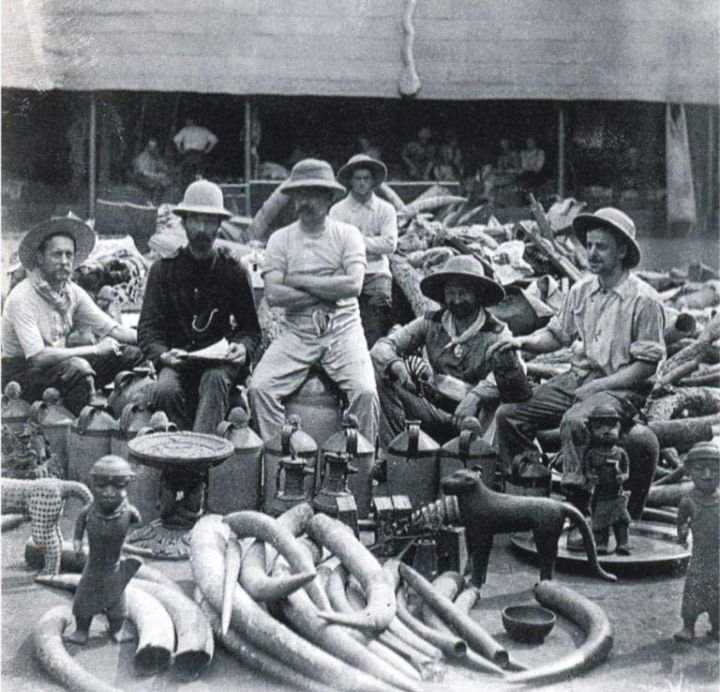
British officials and other European visitors repeatedly criticized Dahomey’s human sacrifices and slave trading. By the nineteenth century, Dahomey was increasingly caught between its established political system and the expanding influence of European colonial powers.
Eventually, France invaded Dahomey.
After military conflict, the kingdom was defeated and incorporated into the French colonial system in the 1890s. The independent Dahomean monarchy effectively came to an end.
The Historabase Editorial Team is dedicated to exploring and sharing the stories that have shaped Africa and the wider world. Our work covers African history, ancient civilizations, empires, historical figures, wars, cultures, political movements, and important events from the past.
We aim to present history in a clear, engaging, and accessible way, combining historical records with careful research to help readers better understand the people, events, and civilizations that shaped our world.




One Comment