Death did not always mark the end of a king’s role in traditional African societies. In several precolonial kingdoms, royal funerals were elaborate ceremonies through which political authority, religion, ancestry and the afterlife were connected.
In some West African societies, historical accounts describe servants, court officials, wives, captives or other attendants being killed or buried in connection with the funeral of a powerful ruler. The underlying belief was not simply that a king needed company. These practices reflected ideas about kingship, the afterlife and the continuing relationship between a ruler and his household.
However, this was not a universal African practice. African kingdoms had different burial traditions, and many royal burials did not involve human sacrifice. Even where it occurred, the exact customs changed over time.
The King Was More Than an Ordinary Person
In many traditional African political systems, the king occupied a special religious and political position.
A ruler could be regarded as the guardian of the kingdom’s traditions, the representative of royal ancestors, or a figure whose actions had consequences for the wider community.
Consequently, his death could be treated as a major event affecting the entire kingdom.
The funeral was therefore not simply about disposing of the body. It could involve rituals intended to ensure that the ruler was properly received by the ancestors or spiritual realm and that his relationship with the kingdom continued after death.
This helps explain why royal funerals could become extraordinarily elaborate.
The Belief in Continuing Service
One explanation for burying attendants with a ruler was the belief that relationships did not necessarily end with death.
If a king had servants, officials or attendants who served him during his lifetime, some traditions envisioned those relationships continuing beyond the grave.
The attendants could therefore be understood as accompanying the ruler into the next world.
Historical accounts of Asante royal funerals, for example, describe people connected to the royal household being killed to accompany a deceased king. A scholarly study of West African human sacrifice notes that such practices were associated with mortuary customs among wealthy and powerful people in parts of the region.
This does not mean that every person associated with a royal funeral willingly chose to die. Historical evidence indicates that some victims were compelled, while other accounts describe people who were regarded as volunteers. The circumstances differed considerably.
The Asante Example
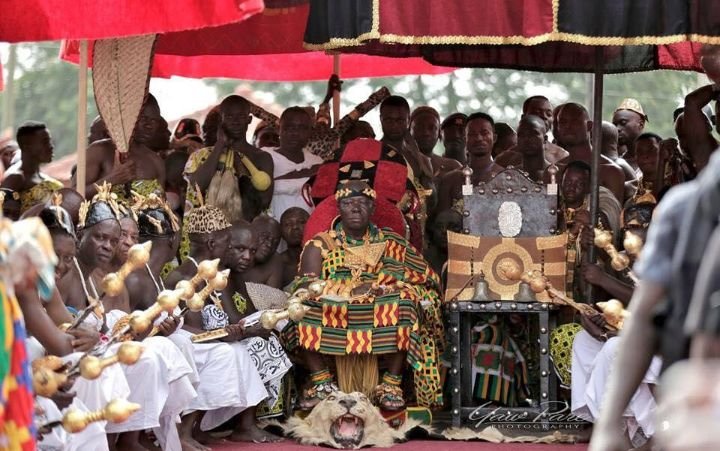
The Asante kingdom, centred in present-day Ghana, provides some of the clearest historical accounts of royal funerary sacrifice.
Nineteenth- and early twentieth-century descriptions of Asante funeral practices recorded the killing of people associated with the royal household. These could include office holders and attendants whose roles were symbolically connected to the deceased ruler.
A detailed account published by anthropologist R. S. Rattray described representatives of different household offices being killed to accompany a king. The account also distinguishes between court officials, captives, criminals and people described as volunteers.
The historical record must nevertheless be approached carefully. Many surviving descriptions were written by European observers, missionaries or colonial-era writers, whose interpretations could be shaped by their own cultural assumptions.
Modern historians therefore compare such accounts with African traditions, archaeological evidence and other contemporary records rather than accepting every historical description literally.
Dahomey and the Royal Afterlife
The Kingdom of Dahomey, located in present-day Benin, also developed highly elaborate royal funerary traditions.
European observers reported large-scale sacrifices connected with royal ceremonies and funerals. Modern scholarship confirms that human sacrifice existed in Dahomey, although the numbers and details reported by some early observers require careful scrutiny.
Research on Dahomean political and religious institutions shows that royal power was closely connected with control over ritual. Kingly authority extended into the religious sphere, particularly through the public cult of royal ancestors.
This is important because it shows that royal funerals were also political events.
The death of a king could reinforce the authority of the monarchy by demonstrating the extraordinary status of the royal institution.
Why Servants?
The presence of servants or court officials had symbolic meaning.
A king’s household represented his authority. Palace officials, attendants and servants were not simply private employees in the modern sense. Some occupied formal positions within the royal institution.
Their association with the king could therefore continue into funeral rituals.
In societies where the afterlife was understood as an extension of social relationships, sending attendants with a ruler could symbolise the continuation of his royal household beyond death.
In some traditions, attendants were also expected to perform particular roles. Historical accounts of Asante funerals, for instance, describe people whose duties included acting as heralds or performing other symbolic functions.
The concept was therefore more complicated than simply “a king wanted servants in the afterlife.”
A Demonstration of Royal Power
Royal funerals could also reinforce political authority.
The enormous resources required for a royal funeral demonstrated the power of the state. A king’s death could bring together officials, warriors, religious specialists, members of royal families and ordinary subjects.
Where human sacrifice occurred, the deaths of victims could demonstrate the extraordinary authority attributed to the monarchy.
Research on Dahomey has shown how rulers sought to concentrate religious as well as political authority around the monarchy. Royal ancestral worship became particularly important in this process.
The funeral was therefore simultaneously a religious ceremony and a statement about who possessed power.
Not Everyone Was a Servant
The phrase “buried with his servants” can create an inaccurate picture if taken literally.
Historical accounts mention different categories of people associated with royal funerary sacrifices, including household officials, captives, criminals, slaves and, in some accounts, people who volunteered.
These groups did not have identical social positions or reasons for being involved.
This distinction matters because modern retellings sometimes reduce complicated funerary systems to a simple story of a king being buried with his servants.
The historical reality was more complex.
The Spiritual Meaning of Death
Underlying these practices was a broader African understanding of death in which the deceased could remain connected to the living.
Ancestor veneration was important in many African societies, although beliefs differed greatly from one culture to another.
The dead could be remembered, honoured and incorporated into continuing relationships between families and communities.
Royal ancestors could have an even greater significance.
In Buganda, for example, the tombs of the Kabakas became important spiritual centres where rituals continue to be performed. UNESCO describes the Kasubi tombs as a place where communication with the spiritual world is maintained.
Yet Buganda’s royal burial tradition also demonstrates why it is wrong to assume that African royal burials generally involved servants being killed. The surviving royal tombs at Kasubi are monumental burial and ritual spaces, not evidence of a universal practice of human sacrifice.
What Happened to the Tradition?
The practice of human sacrifice declined and disappeared in many areas as political systems changed and external religious influences expanded.
Christianity and Islam became influential across different parts of Africa, while expanding colonial governments increasingly criminalised practices involving human sacrifice.
African kingdoms themselves also changed their political and religious institutions.
By the modern period, royal funerals in Africa had developed into very different ceremonies. In many places, traditional royal burial customs survived without the violent practices described in earlier historical sources.
The History Behind the Shock
The idea of a king being accompanied into death by members of his household can be shocking today.
But to understand it historically, it must be placed within the worldview of the societies that practiced it.
For some communities, death was not imagined as complete separation from earthly relationships. A powerful ruler could continue to exist within an ancestral or spiritual realm, and his household could symbolically continue with him.
Royal funerary sacrifices could therefore combine religion, political authority, social hierarchy and beliefs about the afterlife.
At the same time, these practices should not be presented as representative of Africa as a whole. The continent contained, and continues to contain, an enormous variety of cultures and religious traditions.
Some African kings were buried in elaborate royal tombs. Others were commemorated through shrines and ancestral rituals. In certain historical settings, attendants or other people were killed in connection with royal funerals.
The story is ultimately not simply about kings being buried with servants. It is about how particular African societies understood kingship, death, loyalty and the world believed to exist beyond life.
The Historabase Editorial Team is dedicated to exploring and sharing the stories that have shaped Africa and the wider world. Our work covers African history, ancient civilizations, empires, historical figures, wars, cultures, political movements, and important events from the past.
We aim to present history in a clear, engaging, and accessible way, combining historical records with careful research to help readers better understand the people, events, and civilizations that shaped our world.