Long before the creation of modern Nigeria, powerful kingdoms and empires flourished across West Africa. Among them was the Oyo Empire, a major Yoruba state that became one of the most influential political and military powers in the region.
At its height, Oyo controlled a large territory, developed a sophisticated political system and dominated important trade routes. Its influence extended far beyond the city of Oyo, making it a major force in the history of present-day southwestern Nigeria and neighbouring parts of West Africa.
The Origins of the Oyo Empire
The Oyo state emerged among the Yoruba people, with its capital located in the northern part of present-day southwestern Nigeria.
According to Yoruba traditions, the origins of the Oyo dynasty are connected to Oduduwa, the legendary ancestor associated with the establishment of several Yoruba kingdoms.
Oyo gradually grew from a regional kingdom into a powerful state. Its location was particularly important because it connected the forest regions of the south with the savannah and trading networks further north.
The Political System of Oyo
One of the reasons for Oyo’s success was its sophisticated system of government.
The ruler was known as the Alaafin. Although the Alaafin was the supreme ruler, his authority was not absolute.
Several important institutions helped regulate royal power. One of the most influential was the Oyo Mesi, a council of senior officials who played a major role in government.
The Bashorun, the head of the Oyo Mesi, was one of the most powerful officials in the empire.
This system created a balance between the authority of the Alaafin and the political influence of powerful chiefs.
The empire was also divided into provinces governed by officials who answered to the central government.
The Rise of Oyo’s Military Power
Oyo became particularly powerful because of its highly organised military.
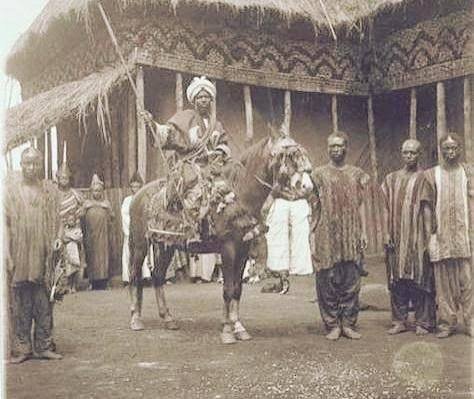
One of its greatest advantages was its use of cavalry.
Horses were difficult to maintain in the forest regions of southern West Africa because of diseases such as trypanosomiasis. However, the northern savannah provided better conditions for horses.
Oyo’s location allowed it to develop a strong cavalry force, which became an important part of its military strength.
The empire’s cavalry enabled Oyo to project power over large distances and defeat neighbouring states.
The Alaafin and the Empire’s Expansion
During the 17th and 18th centuries, Oyo expanded significantly.
Its rulers conquered or brought neighbouring territories under their influence, while other states became tributaries.
Oyo’s influence eventually extended into parts of present-day Benin Republic and Togo, as well as large areas of southwestern Nigeria.
The empire’s expansion was not based entirely on direct occupation. In many cases, local rulers remained in place but were required to recognise Oyo’s authority and pay tribute.
This allowed Oyo to maintain influence over a large territory without having to administer every community directly.
Trade and Wealth
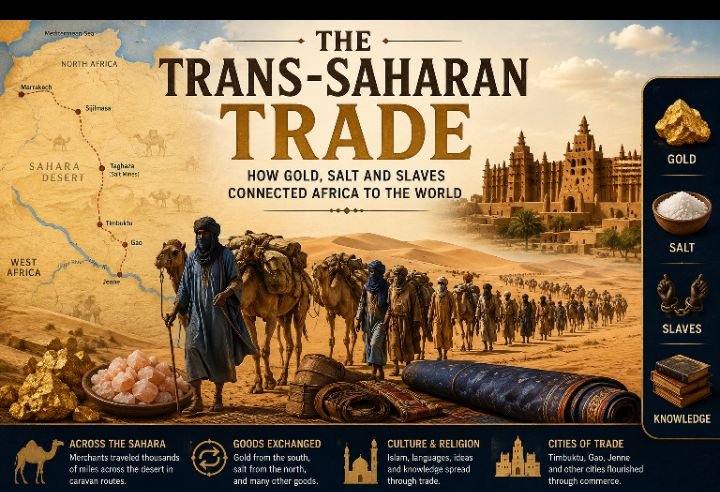
Trade was central to Oyo’s prosperity.
The empire benefited from its position between the northern savannah and the southern forest zones.
Merchants traded goods including horses, kola nuts, textiles, salt and other commodities.
Oyo also became involved in the Atlantic economy that developed along the West African coast.
The growth of European coastal trade increased the importance of Oyo’s access to markets and commercial routes.
Taxes and tribute collected from territories under Oyo’s influence provided additional wealth for the empire.
The Decline of the Oyo Empire
Despite its strength, Oyo eventually faced serious internal and external challenges.
Political conflicts between the Alaafin and powerful officials weakened the central government.
At the same time, changes in regional trade and growing military pressure from neighbouring states created additional difficulties.
During the late 18th and early 19th centuries, the empire’s political structure became increasingly unstable.
The rise of the Fulani-led Sokoto Caliphate also changed the political balance of northern and central West Africa.
Oyo faced pressure from several directions, while internal divisions reduced its ability to respond effectively.
The Fall of Old Oyo
By the early 19th century, the old Oyo capital was abandoned.
The empire fragmented, and several territories that had previously been under Oyo’s influence became independent.
The fall of Oyo did not mean the end of Yoruba political power. New centres emerged, including Ibadan, which became an important military and political power in the region.
The Yoruba states continued to influence the political history of southwestern Nigeria throughout the 19th century.
The Legacy of the Oyo Empire
The Oyo Empire left a lasting legacy in West African history.
Its political institutions demonstrated a sophisticated approach to governance, with the Alaafin sharing power with influential councils and officials.
Its military organisation, particularly its cavalry, allowed it to control a vast territory.
Oyo also played an important role in regional commerce and helped shape the political and cultural development of the Yoruba people.
Today, the history of Oyo remains an important part of Nigeria’s pre-colonial heritage. The traditional institution of the Alaafin of Oyo continues to exist, serving as a reminder of a kingdom that once stood among the most powerful states in West Africa.
Conclusions
The Oyo Empire was far more than a traditional Yoruba kingdom. It was a sophisticated political and military power with an organised government, a strong economy and extensive regional influence.
Its rise demonstrated the ability of African states to build complex political institutions and powerful armies long before European colonial rule.
Although internal conflicts, external pressures and changing regional conditions eventually brought the empire down, Oyo’s influence survived.
Its story remains an important chapter in Nigerian history and a powerful reminder of the complexity and achievements of pre-colonial Africa.
The Historabase Editorial Team is dedicated to exploring and sharing the stories that have shaped Africa and the wider world. Our work covers African history, ancient civilizations, empires, historical figures, wars, cultures, political movements, and important events from the past.
We aim to present history in a clear, engaging, and accessible way, combining historical records with careful research to help readers better understand the people, events, and civilizations that shaped our world.