The Songhai Empire was one of the most powerful states in African history. At its height in the 15th and 16th centuries, it controlled a vast territory across West Africa, dominated important trans-Saharan trade routes and became a major centre of Islamic scholarship.
From its capital at Gao, the empire expanded across large parts of present-day Mali, Niger, Burkina Faso and neighbouring regions. Its wealth came largely from trade in gold, salt, livestock and other valuable goods. Yet, despite its enormous strength, the Songhai Empire eventually collapsed after an invasion from Morocco in 1591.
Its history remains an important example of how commerce, strong leadership, military power and political stability can build a great empire—and how internal weaknesses and technological disadvantages can contribute to its downfall.
The Origins of the Songhai Empire
The Songhai people established themselves around the city of Gao, located along the Niger River. Gao developed into an important trading centre because of its position near major commercial routes connecting West Africa with North Africa.
Early Songhai rulers gradually expanded their influence around Gao. However, for several centuries, the kingdom remained under the influence of the Mali Empire, which dominated much of West Africa.
Songhai eventually regained its independence and began expanding rapidly. The turning point came during the reign of Sonni Ali, one of the empire’s most famous rulers.
Sonni Ali and the Rise of Songhai
Sonni Ali ruled from 1464 to 1492 and transformed Songhai from a regional kingdom into a major empire.
He was an effective military commander who understood the importance of controlling the Niger River. His armies captured important cities, including Timbuktu in 1468 and Jenne in 1473.
These conquests were extremely important because both cities were major centres of commerce and learning.
Sonni Ali also developed a powerful army, including cavalry and naval forces that operated along the Niger River. By controlling important towns, agricultural areas and trade routes, he greatly increased Songhai’s wealth and influence.
However, his relationship with Muslim scholars was sometimes complicated. Although he was a Muslim, some scholars viewed his religious practices and policies with suspicion.
After his death in 1492, Songhai entered another important phase under the Askia dynasty.
Askia Muhammad and the Golden Age
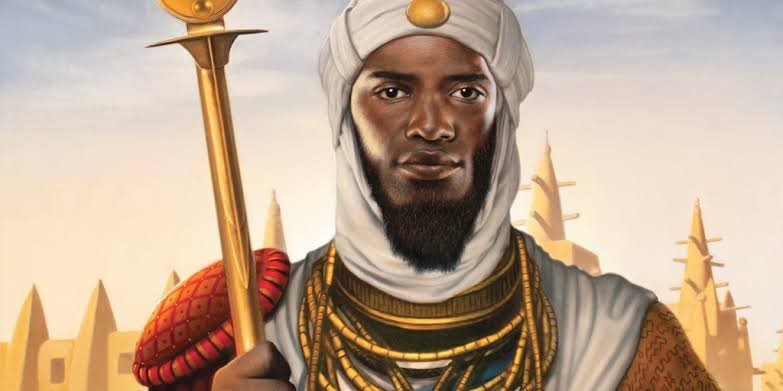
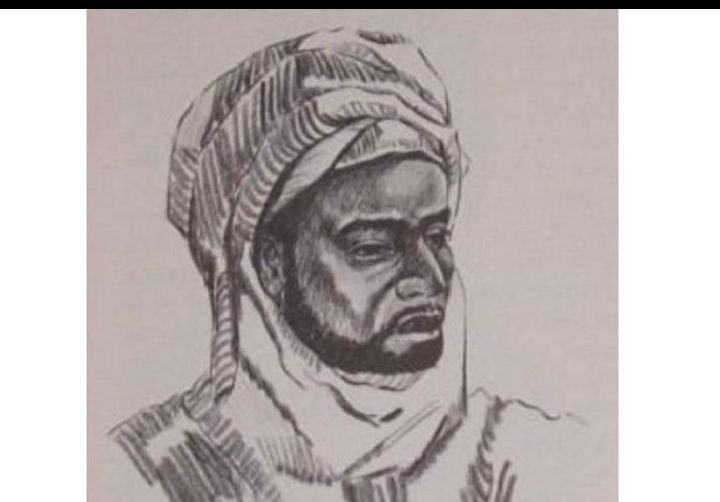
One of the greatest rulers of Songhai was Askia Muhammad I, who came to power in 1493.
Askia Muhammad strengthened the administration of the empire and introduced reforms that helped make Songhai more organised. He divided the empire into provinces and appointed officials to administer them.
He also promoted Islam and established closer relationships with Muslim scholars.
Under his leadership, cities such as Timbuktu became important centres of education. Scholars studied subjects including Islamic law, theology, mathematics, astronomy and literature.
Askia Muhammad also expanded Songhai’s territory through military campaigns. At its peak, the empire stretched across a huge area of West Africa.
The Wealth of Songhai
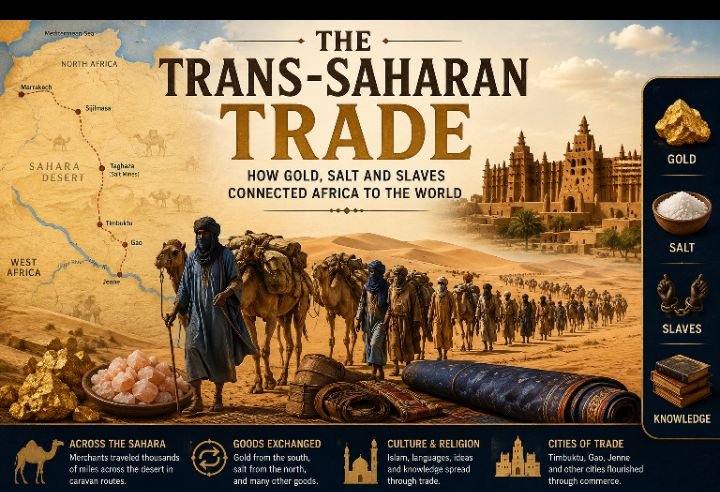
Songhai’s economic power was closely connected to the trans-Saharan trade.
Merchants travelled across the Sahara carrying goods between West Africa and North Africa. Gold from the southern regions of West Africa was exchanged for salt from the Sahara, as well as textiles, horses, weapons and other products.
Songhai benefited enormously from taxing trade.
The Niger River also played an important role. It provided water for agriculture and served as a major transportation route. Farmers produced crops that supported the empire’s growing population.
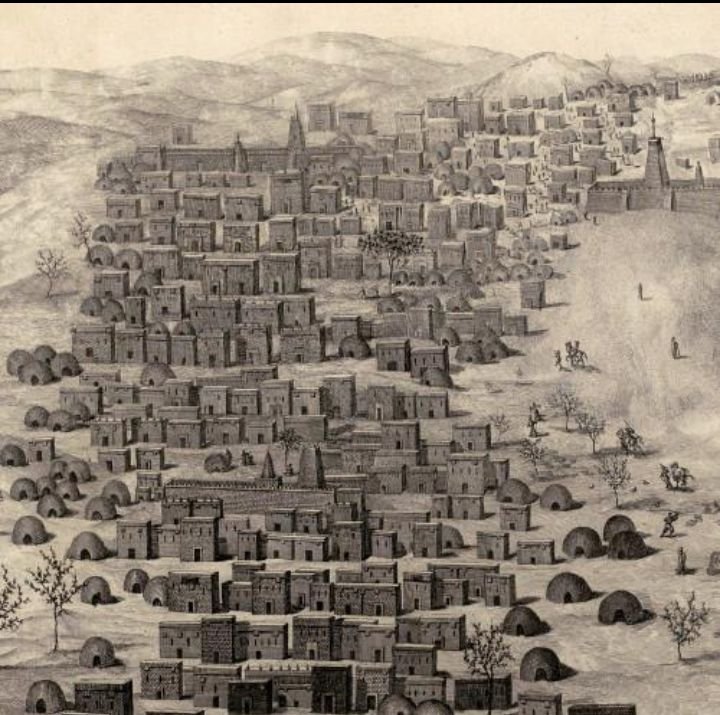
Cities such as Gao, Timbuktu and Jenne became important commercial centres.
Songhai’s wealth was therefore not based on a single resource. Its strength came from controlling trade routes, cities, agricultural lands and strategic sections of the Niger River.
Timbuktu: A Centre of African Knowledge
Timbuktu became one of the most famous intellectual centres in Africa during the Songhai period.
The city’s mosques and schools attracted scholars from different parts of the Islamic world. The Sankore Mosque and its associated learning community became particularly important.
Thousands of manuscripts were produced and preserved, covering subjects ranging from religion and law to science, medicine and literature.
This intellectual tradition challenges the outdated idea that medieval Africa lacked advanced centres of education. Timbuktu demonstrates that West Africa was connected to wider intellectual and commercial networks centuries ago.
The Beginning of Decline
Despite its enormous power, Songhai faced serious challenges.
One problem was the difficulty of governing such a large empire. Different regions had their own interests, and maintaining political unity required strong leadership.
After Askia Muhammad was removed from power in 1528, Songhai experienced periods of political instability. Several rulers struggled for control, weakening the central government.
Succession disputes also became increasingly damaging. When powerful leaders compete for the throne, military and political resources can be diverted away from defending the empire.
At the same time, Morocco was becoming increasingly interested in Songhai’s wealth.
The Moroccan Invasion
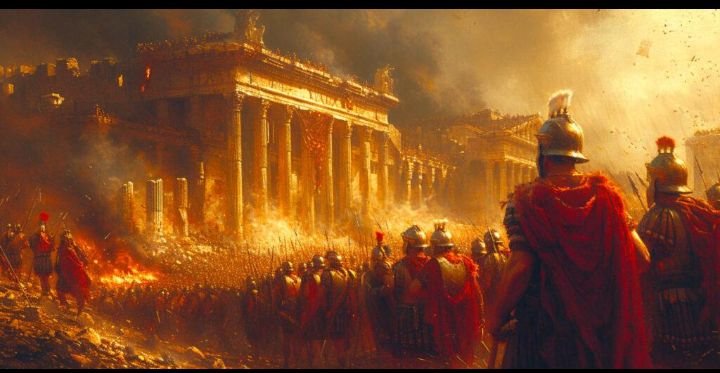
The final blow came in 1591, when Sultan Ahmad al-Mansur of Morocco sent an army across the Sahara.
The Moroccan forces were led by Judar Pasha and possessed firearms, including arquebuses and cannon. Songhai had a much larger army, but its traditional weapons and military tactics were less effective against Moroccan gunpowder technology.
The two sides met at the Battle of Tondibi near Gao.
Despite having greater numbers, Songhai suffered a decisive defeat.
The Moroccan army captured Gao and later occupied Timbuktu and Jenne. Songhai’s central government was effectively destroyed.
Although resistance continued in parts of the former empire, the great Songhai Empire never recovered its former power.
Why Did the Songhai Empire Fall?
The collapse of Songhai cannot be blamed on one event alone.
Several factors contributed to its downfall:
Political instability: Leadership struggles weakened the central government.
Succession disputes: Rival claimants fought for control of the empire.
The empire’s enormous size: Maintaining control over distant territories was difficult.
Military technology: Moroccan forces had superior firearms and artillery.
Economic pressure: The disruption of major trade routes weakened the empire.
Internal divisions: Local leaders did not always remain completely loyal to the central government.
The Moroccan invasion was the decisive event, but Songhai had already become vulnerable because of its internal weaknesses.
The Legacy of the Songhai Empire
The Songhai Empire remains one of the greatest political and economic achievements in African history.
Its rulers built a sophisticated state that controlled enormous territories, encouraged trade and supported centres of Islamic learning.
The empire also demonstrated the importance of West Africa in the medieval global economy. Gold from West Africa helped connect the region to North African, Mediterranean and wider Islamic markets.
Today, the history of Songhai can still be seen in the ancient cities, architecture, manuscripts and cultural traditions of the region.
The empire eventually disappeared, but its legacy survived.
The story of Songhai is not simply a story of an empire that fell. It is the story of a powerful African civilisation that built its wealth through trade, strengthened itself through military power and became a centre of knowledge that connected West Africa to the wider world.
The Historabase Editorial Team is dedicated to exploring and sharing the stories that have shaped Africa and the wider world. Our work covers African history, ancient civilizations, empires, historical figures, wars, cultures, political movements, and important events from the past.
We aim to present history in a clear, engaging, and accessible way, combining historical records with careful research to help readers better understand the people, events, and civilizations that shaped our world.