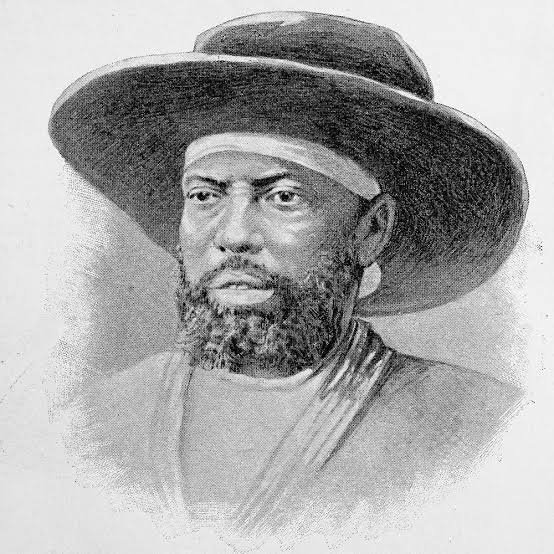
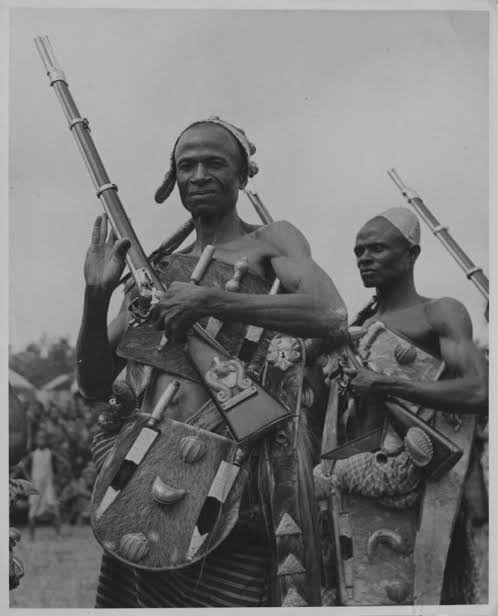
The Battle of Adwa, fought on 1 March 1896, was one of the most important military victories in African history. It was a decisive confrontation between the Ethiopian Empire, led by Emperor Menelik II, and the Kingdom of Italy.
At a time when European powers were rapidly dividing Africa among themselves, Ethiopia stood as one of the continent’s few independent states. Italy attempted to bring Ethiopia under its colonial control, but Ethiopian forces delivered a crushing defeat at Adwa. The victory preserved Ethiopia’s independence and became a powerful symbol of African resistance to European colonialism.
The Scramble for Africa
During the late 19th century, European powers competed aggressively for territory and influence in Africa. Britain, France, Germany, Belgium, Portugal and Italy established colonies across the continent.
Italy, which had become a unified kingdom only in 1861, wanted to build its own African empire. It established control over parts of the Red Sea coast and gradually expanded its presence in Eritrea.
Italy then turned its attention toward Ethiopia, one of the most powerful independent states in Africa.
The Treaty of Wuchale
In 1889, Emperor Menelik II and Italy signed the Treaty of Wuchale. The agreement was supposed to establish peaceful relations between the two countries, but differences between the Italian and Amharic versions of the treaty soon caused serious problems.
The Italian version contained language that appeared to make Ethiopia an Italian protectorate, while the Ethiopian version did not impose the same obligation.
When Italy attempted to use the treaty to justify control over Ethiopia’s foreign affairs, Menelik rejected the claim. Diplomatic relations deteriorated, and military confrontation became increasingly likely.
Menelik II Prepares for War
Emperor Menelik II recognised the seriousness of the Italian threat and began preparing for a major conflict.
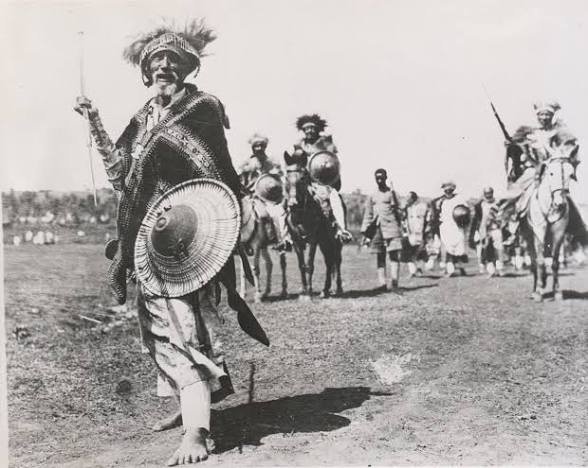
He mobilised soldiers from different parts of the Ethiopian Empire and brought together a huge army. Ethiopian forces were equipped with a mixture of traditional weapons and modern firearms acquired through international trade.
Menelik was also supported by Empress Taytu Betul, who strongly opposed Italian expansion. Ethiopian leaders understood that the conflict was not simply about territory; it was about protecting the country’s sovereignty.
By early 1896, Menelik had assembled an army numbering in the tens of thousands. The exact size of the Ethiopian force remains disputed, with historical estimates varying considerably.
The Italian Advance
The Italian army was commanded by General Oreste Baratieri. Italian forces had modern weapons and military training, but their commanders underestimated the strength of the Ethiopian army.
Baratieri moved his troops toward the Ethiopian positions around Adwa. The Italian army was divided into several columns as it advanced through difficult mountainous terrain.
This decision proved disastrous.
The Ethiopian army had a major advantage because its commanders were familiar with the landscape. Menelik’s forces were able to move quickly through the mountains and attack the separated Italian formations.
The Battle of Adwa
The battle began on the morning of 1 March 1896.
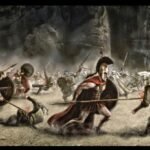
Ethiopian forces attacked the Italian columns from different directions. Ethiopian commanders, including Ras Alula, Ras Makonnen and Ras Mengesha, played important roles in the fighting.
The Italians struggled to coordinate their forces because the different units had become separated across the difficult terrain.
As the fighting intensified, Ethiopian troops surrounded and overwhelmed several Italian formations. Italian soldiers suffered heavy casualties, while thousands were captured.
By the end of the battle, the Italian army had suffered a devastating defeat.
The victory was not simply the result of having more soldiers. Ethiopian forces had benefited from effective mobilisation, knowledge of the terrain, determined leadership and access to modern firearms.
Why Adwa Was So Important
The Battle of Adwa had consequences far beyond Ethiopia.
Italy was forced to recognise Ethiopia’s independence, effectively ending its attempt to establish Ethiopia as a colony. The Treaty of Addis Ababa, signed later in 1896, formally recognised Ethiopia as an independent state and replaced the disputed Treaty of Wuchale.
Ethiopia had achieved something remarkable: it had defeated a major European power during the height of the Scramble for Africa.
The victory also strengthened Menelik II’s position and increased Ethiopia’s international prestige.
A Symbol of African Resistance
The significance of Adwa grew even further during the 20th century. African nationalists and anti-colonial movements looked to Ethiopia’s victory as evidence that European imperialism could be challenged.
For many Africans and people of African descent around the world, Adwa became a symbol of freedom, sovereignty, courage and resistance.
Ethiopia’s survival as an independent African state gave enormous psychological importance to the victory. Although Ethiopia was later occupied by Fascist Italy between 1936 and 1941, the legacy of Adwa remained deeply rooted in Ethiopian national identity.
The Legacy of Adwa
Today, the Battle of Adwa remains one of the defining moments in African history.
It demonstrated that European military expansion was not unstoppable and that an organised African state could successfully defend its territory and independence.
The battle also reminds historians that Africa’s history cannot be understood only through the story of European colonisation. African kingdoms and empires made their own strategic decisions, formed alliances, acquired modern weapons and actively resisted foreign domination.
More than a century after the battle, Adwa continues to stand as a powerful reminder of Ethiopia’s determination to protect its sovereignty and of Africa’s long history of resistance to colonial rule.
The Historabase Editorial Team is dedicated to exploring and sharing the stories that have shaped Africa and the wider world. Our work covers African history, ancient civilizations, empires, historical figures, wars, cultures, political movements, and important events from the past.
We aim to present history in a clear, engaging, and accessible way, combining historical records with careful research to help readers better understand the people, events, and civilizations that shaped our world.