For more than 3,000 years, Ancient Egypt stood as one of the most remarkable civilizations in human history. Along the banks of the Nile River, Egyptians built powerful kingdoms, enormous temples, sophisticated cities and monumental tombs that continue to fascinate the world today. Its achievements in writing, architecture, medicine, mathematics and government influenced generations long after the civilization disappeared.
But Egypt’s remarkable history was not one continuous period of prosperity. It experienced powerful rises, political divisions, foreign invasions and eventual conquest.
The Rise of Ancient Egypt
The story of Ancient Egypt began along the Nile, whose annual flooding provided fertile soil for farming in an otherwise dry region. As settlements grew, communities developed into larger political centres.
Around 3100 BC, Upper and Lower Egypt were traditionally unified under a single ruler, marking the beginning of dynastic Egypt. This early period laid the foundations for a centralised government ruled by kings who later became known as pharaohs.
The pharaoh was not simply a political leader. Egyptians regarded the ruler as a divine figure responsible for maintaining order, justice and harmony in society.
The Age of the Pyramids
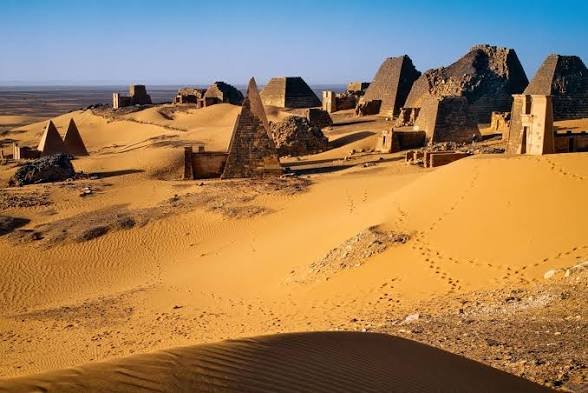
Egypt reached an early peak during the Old Kingdom, particularly between roughly 2686 and 2181 BC. This period is often remembered as the age of the great pyramids.
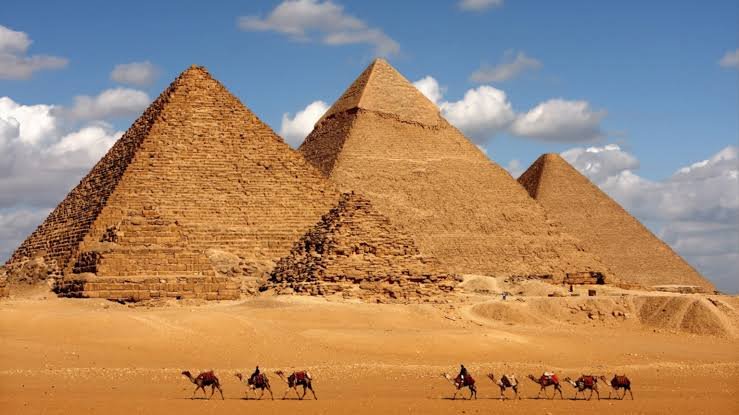
The most famous example is the Great Pyramid of Giza, built for Pharaoh Khufu. Alongside the pyramids of Khafre and Menkaure, it demonstrates the extraordinary organisational and engineering abilities of ancient Egyptian society.
Thousands of workers, engineers, craftsmen and administrators contributed to these enormous projects. The pyramids were primarily royal burial monuments connected to Egyptian beliefs about death and the afterlife.
However, the Old Kingdom eventually weakened. Political instability, economic difficulties and changes in climate contributed to the collapse of central authority.
The Middle Kingdom
After a period of political division, Egypt was reunited during the Middle Kingdom, which lasted approximately from 2055 to 1650 BC.
This era brought renewed political stability, economic growth and territorial expansion. Egyptian rulers strengthened administration, developed irrigation systems and expanded trade with neighbouring regions.
The Middle Kingdom also became an important period for Egyptian literature and artistic development. Yet Egypt again faced political problems, eventually allowing foreign rulers known as the Hyksos to gain control over parts of the country.
The New Kingdom: Egypt at Its Greatest
The New Kingdom, beginning around 1550 BC, was arguably the height of Egyptian power.
Egypt became a major military and diplomatic power in the ancient Near East. Pharaohs such as Hatshepsut, Thutmose III, Akhenaten, Tutankhamun and Ramesses II ruled during this period.
Hatshepsut expanded trade and commissioned impressive building projects. Thutmose III led successful military campaigns and greatly expanded Egyptian influence.
Ramesses II became particularly famous for his military campaigns and monumental construction. His reign also produced a famous peace treaty with the Hittite Empire after years of conflict.
During the New Kingdom, Egypt controlled territories beyond the Nile Valley and benefited from international trade. Temples at Karnak, Luxor and Abu Simbel reflected the wealth and power of the period.
Decline and Foreign Rule
Despite its achievements, Egypt gradually lost some of its political and military strength. Internal struggles, economic pressures and conflicts with foreign powers weakened the kingdom.
After the New Kingdom, Egypt experienced periods of political fragmentation and foreign domination. Libyans, Nubians and other foreign rulers controlled Egypt at different times.
The country was later conquered by the Persian Empire. Although Egyptian rulers occasionally regained independence, Egypt increasingly became part of larger imperial struggles.
In 332 BC, Alexander the Great conquered Egypt. After his death, Egypt came under the rule of the Ptolemaic dynasty, founded by his general Ptolemy I.
The Ptolemies maintained many Egyptian traditions while ruling as a Greek-speaking dynasty. Alexandria became one of the ancient world’s greatest centres of learning, trade and culture.
The Final Fall of Ancient Egypt
The Ptolemaic Kingdom eventually became increasingly dependent on Rome. Internal political conflicts further weakened the kingdom.
The reign of Cleopatra VII marked the final chapter of independent ancient Egyptian rule. After her defeat and death in 30 BC, Egypt became a Roman province.
This did not mean Egyptian culture immediately disappeared. Egyptian religion, customs, art and traditions continued for centuries under Roman rule and beyond.
The Legacy of Ancient Egypt
Ancient Egypt’s political independence eventually ended, but its influence survived.
Egyptians developed one of the world’s earliest writing systems, created sophisticated calendars and made important advances in mathematics, engineering and medicine. Their monumental architecture remains among humanity’s most impressive achievements.
The pyramids, temples and tombs also provide evidence of a civilization deeply concerned with religion, death and the afterlife.
Ancient Egypt rose because of the Nile, strong political institutions, agricultural wealth and effective organisation. It declined through a combination of internal instability, economic pressures and repeated foreign intervention.
Yet its fall did not erase its achievements. Thousands of years later, Ancient Egypt remains one of history’s most enduring civilizations, continuing to shape our understanding of the ancient world.
The Historabase Editorial Team is dedicated to exploring and sharing the stories that have shaped Africa and the wider world. Our work covers African history, ancient civilizations, empires, historical figures, wars, cultures, political movements, and important events from the past.
We aim to present history in a clear, engaging, and accessible way, combining historical records with careful research to help readers better understand the people, events, and civilizations that shaped our world.