The pyramids of ancient Egypt are among the most remarkable monuments ever constructed. Built thousands of years ago without modern machinery, these enormous stone structures continue to attract historians, archaeologists and visitors from around the world.
The most famous is the Great Pyramid of Giza, built during Egypt’s Old Kingdom more than 4,500 years ago. For centuries, people have wondered why the ancient Egyptians invested enormous amounts of labour and resources in constructing such massive monuments.
Were the pyramids simply enormous tombs? Were they religious monuments? Or did they serve another purpose?
Archaeological evidence provides a clear answer: the Egyptian pyramids were primarily built as monumental tombs for kings and as part of elaborate funerary complexes designed to support the pharaoh’s journey into the afterlife.
However, the reasons behind their construction go much deeper than burial alone.
The Pyramids Were Royal Tombs
Ancient Egyptians believed that death was not the end of existence.
They believed that a person’s life continued in the afterlife, and that the dead required proper preparation and religious rituals to survive beyond death.
Pharaohs were considered more than ordinary rulers. They were closely connected with the gods and played an important religious role in maintaining order throughout Egypt.
When a pharaoh died, his body was preserved through mummification, while priests performed rituals intended to help his spirit enter the afterlife.
The pyramid served as the centrepiece of this process.
Inside or beneath the pyramid was a burial chamber designed to protect the king’s remains and royal burial equipment.
The monument itself demonstrated the pharaoh’s enormous power and his connection to the divine.
Why Were the Pyramids So Large?
The enormous size of the pyramids was not simply an attempt to create impressive buildings.
Size had religious and political meaning.
The pharaoh was believed to have a special relationship with the gods, and the construction of a massive monument demonstrated his ability to organize the resources of the entire kingdom.
The pyramid also provided a permanent monument to the king.
Thousands of years after the pharaoh’s death, his monument could still dominate the landscape.
For ancient Egyptians, this permanence mattered because the continued existence of the king’s funerary monument was connected to his eternal existence.
The Great Pyramid of Giza
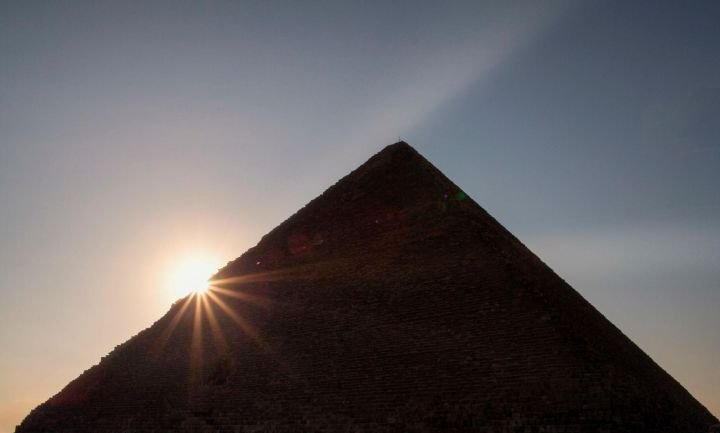
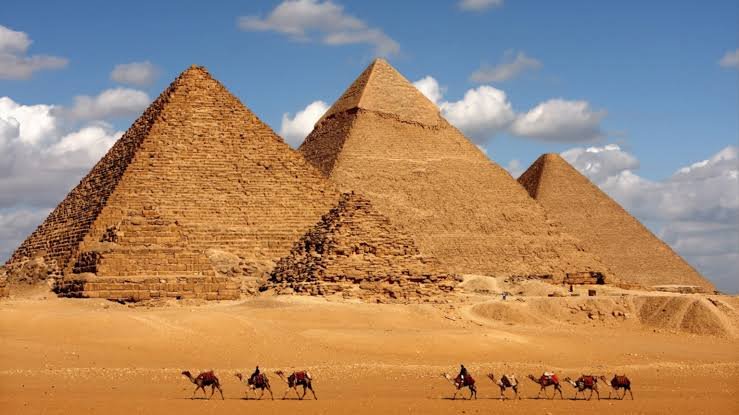
The most famous pyramid is the Great Pyramid, built for Pharaoh Khufu, who ruled during the Fourth Dynasty.
It was originally approximately 146.6 metres tall, although erosion and the loss of its outer casing stones have reduced its height.
For thousands of years, it was the tallest human-made structure in the world.
The Great Pyramid was part of a much larger complex that included temples, causeways and other structures associated with the king’s burial and worship.
Its construction required enormous planning.
Workers had to quarry, transport and position millions of blocks of stone.
The precision of the project demonstrates the sophistication of ancient Egyptian engineering and administration.
How Were the Pyramids Built?
One of the biggest misconceptions about the pyramids is that they were constructed primarily by slaves.
Evidence discovered at Giza suggests a more complicated picture.
Archaeologists have found workers’ settlements, bakeries, food remains and evidence of organized labour near the pyramids.
The workforce appears to have included skilled craftsmen and labourers who were organized into teams.
Some workers may have been seasonal labourers who worked on royal construction projects when agricultural work was limited.
This enormous workforce required an advanced administrative system.
Food had to be supplied, tools had to be maintained and workers had to be housed and organized.
The pyramid project therefore demonstrates the power of the Egyptian state as much as it demonstrates architectural skill.
Religion and the Journey to the Afterlife
Religion was central to pyramid construction.
Ancient Egyptian beliefs about death involved several aspects of the individual, including the ka and ba, concepts that modern translations cannot perfectly capture.
The Egyptians believed the deceased needed their physical body, offerings and religious rituals to continue their existence.
This helps explain why enormous effort was invested in protecting royal burials.
The pyramid was part of a larger sacred landscape designed to connect the world of the living with the realm of the dead.
Temples near the pyramids were used for rituals and offerings.
Priests could continue performing ceremonies for the deceased king long after his burial.
The Pyramid Shape Had Religious Meaning
The pyramid’s shape may also have carried religious significance.
One important connection is with the ancient Egyptian solar cult.
The sun was one of the most important forces in Egyptian religion, and the sun god Ra played a central role in later Egyptian religious traditions.
The pyramid’s sloping sides may have been associated with rays of sunlight reaching the earth.
There was also a long-standing Egyptian creation tradition involving a primeval mound emerging from the waters of chaos.
The pyramid may have symbolized this sacred mound.
The exact religious meaning of the pyramid shape probably changed over time, but it clearly belonged to a broader religious tradition rather than being an arbitrary architectural design.
Why Did Pyramid Building Begin?
The pyramids did not appear suddenly.
They developed from earlier Egyptian burial traditions.
Before the great pyramids, important Egyptians were buried in structures called mastabas. These were rectangular buildings constructed above underground burial chambers.
During the reign of Djoser, an architect traditionally identified as Imhotep, the Egyptians developed the Step Pyramid at Saqqara.
The Step Pyramid was created by stacking several levels of stone construction.
This represented a major development in Egyptian architecture.
Later rulers experimented with pyramid designs until they eventually developed the smooth-sided pyramids associated with Giza.
The famous pyramids were therefore the result of centuries of architectural experimentation.
The Pyramids Displayed Pharaohs’ Power
Pyramid construction was also a political statement.
Building a monument of such enormous scale required centralized authority.
The pharaoh had to command labour, organize resources and control vast networks of workers, quarrymen, engineers and administrators.
The finished monument showed subjects and neighbouring kingdoms that Egypt possessed enormous wealth and organizational power.
In this sense, the pyramid was both a religious monument and a demonstration of royal authority.
It effectively communicated a message:
The pharaoh was powerful enough to organize an entire kingdom around his eternal monument.
How Were the Stones Transported?
The construction process remains one of the most fascinating aspects of pyramid history.
Much of the limestone used for the Giza pyramids came from nearby quarries, while other materials travelled much farther.
Granite used in important internal chambers of the Great Pyramid came from Aswan, hundreds of kilometres south of Giza.
The Egyptians transported heavy stones using boats along the Nile and its waterways.
On land, workers likely used sledges and prepared paths to move blocks.
Recent archaeological discoveries have also provided evidence that ancient Egyptians used waterways and canals to bring materials closer to construction sites.
The exact design of the ramps and lifting systems remains debated.
However, there is no need to assume that lost supernatural technology was involved.
The Egyptians possessed thousands of workers, generations of accumulated engineering knowledge and an exceptionally organized state.
Why Did Egyptians Stop Building Giant Pyramids?
Pyramid construction gradually declined as the preferred form of royal burial.
Later Egyptian kings increasingly used hidden tombs cut into rock, particularly in the Valley of the Kings.
There were several possible reasons.
Large pyramids were highly visible and could attract tomb robbers.
A hidden burial location offered greater protection.
Egyptian religious practices also changed over time, and royal tomb architecture evolved.
By the New Kingdom, pharaohs were commonly buried in concealed rock-cut tombs rather than enormous pyramids.
The pyramids therefore represented one important stage in the long development of Egyptian funerary architecture.
Were the Pyramids Built by Aliens?
Despite countless modern theories, there is no credible archaeological evidence that extraterrestrial beings built the Egyptian pyramids.
The evidence points toward ancient Egyptian workers, engineers, architects and administrators.
The discovery of worker settlements, tools, quarry sites, transport routes and inscriptions provides a much more convincing explanation.
The real achievement is arguably more impressive than the alien theories suggest.
The ancient Egyptians were capable of designing and constructing enormous monuments using the technology and resources available to them.
The Pyramids Were More Than Tombs
Although the pyramids were primarily connected to royal burials, reducing them to “giant tombs” misses their wider significance.
They were parts of enormous religious complexes.
They were symbols of kingship.
They were expressions of religious beliefs about death and the afterlife.
They were also demonstrations of Egypt’s political organization and economic strength.
The surrounding temples, causeways, smaller pyramids and cemeteries show that these monuments belonged to carefully planned landscapes.
The pyramid was therefore one part of a much larger system.
Why Do the Pyramids Still Matter?
The pyramids have survived for thousands of years because they were built on an extraordinary scale and with remarkable precision.
They also provide historians with evidence about ancient Egyptian society.
Their construction tells us about labour organization, engineering, religion, economics, transportation and government.
They challenge modern assumptions about what ancient societies were capable of achieving.
The Great Pyramid, in particular, remains one of humanity’s most famous architectural achievements.
Conclusion
The ancient Egyptians built pyramids primarily as royal tombs and monuments connected to the pharaoh’s journey into the afterlife.
But their purpose went beyond burial.
The pyramids expressed the Egyptians’ religious beliefs, reinforced the authority of the pharaoh and demonstrated the extraordinary organizational abilities of the Egyptian state.
From the Step Pyramid of Djoser to the Great Pyramid of Khufu, their development reflects centuries of architectural experimentation and religious tradition.
The greatest mystery is therefore not necessarily why the Egyptians built the pyramids.
It is how an ancient civilization, working without modern machinery, managed to organize the people, materials and knowledge needed to build monuments that have survived for more than four millennia.
The Historabase Editorial Team is dedicated to exploring and sharing the stories that have shaped Africa and the wider world. Our work covers African history, ancient civilizations, empires, historical figures, wars, cultures, political movements, and important events from the past.
We aim to present history in a clear, engaging, and accessible way, combining historical records with careful research to help readers better understand the people, events, and civilizations that shaped our world.