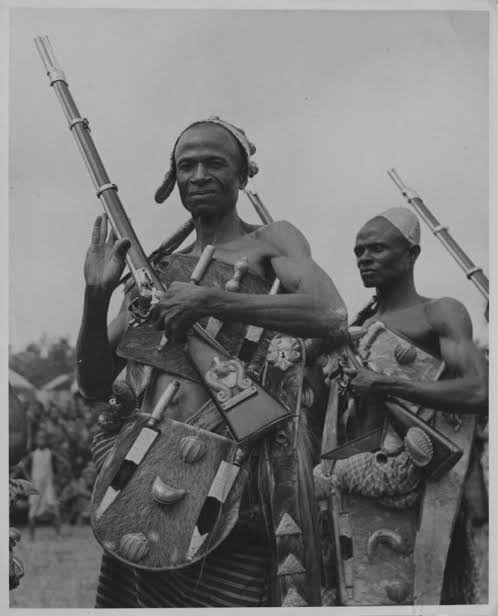
The Anglo-Ashanti Wars were a series of conflicts fought between the powerful Ashanti Empire of West Africa and the British Empire between the 19th and early 20th centuries. Centred in present-day Ghana, the wars were driven by competing political interests, control of trade routes, territorial expansion and Britain’s growing ambition to dominate the Gold Coast. The prolonged struggle demonstrated the military strength of the Ashanti state and its determination to defend its independence.
By the 18th century, the Ashanti Empire had become one of the most powerful states in West Africa. Under the leadership of Osei Tutu and his successors, the Ashanti united several Akan states under a central authority based at Kumasi.
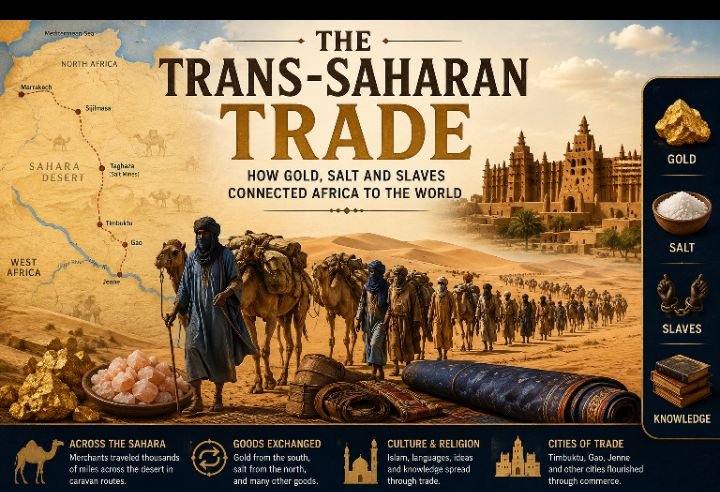
The empire developed a strong political system, a professional military structure and an economy supported by agriculture, gold and regional trade. The Ashanti also controlled important routes linking the interior with the coastal trading centres.
British merchants and officials, meanwhile, were expanding their influence along the Gold Coast. Britain controlled coastal forts and increasingly sought political influence over territories beyond the coast. This brought the British and Ashanti into direct competition.
The First Anglo-Ashanti War
The first major conflict began in 1824 after tensions between the Ashanti and British-backed coastal states escalated. An Ashanti army defeated a British force near the coast, killing the British commander, Sir Charles MacCarthy.
The conflict continued for several years. In 1831, Britain and the Ashanti reached an agreement that temporarily reduced hostilities and established a period of relative peace.
However, the underlying rivalry remained unresolved.
Renewed Conflict
Tensions increased again during the second half of the 19th century. Britain wanted greater control over the Gold Coast and surrounding territories, while the Ashanti sought to maintain its independence and influence.
The Second Anglo-Ashanti War began in 1863 and lasted until 1864. Although neither side achieved a decisive victory, the conflict demonstrated that Britain could not easily impose its authority on the Ashanti Empire.
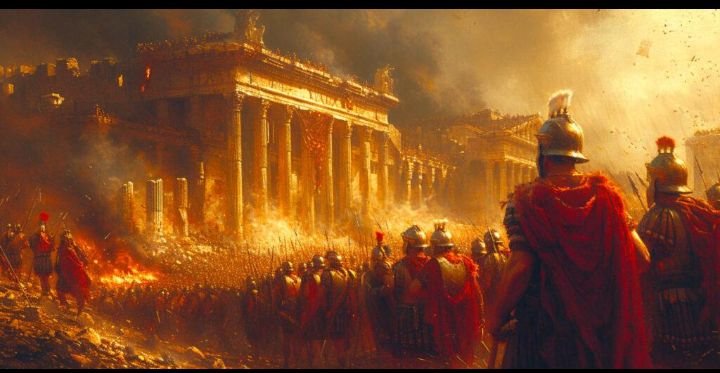
A more serious confrontation followed in 1873–1874. British forces under Sir Garnet Wolseley invaded Ashanti territory and eventually captured Kumasi, the imperial capital.
The Treaty of Fomena forced the Ashanti to accept significant terms and pay an indemnity. Britain did not immediately annex the Ashanti Empire, but the war weakened Ashanti power and increased British influence in the region.
The War of 1895–1896
The rivalry returned in the 1890s. Britain demanded that the Ashanti accept a British protectorate. Ashanti leaders resisted, refusing to surrender their sovereignty.
In 1895, Britain launched another expedition into Ashanti territory. The British occupied Kumasi and captured Asantehene Prempeh I, who was later exiled.
The Ashanti Empire was placed under increasing British control, but resistance continued.
The War of the Golden Stool
The final major confrontation came in 1900. British colonial authorities demanded that Ashanti leaders hand over the Golden Stool, a sacred symbol representing the soul and authority of the Ashanti nation.
The demand provoked widespread resistance. Led by Yaa Asantewaa, the Queen Mother of Ejisu, Ashanti forces launched a determined uprising against British rule.
Yaa Asantewaa became one of the most famous figures in African resistance to colonialism. Her forces fought British troops and besieged the British position at Kumasi.
Although the uprising was eventually defeated by the better-equipped British military, it demonstrated the continued determination of the Ashanti people to defend their political and cultural independence.
The End of Ashanti Independence
Following the defeat of the 1900 rebellion, Britain formally annexed the Ashanti Empire in 1902, incorporating it into the British colonial system.
The Ashanti state lost its independence, but its traditional institutions and cultural identity survived. The legacy of the empire remained deeply important to the people of the region.
Legacy of the Anglo-Ashanti Wars
The Anglo-Ashanti Wars were more than a series of battles between two armies. They represented a prolonged struggle between an African empire determined to preserve its sovereignty and a European power expanding its colonial influence.
The Ashanti repeatedly demonstrated their ability to organise large armies, defend their territory and challenge one of the world’s most powerful imperial forces. Figures such as Prempeh I and Yaa Asantewaa became enduring symbols of resistance.
Today, the history of the Anglo-Ashanti Wars remains an important part of Ghana’s national history. The conflicts illustrate both the military power of the Ashanti Empire and the wider struggle of African societies against European colonial expansion.
The fall of the Ashanti Empire was ultimately part of the larger European partition and colonisation of Africa. Yet the resistance mounted by the Ashanti ensured that their struggle for independence would remain one of the most significant chapters in the history of West Africa.
The Historabase Editorial Team is dedicated to exploring and sharing the stories that have shaped Africa and the wider world. Our work covers African history, ancient civilizations, empires, historical figures, wars, cultures, political movements, and important events from the past.
We aim to present history in a clear, engaging, and accessible way, combining historical records with careful research to help readers better understand the people, events, and civilizations that shaped our world.