The Anglo-Zulu War of 1879 was one of the most significant conflicts between a European colonial power and an African kingdom during the 19th century. The war was fought between the British Empire and the Zulu Kingdom in what is now South Africa.
Although Britain ultimately defeated the Zulu Kingdom, the conflict is remembered particularly for the Battle of Isandlwana, fought on 22 January 1879. In one of the most remarkable battlefield victories in African military history, a large Zulu army destroyed a heavily equipped British force, shocking the British Empire and challenging the belief that European armies were unbeatable.
Background to the War
The conflict developed during a period when Britain was expanding its political and military influence in southern Africa.
The Zulu Kingdom, founded in the early 19th century, had become a powerful regional state. Its military strength had been greatly developed under King Shaka Zulu, whose reforms created a highly disciplined fighting force.
By the late 1870s, the Zulu Kingdom was ruled by King Cetshwayo kaMpande. He maintained a large army and resisted attempts to bring the kingdom under British control.
Britain, meanwhile, wanted to consolidate its territories and influence in southern Africa. British officials viewed the independent Zulu Kingdom as an obstacle to their plans for a larger regional federation.
Tensions increased after Britain presented Cetshwayo with demands that threatened the independence of his kingdom. When the Zulu king refused to accept the British terms, war became increasingly likely.
The British Invasion
On 11 January 1879, British forces crossed into Zululand, beginning the Anglo-Zulu War.
The British army possessed major technological advantages. Its soldiers were equipped with modern firearms, artillery and military supplies. British commanders therefore expected to defeat the Zulu forces relatively quickly.
The invasion force entered Zululand through several routes. One of the central columns was commanded by Lieutenant-General Lord Chelmsford.
However, the British underestimated the organisation, discipline and fighting ability of the Zulu army.
The Zulu military system could mobilise tens of thousands of warriors, organised into regiments known as amabutho. Their traditional tactics emphasised speed, discipline and coordinated attacks.
The Battle of Isandlwana
On the morning of 22 January 1879, British forces established a camp near the foot of Isandlwana Mountain.
Lord Chelmsford had taken part of his force away from the main camp to search for the Zulu army. This left the British camp with a smaller force under Lieutenant-Colonel Henry Pulleine, later supported by other British troops.
Unknown to the British, a large Zulu army was nearby.
The Zulu commanders, including Ntshingwayo kaMahole and Mavumengwana kaNdlela, carefully positioned their forces before launching the attack.
The Zulu army eventually emerged and attacked the British position.
The Zulu Attack
The Zulu forces used a traditional tactic often described as the “horns of the buffalo.” The main force would attack the enemy’s centre while additional forces attempted to surround the opposing army from the sides.
Despite being armed largely with spears and shields, the Zulu warriors advanced against British rifle fire with remarkable determination.
The British soldiers initially used their Martini-Henry rifles effectively and inflicted heavy casualties. However, their defensive position became increasingly difficult to maintain.
As the Zulu forces surrounded the camp, British lines began to collapse.
The British troops were eventually overwhelmed. Large numbers of soldiers were killed, including officers and men of the British Army and colonial units.
By the end of the battle, the Zulu army had achieved a stunning victory.
Why Did Britain Lose at Isandlwana?
The defeat surprised Britain because of the technological difference between the two armies.
Several factors contributed to the disaster.
First, the British underestimated the size and capability of the Zulu army. Second, the decision to divide the British force weakened the main camp.
The British also failed to establish sufficiently strong defensive positions around Isandlwana. Their troops were spread over a wide area, making it difficult to maintain a concentrated defensive line.
The Zulus, meanwhile, demonstrated excellent discipline and coordination. Their commanders successfully used the terrain and numerical superiority to surround the British position.
The Battle’s Impact
News of the defeat shocked Britain. The destruction of a British force by an African army became an embarrassing military setback for the empire.
However, the Battle of Isandlwana did not end the war.
Later that same day, another small British force came under attack at Rorke’s Drift, where a much smaller British garrison successfully defended its position against a large Zulu force.
Britain subsequently sent additional troops and increased its military operations in Zululand.
Over the following months, British forces gradually regained the initiative. Major battles eventually weakened the Zulu military resistance, and the British defeated the kingdom later in 1879.
The Fall of the Zulu Kingdom
The final defeat of the Zulu Kingdom resulted in the collapse of its central political authority.
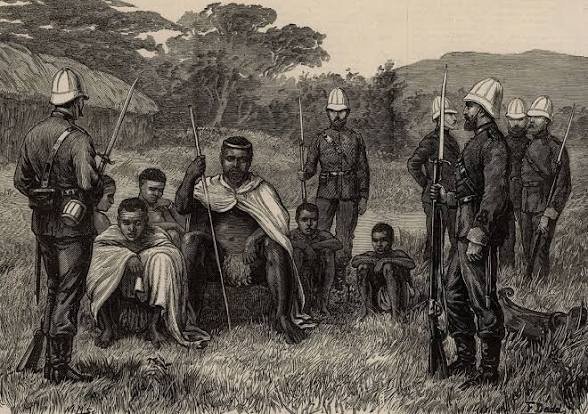
Cetshwayo was captured and later taken into exile. Zululand was divided into several territories, weakening the unified Zulu state.
Although the British ultimately won the war, the victory came at a significant cost and followed one of the most humiliating defeats in British colonial military history.
Legacy of Isandlwana
The Battle of Isandlwana remains one of the most famous battles in African history.
It demonstrated that military technology alone did not guarantee victory. Leadership, strategy, discipline, numbers and knowledge of the battlefield could allow an apparently weaker force to defeat a technologically superior opponent.
For the Zulu people, Isandlwana remains a powerful symbol of resistance and military achievement. For Britain, the battle became a lasting reminder of the dangers of underestimating an opponent.
More than 140 years later, the Battle of Isandlwana continues to attract historians and visitors interested in the Anglo-Zulu War and the wider history of colonial Africa.
The Historabase Editorial Team is dedicated to exploring and sharing the stories that have shaped Africa and the wider world. Our work covers African history, ancient civilizations, empires, historical figures, wars, cultures, political movements, and important events from the past.
We aim to present history in a clear, engaging, and accessible way, combining historical records with careful research to help readers better understand the people, events, and civilizations that shaped our world.