In an era when women faced enormous barriers to education and professional careers, one Nigerian woman achieved something remarkable.
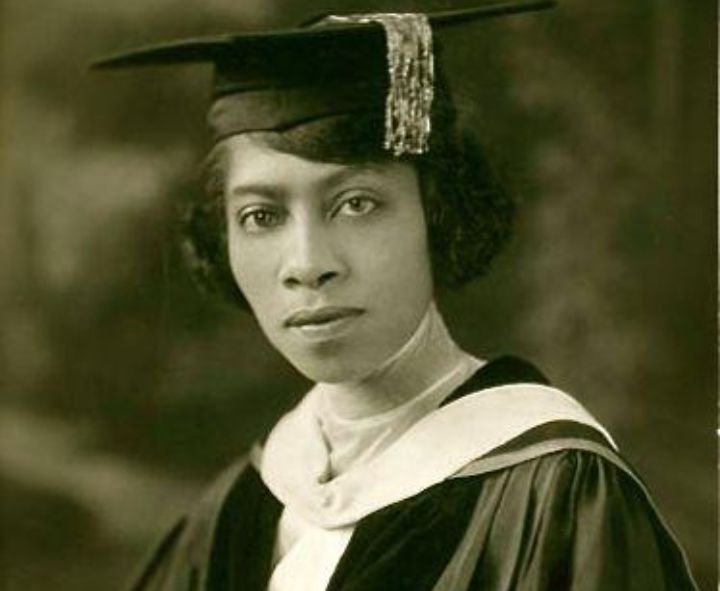
In 1929, Agnes Yewande Savage became the first Nigerian woman to qualify as a medical doctor, graduating from the University of Edinburgh in Scotland with first-class honours. She was only 23 years old.
Her achievement was more than a personal success. It marked an important moment in the history of Nigerian women, African medicine and women’s education.
Who Was Agnes Yewande Savage?
Agnes Yewande Savage was born on 21 February 1906 in Edinburgh, Scotland, to a Nigerian father, Richard Akiwande Savage, and a Scottish mother, Maggie Bowie.
Her father was himself a pioneering Nigerian doctor. He had studied medicine at the University of Edinburgh and graduated in 1900. He was also a newspaper publisher and an early advocate of Nigerian political independence. Her brother, Richard Gabriel Akiwande Savage, later became a doctor as well.
Growing up in a family with strong connections to education and medicine undoubtedly gave Agnes an unusual environment for a young woman of her generation.
But her eventual achievements were the result of her own exceptional academic ability.
An Exceptional Student
Agnes attended George Watson’s Ladies College in Edinburgh, where she excelled in her studies.
She eventually followed her father’s footsteps and entered the University of Edinburgh Medical School to study medicine.
At university, Savage distinguished herself academically.
She obtained first-class honours in all her subjects, won a prize in Diseases of the Skin and received a medal in Forensic Medicine. She was reportedly the first woman in the history of Edinburgh to win the forensic medicine medal.
In 1929, she also received the prestigious Dorothy Gilfillan Memorial Prize, awarded to the best woman graduate.
At just 23 years old, she graduated with a medical degree.
With that achievement, she became the first West African woman to train and qualify in orthodox medicine. Nigerian medical historians specifically identify her as the first Nigerian female medical doctor.
Breaking a Barrier in 1929
Savage’s achievement came at a time when medicine was overwhelmingly dominated by men.
For African women, the barriers were even greater.
Women had limited access to higher education, while racial discrimination also affected the opportunities available to Africans and people of African descent.
The University of Edinburgh notes that Savage faced institutional barriers based on both race and sex during her career.
Despite these obstacles, she had achieved something that very few women in West Africa had accomplished.
She was not simply studying medicine.
She was becoming a qualified physician at a time when the profession was still largely closed to women.
Her Medical Career
After graduating, Savage began her medical career in the Gold Coast, now Ghana, where she joined the colonial medical service as a junior medical officer.
Despite being highly qualified, she encountered racial and gender discrimination. The University of Edinburgh records that she received fewer benefits than many of her male counterparts, despite her qualifications.
In 1931, she was recruited to work at Achimota College, an important educational institution in the Gold Coast.
There, she worked not only as a medical officer but also as a teacher.
Her influence extended beyond treating patients. She helped inspire young women interested in education and medicine.
One of the young women she encountered at Achimota was Susan de Graft-Johnson, who later studied medicine at Edinburgh and became Ghana’s first female medical doctor.
Savage therefore became part of a chain of pioneering women who helped open the medical profession to future generations.
Her Connection to Nigeria
Although Agnes Savage was born in Scotland and spent an important part of her professional career in the Gold Coast, her Nigerian heritage came through her father.
This sometimes causes confusion when historical accounts discuss the first Nigerian woman doctor.
The University of Edinburgh identifies Savage as the first woman of West African heritage to train and qualify in orthodox medicine, while Nigerian medical historians identify her specifically as the first Nigerian female medical doctor.
There is another important distinction.
Elizabeth Abimbola Awoliyi, who qualified later, is often described as Nigeria’s first female physician because she became the first Nigerian woman to practise medicine in Nigeria and entered Nigerian government medical service. Awoliyi graduated in the 1930s and later became a prominent gynaecologist and medical administrator at Massey Street Hospital in Lagos.
So, in simple terms:
Agnes Yewande Savage , first Nigerian woman to qualify as a doctor.
Elizabeth Abimbola Awoliyi , first Nigerian woman to practise medicine in Nigeria/go into government medical service.
Both women were pioneers, but their historical “firsts” were different.
Building Medical Institutions
Savage’s contribution did not end with obtaining her medical degree.
During her later career in the Gold Coast, she worked at Korle Bu Hospital in Accra and played an important role in the development of nursing education.
She was involved in establishing the Korle-Bu Nurses Training College, helping strengthen the professional training of nurses in the region. A ward at Korle Bu was later named after her.
Her career therefore extended beyond the achievement of becoming a doctor.
She contributed to the development of healthcare institutions and helped create opportunities for other women to enter professional healthcare.
A Family of Medical Pioneers
Agnes Savage was part of an extraordinary medical family.
Her father, Richard Akiwande Savage, had graduated from Edinburgh Medical School in 1900.
Her brother, Richard Gabriel Akiwande Savage, graduated from the same university in 1926 and later became a pioneering doctor and military officer. He was the first person of West African descent to receive a commission as an officer in the British Army during the Second World War.
Agnes followed the same path, graduating from Edinburgh three years later.
The family therefore produced several remarkable figures who contributed to medicine and public life.
Retirement and Final Years
After years of medical service, Agnes Savage retired relatively early, in 1947.
She eventually returned to Britain and spent her later years in England.
She died in 1964, aged 58.
Although her career was not as long as that of some later medical pioneers, the significance of what she achieved at the age of 23 remained enormous.
A Pioneer Who Opened the Door
Agnes Yewande Savage’s story is ultimately about breaking barriers.
In 1929, when opportunities for women in medicine were extremely limited, she became the first Nigerian woman to qualify as a medical doctor.
She achieved first-class honours, won academic prizes and entered a profession where women of African heritage were rare.
Her accomplishment also helped demonstrate that Nigerian and West African women could excel in fields that society had traditionally reserved for men.
Today, thousands of Nigerian women work as doctors, surgeons, professors, researchers and medical specialists.
That reality was built over generations by pioneers who entered these professions when doing so was exceptionally difficult.
Agnes Yewande Savage was one of those pioneers.
Her name may not be as familiar as many Nigerian historical figures, but her achievement deserves to be remembered.
At just 23 years old, she became the first Nigerian woman to qualify as a doctor—and helped open a door through which generations of African women would follow.
The Historabase Editorial Team is dedicated to exploring and sharing the stories that have shaped Africa and the wider world. Our work covers African history, ancient civilizations, empires, historical figures, wars, cultures, political movements, and important events from the past.
We aim to present history in a clear, engaging, and accessible way, combining historical records with careful research to help readers better understand the people, events, and civilizations that shaped our world.





One Comment