Few words in the English language are as instantly recognizable as vampire. The word evokes images of pale figures rising from graves, drinking blood and haunting the night. From Bram Stoker’s Dracula to modern films and television, vampires have become one of the most enduring figures in popular culture.
But the word vampire is much older than modern horror fiction.
Its history stretches back to Eastern Europe and the Balkans, where stories of the dead returning to harm the living became deeply rooted in local folklore. From there, the word traveled through European languages before eventually becoming an international term.
Where did “vampire” actually come from?
The Word Appears Relatively Late
Although beliefs about blood-drinking supernatural beings are ancient, the English word vampire did not become common until the early 18th century.
Before then, many cultures already had legends about the dead returning from the grave. Ancient civilizations including Mesopotamians, Greeks and Romans had stories involving spirits, demons or creatures that attacked the living.
However, these beings were not necessarily vampires in the modern sense.
The specific vampire tradition that gave us the modern word developed particularly strongly in Eastern Europe and the Balkans.
The Serbian Connection
One of the earliest well-documented uses of a word resembling “vampire” appeared in connection with the Serbian word vampir.
During the early 18th century, reports about alleged vampires in parts of the Balkans attracted considerable attention in Western Europe.
In 1725, Austrian authorities investigated the alleged case of a Serbian man named Petar Blagojević, who was said to have returned from the dead and caused several deaths in his village.
Reports about the case circulated in German-language newspapers and helped spread the idea of the vampire throughout Western Europe.
Another famous case involved Arnold Paole, a Serbian soldier whose alleged transformation into a vampire was investigated around 1732. Reports about Paole and other supposed vampires generated enormous public interest.
These incidents helped transform what had largely been regional folklore into a subject of European fascination.
Where Did the Serbian Word “Vampir” Come From?
This is where the story becomes more complicated.
The precise linguistic origin of vampir remains disputed.
Some scholars have proposed that the word may have roots in older Balkan languages or traditions. Others have suggested connections to Slavic or possibly non-Slavic languages.
One important point is that there is no universally accepted explanation for the ultimate origin of the word.
The word may have traveled between neighboring languages for centuries before appearing in written European sources.
This is not unusual with folklore. Stories, names and supernatural concepts frequently cross borders, especially in regions where different ethnic and linguistic communities lived alongside one another.
From Vampir to Vampire
The word entered Western European languages during the 18th century.
German writers used forms such as Vampir, while French used vampire. English eventually adopted the French-influenced form vampire.
The Oxford English Dictionary records the English word from the 18th century, showing how quickly the term became established in the language.
As reports about supposed vampires spread across Europe, the word became increasingly associated with a particular type of supernatural creature: a dead person believed to return from the grave and attack the living, often by drinking their blood.
What Did Early Vampires Look Like?
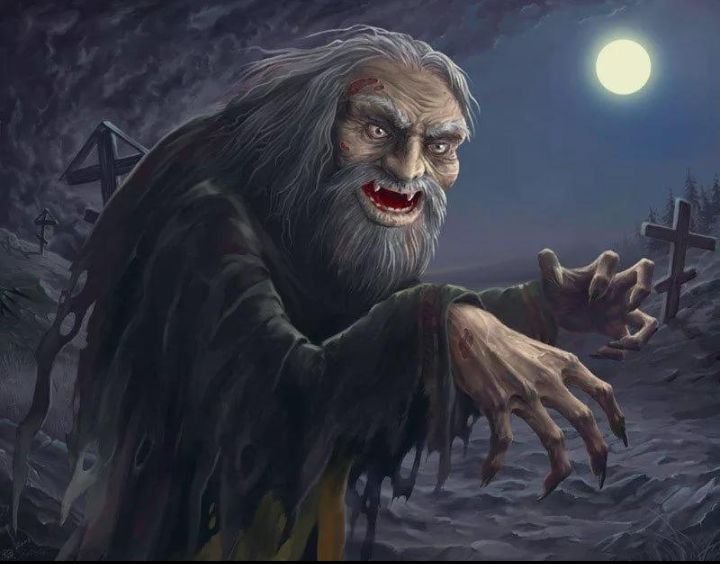
The earliest European vampire was very different from the elegant, mysterious figure portrayed in modern movies.
According to many Eastern European traditions, suspected vampires were often imagined as recently deceased people who returned to their communities.
They were not necessarily pale aristocrats wearing black capes.
In fact, historical accounts of alleged vampires often describe something much more disturbing: villagers discovering that a recently buried person appeared unusually well-preserved.
People sometimes interpreted natural processes of decomposition as evidence that the dead person had become a vampire.
A swollen corpse, blood around the mouth or changes in the body could be interpreted as signs that the deceased had been feeding on the living.
Modern science provides natural explanations for many of these observations.
Why Did People Believe the Dead Were Returning?
Vampire beliefs were closely connected to the limited medical and scientific knowledge of earlier societies.
Before modern medicine, people did not understand diseases such as tuberculosis in the way we do today.
When several members of a household or village became seriously ill and died one after another, communities sometimes searched for a supernatural explanation.
They might believe that the first person to die had returned from the grave and was responsible for subsequent deaths.
This could create a cycle of fear.
A body might be exhumed, examined and sometimes destroyed because villagers believed doing so would prevent further deaths.
The Role of Disease
Some historians have suggested that vampire folklore was influenced by outbreaks of disease.
Tuberculosis, for example, could spread through families and communities, causing victims to become increasingly weak and pale before dying.
To people who lacked knowledge of infectious disease, a sequence of deaths could appear mysterious.
Other illnesses and natural phenomena may also have contributed to vampire beliefs.
This does not mean that every vampire legend can be explained by disease. Folklore is complicated and develops through a combination of cultural beliefs, religious traditions, social fears and attempts to understand unexplained events.
The Vampire Enters Literature
By the 19th century, the vampire had moved beyond folklore and entered European literature.
One of the most influential works was John Polidori’s 1819 story The Vampyre.
Polidori’s vampire was significant because he transformed the creature from a frightening folkloric corpse into a sophisticated and seductive figure.
The story helped establish an important characteristic of the modern vampire: the supernatural predator who appears human and attractive.
This literary transformation would have an enormous influence on later vampire fiction.
Bram Stoker Changes Everything
The vampire became a global cultural icon after the publication of Bram Stoker’s Dracula in 1897.
Stoker’s Count Dracula combined numerous traditions and literary influences into one memorable character.
Dracula was intelligent, aristocratic, mysterious and terrifying. He lived in a castle, transformed into supernatural forms and preyed upon humans for their blood.
Although Stoker did not invent the vampire, his novel helped establish many characteristics that audiences now associate with vampires.
The name Dracula itself is connected to the historical figure Vlad III of Wallachia, commonly known as Vlad the Impaler, although Stoker’s fictional Dracula is very different from the historical ruler.
From Folklore to Global Pop Culture
During the 20th century, vampires became increasingly popular in books, movies, television and theater.
Films such as Nosferatu and later adaptations of Dracula helped establish the visual appearance of vampires.
Eventually, popular culture added new characteristics, including:
Sharp canine teeth
Transformation into bats
Superhuman strength
Immortality
Fear of sunlight
Hypnotic powers
Garlic and wooden stakes as vampire defenses
Not all of these characteristics existed in the earliest vampire traditions.
Many were developed, combined or popularized by later writers and filmmakers.
So, What Does Vampire Really Mean?
At its simplest, the word vampire refers to a supernatural being traditionally believed to return from the dead and consume the blood or life force of the living.
But its deeper history is much more complicated.
The modern English word appears to have traveled from the Balkans into Western European languages during the 18th century, with the Serbian vampir being one of the most important early forms.
Its ultimate linguistic origin, however, remains uncertain.
What is clear is that the word became internationally famous because it gave a name to an ancient human fear: the idea that death might not be the end.
The Enduring Legacy of the Vampire
The history of the word “vampire” is ultimately a story about how language and folklore travel.
A term associated with supernatural beliefs in Eastern Europe crossed linguistic and cultural boundaries, entered European literature and eventually became part of global popular culture.
Today, vampires can be found everywhere—from horror novels and Hollywood films to television series, video games and folklore tourism.
Yet behind the glamorous fictional vampire lies a much older and darker tradition.
Long before Dracula entered popular culture, communities in Eastern Europe were already telling stories about the dead returning to the world of the living.
The Historabase Editorial Team is dedicated to exploring and sharing the stories that have shaped Africa and the wider world. Our work covers African history, ancient civilizations, empires, historical figures, wars, cultures, political movements, and important events from the past.
We aim to present history in a clear, engaging, and accessible way, combining historical records with careful research to help readers better understand the people, events, and civilizations that shaped our world.