Today, Calabar is known for its beautiful landscapes, rich Efik culture and historic importance in southeastern Nigeria. But centuries ago, the waters around what became known as Old Calabar witnessed one of the darkest chapters in African history.
The area became a major centre of the transatlantic slave trade, connecting African communities to European merchants and slave ships bound for the Americas.
For generations, thousands of captured Africans passed through its trading networks. Many never returned home.
Calabar’s history is therefore not simply a story about a port. It is a story about commerce, power, human suffering and the transformation of a society under the pressure of the Atlantic slave trade.
What Was Old Calabar?
The term Old Calabar did not originally refer to the modern city alone. It described a group of Efik settlements along the lower Cross River, including Duke Town, Creek Town, Henshaw Town and Old Town.
These communities developed into an important commercial centre because of their location on waterways that connected the interior of southeastern Africa with the Atlantic coast.
Efik merchant families played a major role in organising trade. European ships could anchor offshore while African merchants connected them with inland trading networks.
The trade involved goods such as textiles, firearms and metal products, but one commodity became particularly profitable: enslaved human beings.
How Calabar Became a Slave-Trading Centre
The transatlantic slave trade did not begin with Europeans simply arriving in Calabar and capturing everyone they encountered.
Instead, a complex commercial system developed.
European merchants and African traders became involved in networks through which captives were transported from inland areas towards coastal trading centres.
The Efik merchant houses of Old Calabar became powerful intermediaries in this system. They negotiated with European ship captains, supplied captives and received imported goods in return.
Historical research shows that by the eighteenth century, numerous merchants and commercial houses were involved in the trade around the Cross River.
This turned Old Calabar into one of the major slave-export centres of the Bight of Biafra.
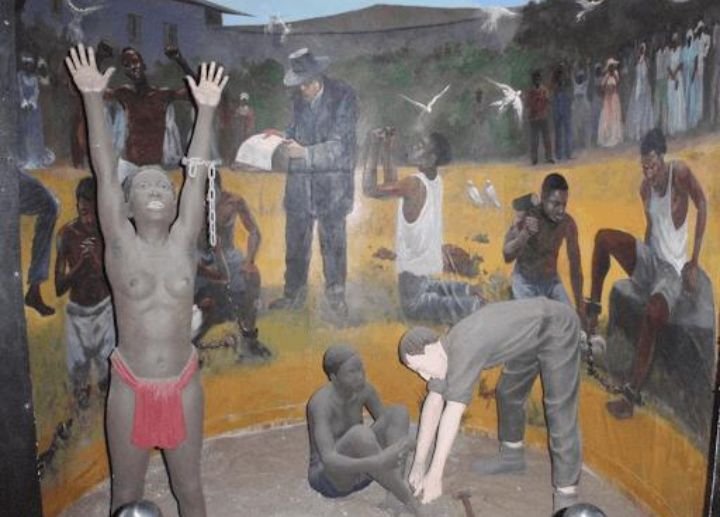
People Became Commodities
The most disturbing aspect of the system was the transformation of human beings into commercial property.
Captives could be obtained through warfare, raids, kidnapping, punishment, debt and political conflicts. They were then transported through networks leading towards the coast.
Some were held in coastal communities while merchants negotiated their sale to European traders.
Eventually, many were loaded onto ships.
For the enslaved person, this could mean the permanent destruction of family ties and separation from their homeland.
They were transported across the Atlantic under brutal conditions, with many dying during the journey.
Calabar was therefore not merely a place where European ships stopped. It was an important link between inland systems of captivity and the wider Atlantic economy.
The European Demand Made the System Worse
European demand was a major force behind the expansion of the trade.
British, French, Dutch, Portuguese and Spanish interests participated in the wider Atlantic slave system at different periods.
European ships arrived on the West African coast carrying manufactured goods that could be exchanged for captives and other commodities.
The profits created powerful incentives for merchants and political authorities to maintain the trade.
Old Calabar’s merchant houses became wealthy and politically influential because of their ability to control access to the European market.
Historical records from the eighteenth century reveal the scale of commercial activity. One study of the Old Calabar trade identifies numerous merchants involved in supplying enslaved people to European ships.
The Tragedy of 1767
One of the darkest episodes in Calabar’s history occurred in 1767.
A dispute between competing trading communities eventually became violent, drawing European slave-ship crews into the conflict.
The incident became known as the Massacre of Old Calabar.
Historical accounts report that hundreds of people were killed during the confrontation.
The event demonstrated how deeply the slave trade had become connected to political rivalries and commercial competition.
Human lives were being lost not only through enslavement itself, but also through conflicts generated by the struggle to control the trade.
Calabar Was Not the Only Slave Port
It is important not to describe Calabar as if it operated alone.
Other Nigerian coastal centres, including Bonny and Badagry, were also connected to the Atlantic slave trade.
Together with ports and trading centres across West and Central Africa, they formed parts of a vast system that transported millions of enslaved Africans to the Americas.
UNESCO’s network of places connected to the history and memory of enslavement identifies Calabar and Badagry among important Nigerian sites associated with this history.
Calabar’s particular importance came from its position along the Cross River and the commercial networks controlled by its merchant communities.
Britain Abolished the Slave Trade
By the nineteenth century, attitudes towards the transatlantic slave trade were changing.
Britain abolished its participation in the slave trade in 1807 and increasingly used naval power to suppress the trade by other nations.
But abolition did not immediately end slave trading everywhere.
In Old Calabar, the trade continued for years after Britain’s abolition.
European merchants from other countries remained involved, and local commercial interests did not immediately disappear.
Eventually, pressure from British officials and changing economic circumstances pushed the region towards a new commercial system.
From Slaves to Palm Oil
One of the most remarkable transformations in Old Calabar’s history was the shift from the slave trade to the palm-oil trade.
As international opposition to slave trading increased, palm oil became increasingly valuable to European industries.
Old Calabar’s merchants adapted.
Instead of exporting large numbers of enslaved people, the region increasingly became involved in exporting palm oil and palm kernels.
Historical studies of Old Calabar describe this transition as a major transformation in the region’s economy and society.
The change did not erase the past, but it showed how quickly commercial systems could change when international demand changed.
The Legacy of the Slave Trade
The legacy of slavery remains deeply embedded in Calabar’s history.
It affected political structures, wealth, social relationships and relations between different communities.
Some merchant families accumulated considerable wealth through Atlantic commerce, while countless enslaved people suffered violence, displacement and permanent separation from their families.
This is why historians must tell the story carefully.
The history cannot simply be reduced to Europeans versus Africans. European merchants created enormous overseas demand and built an international system of exploitation, while African political authorities, merchants and intermediaries also participated in capturing, selling and transporting enslaved people.
At the same time, many African communities resisted enslavement, suffered from raids and warfare, or became victims of the system themselves.
The reality was complicated, but the human suffering was undeniable.
Calabar’s Slave Trade History Today
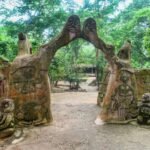
Today, the history of slavery is preserved through heritage sites and museums.
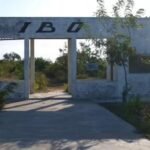
UNESCO’s Routes of Enslaved Peoples network includes the Museum of the History of Slavery and Esuk Mba Slave Beach Market in Calabar. UNESCO describes the site as being connected to the history of the transatlantic slave trade and identifies it as a place of memory.
These places serve an important purpose.
They remind visitors that the transatlantic slave trade was not an abstract historical event. It involved real people, parents, children, traders, farmers, craftsmen and communities whose lives were violently disrupted.
A Port With Two Histories
Calabar eventually became much more than its history as a slave-trading centre.
It became an important centre of Christianity, education, palm-oil commerce and colonial administration. Missionaries arrived in the nineteenth century, and the region played an important role in the development of education and Christianity in southeastern Nigeria.
Yet the memory of the slave trade remains.
The same waterways that once carried commercial ships also carried people away from their homes.
The same trading communities that later became centres of palm-oil commerce had once been deeply connected to an international system that treated human beings as commodities.
That is what makes Old Calabar’s story so powerful.
It is not only the story of a Nigerian port. It is the story of how global demand transformed African societies, and how millions of human lives were caught in the middle.
The Historabase Editorial Team is dedicated to exploring and sharing the stories that have shaped Africa and the wider world. Our work covers African history, ancient civilizations, empires, historical figures, wars, cultures, political movements, and important events from the past.
We aim to present history in a clear, engaging, and accessible way, combining historical records with careful research to help readers better understand the people, events, and civilizations that shaped our world.