The name Africa is one of the most familiar geographical names in the world. It identifies a continent of more than 50 countries, thousands of cultures and languages, and a history stretching back to the earliest civilizations of humanity.
Yet the origin of the word itself is surprisingly uncertain.
Historians and linguists have proposed several explanations for where “Africa” came from. Some connect it to an ancient North African people known as the Afri. Others have suggested connections to Phoenician, Berber, Greek, or Latin words. What is much clearer is how the name gradually expanded from referring to a relatively small area around ancient Carthage to becoming the name of an entire continent.
Africa Was Not Always Called Africa
The ancient Greeks generally referred to much of the continent as Libya, a term that should not be confused with the modern country of Libya. Ancient Greek geographical writings divided the known world into Europe, Asia and Libya.
The Romans, however, increasingly used the word Africa.
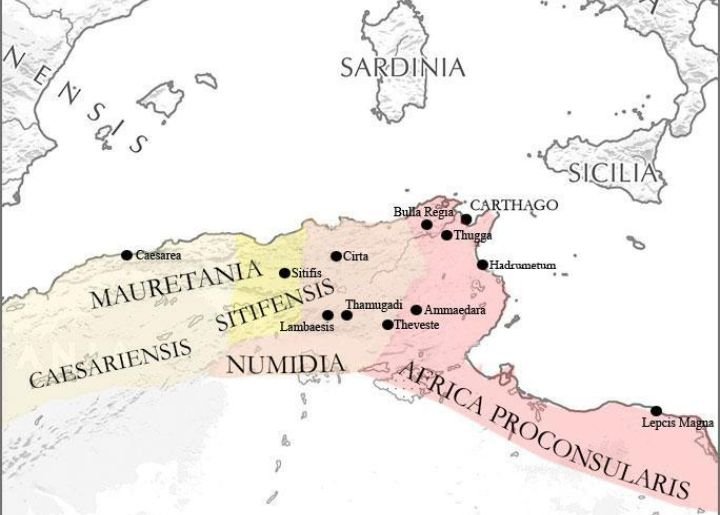
Importantly, the Romans did not originally use “Africa” to describe the entire continent. The term was associated particularly with the territory around Carthage, located near modern Tunis in Tunisia. As Roman geographical knowledge expanded, the name gradually became associated with larger portions of the landmass.
This development is one of the most important clues in understanding the name’s history.
The Roman Connection
Rome’s relationship with North Africa changed dramatically during the Punic Wars, a series of conflicts between Rome and Carthage.
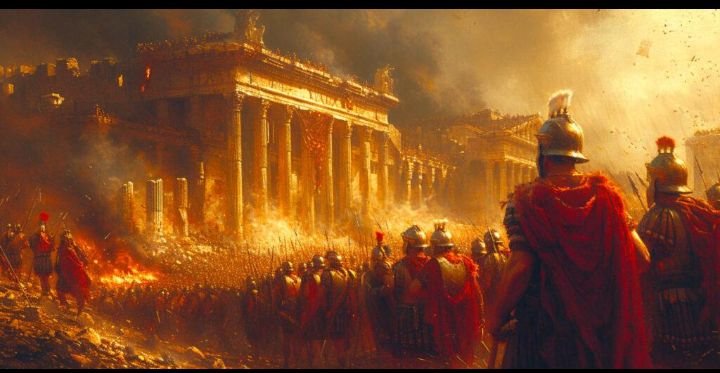
After the destruction of Carthage in 146 BC, Rome took control of its territories and organized them into Roman provinces. One of these became known as Africa Proconsularis, centered on the region around Carthage and covering much of present-day Tunisia and surrounding areas.
The Roman use of Africa therefore became firmly established as a geographical and administrative term. Over centuries, its meaning expanded beyond the original Roman province until it eventually referred to the entire continent.
But this still leaves a major question: Where did the Romans get the word itself?
Theory One: The Afri People
One of the strongest modern explanations connects “Africa” with an ancient population known as the Afri.
The Romans used terms such as Afer for an individual African and Afri for a group. These names appear to have been associated with indigenous populations living in the region around Carthage.
According to this theory, Africa terra could essentially have meant “the land of the Afri.”
Over time, a name originally associated with one population and its territory was extended to a much larger geographical area. Modern scholarship has given considerable attention to this explanation, particularly because the Roman term Afri was closely connected to the region around Carthage.
This theory does not necessarily mean that the Romans invented the underlying name. Rather, they may have adapted a name already used for local people or territory into Latin.
Theory Two: A Phoenician Origin
Another explanation connects Africa to the Phoenician language.
Carthage itself was founded by Phoenicians from the eastern Mediterranean, traditionally associated with the city of Tyre. Because of this connection, some scholars have proposed that the name could have originated from a Phoenician term.
One frequently discussed possibility connects it with a Semitic root associated with dust or earth. However, this explanation remains debated and is not universally accepted.
The Phoenician theory is attractive because Carthage was deeply connected to Phoenician culture, but establishing the exact linguistic path from a Phoenician word to the Latin Africa is difficult.
Theory Three: The Berber Connection
Another important theory connects the name to the Berber languages of North Africa.
The Berber word ifri has been associated with the meaning “cave.” Some researchers have connected it with ancient Berber communities and place names in North Africa.
This has led to the suggestion that Africa could have developed from a Berber term associated with people who lived in caves or rock shelters.
The theory is particularly interesting because several North African names contain related forms, including Ifren and Ifrane. However, scholars continue to debate whether this is actually the origin of the continental name or merely a later linguistic association.
Theory Four: “Land Without Cold”
A much older explanation tried to connect the name with the Greek language.
Some ancient and later writers proposed that Africa came from the Greek aphrikē, interpreted as meaning something like “without cold.”
Under this interpretation, Africa was imagined as a warm land in contrast with colder regions farther north.
Another proposed explanation connects the name with the Latin word aprica, meaning “sunny” or “exposed to the sun.”
These explanations became popular in various historical writings, but modern scholars generally treat them cautiously because they do not provide as convincing a linguistic connection as the Afri theory.
What About “Alkebulan”?
A popular claim on the internet says that Alkebulan was the original indigenous name of Africa and that Europeans replaced it with “Africa.”
This claim requires caution.
The word Alkebulan appears in some modern discussions about African history, but there is no strong scholarly consensus that it was a universally used ancient name for the entire continent. Recent scholarship examining the history of the term Africa specifically notes that claims surrounding Alkebulan are contested and that the etymology of “Africa” remains unresolved.
Africa itself was home to thousands of societies with their own names for particular regions and territories. It would therefore be misleading to assume that ancient Africans necessarily had one single universal name for the entire landmass.
How “Africa” Became the Name of the Whole Continent
The transformation of Africa from a regional name into the name of the entire continent happened gradually.
During Roman times, Africa primarily referred to territories around Carthage and the wider Roman province. As Roman geographical writing developed, the word could be used in broader geographical contexts.
Later, during the Islamic period, the Roman term continued in an Arabic form: Ifriqiya. Initially, Ifriqiya referred primarily to the region corresponding broadly to modern Tunisia and parts of neighboring North Africa rather than the entire continent.
European geographical traditions eventually adopted and expanded the continental use of “Africa.” By the early modern period, maps increasingly represented Africa as the name of the entire landmass.
So, Who Actually Named Africa?
The most accurate answer is: we do not know with certainty.
What historians can establish with much greater confidence is that the Romans were responsible for the widespread use and geographical expansion of the term Africa. The original linguistic source, however, remains disputed.
The Afri explanation is one of the strongest theories because Afri was a Roman term associated with people living near Carthage. Other theories connect the name to Berber, Phoenician, Greek or Latin words.
There is therefore no credible single explanation that has been universally accepted by historians and linguists.
A Name With a Long Journey
The history of the word “Africa” is ultimately a story about how geographical names evolve.
What began as a term associated with a relatively small part of North Africa eventually became the name of an entire continent. Along the way, it passed through different languages and civilizations, ancient African societies, Carthaginians, Romans, and later Arabic and European traditions.
The mystery surrounding its exact origin is part of what makes the name so fascinating.
Africa may be one of the world’s most familiar names, but its earliest meaning remains hidden somewhere between the languages of ancient North Africa and the Mediterranean.
The Historabase Editorial Team is dedicated to exploring and sharing the stories that have shaped Africa and the wider world. Our work covers African history, ancient civilizations, empires, historical figures, wars, cultures, political movements, and important events from the past.
We aim to present history in a clear, engaging, and accessible way, combining historical records with careful research to help readers better understand the people, events, and civilizations that shaped our world.






One Comment