Nigeria’s decision to move its capital from Lagos to Abuja was one of the most important administrative and political changes in the country’s history. On 12 December 1991, Abuja officially became Nigeria’s new capital, replacing Lagos after more than 75 years as the seat of government.
But why did Nigeria move its capital?
The answer goes beyond geography. The decision was influenced by Lagos’s rapid population growth, overcrowding, ethnic and political considerations, security concerns, and the desire to create a capital that could better represent a united Nigeria.
Lagos: Nigeria’s First Capital
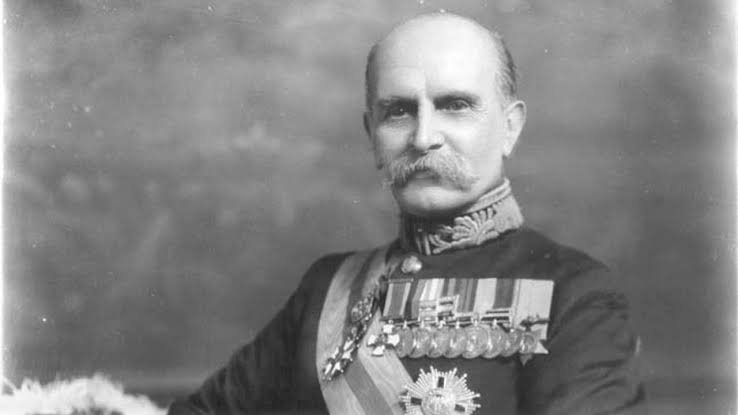
Lagos became the capital of the British Colony and Protectorate of Nigeria in 1914, following the amalgamation of the Northern and Southern Protectorates by Lord Frederick Lugard.
After Nigeria gained independence in 1960, Lagos remained the national capital.
At the time, Lagos was already an important commercial centre. Its location on the Atlantic coast made it ideal for trade, transportation and administration.
The population of Lagos grew dramatically, and the city increasingly struggled with congestion, housing shortages, traffic, inadequate infrastructure and pressure on public services.
By the 1970s, it was becoming increasingly difficult for Lagos to function efficiently as both Nigeria’s commercial centre and its political capital.
Why Abuja Was Chosen
The idea of creating a new capital was formally announced during the military government of General Murtala Mohammed in 1976.
A committee was established to investigate the possibility of moving the capital away from Lagos. The committee recommended an area around the centre of the country.
The location eventually selected was in what was then part of the old Plateau State, in the general area now known as the Federal Capital Territory.
The choice of Abuja was deliberate.
1. Abuja Was Centrally Located
One of the biggest reasons for choosing Abuja was its geographical position.
Lagos is located in the far southwest of Nigeria, while Abuja is situated much closer to the geographical centre of the country.
The government believed that a centrally located capital would be more accessible to Nigerians from different regions.
The new capital was therefore intended to be a symbol of national unity rather than a capital strongly associated with one particular region.
2. Creating a Capital for a United Nigeria
Nigeria is an extremely diverse country with hundreds of ethnic groups and many cultural and religious communities.
Lagos had developed as a major Yoruba cultural and commercial centre, although it was, and remains, a highly diverse city.
The government wanted the new capital to have a different character.
Abuja was planned from the beginning as a Federal Capital Territory, rather than growing organically into a capital over centuries.
The intention was to create a neutral administrative centre where Nigerians from different backgrounds could see themselves represented.
3. Lagos Was Becoming Overcrowded
Another major problem was Lagos’s rapid expansion.
The city was experiencing enormous population growth, while roads, housing, drainage, water supply and other infrastructure struggled to keep pace.
Traffic congestion became a major problem.
Government offices also occupied valuable space within an increasingly crowded metropolitan area.
Moving the federal government to a new city offered an opportunity to design government districts, roads and public infrastructure from the ground up.
4. Abuja Could Be Planned as a Modern Capital
Unlike Lagos, Abuja did not have to inherit centuries of urban development.
The government could plan the city according to a master plan.
Important government buildings, residential districts, roads, diplomatic areas and public spaces could be deliberately positioned.
The city’s master plan was developed with the assistance of international planning experts.
Abuja was envisioned as a modern administrative capital with broad roads, organised districts and room for future expansion.
The Nigerian Civil War of 1967–1970 had demonstrated the political and strategic difficulties associated with Nigeria’s major institutions being concentrated in one coastal city.
Lagos’s location on the Atlantic coast also meant that it was geographically distant from many parts of the country.
A capital located farther inland was considered strategically advantageous.
Abuja’s inland location also reduced some of the vulnerabilities associated with having the political centre concentrated in a major coastal metropolis.
The Creation of the Federal Capital Territory
On 3 February 1976, the Federal Capital Territory was officially created.
The area covered approximately 8,000 square kilometres and was separated from the surrounding states for federal administrative purposes.
Abuja was selected as the site of the new capital.
The name “Abuja” itself was not entirely new. Historically, it had been associated with the Abuja Emirate established in the 19th century, while the area selected for the new capital included several existing communities.
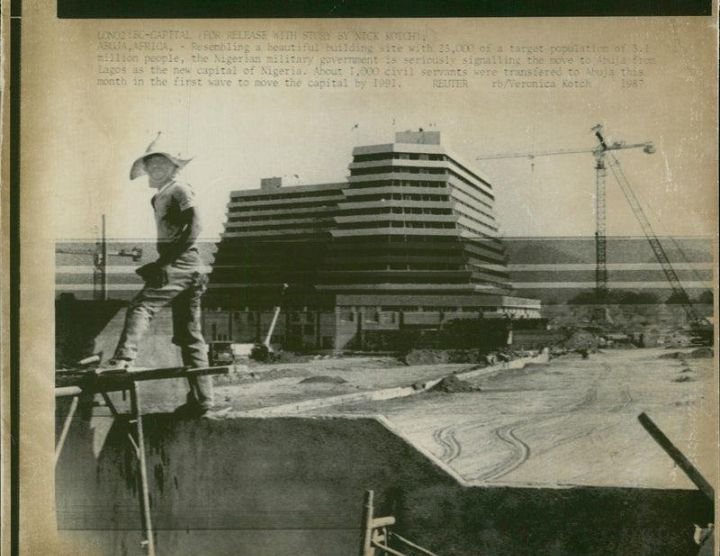
The construction of the new capital was therefore a massive national project.
Building a New Capital
The development of Abuja required enormous investment.
Roads had to be constructed. Government ministries and departments needed new buildings. Housing had to be provided for civil servants. Utilities, schools, hospitals and other public infrastructure had to be developed.
Major landmarks gradually transformed the landscape.
These included the National Assembly complex, the Supreme Court, government ministries and other federal institutions.
The distinctive Aso Rock became one of the most recognisable symbols of the new capital.
Why Did the Move Take So Long?
Although the decision to establish Abuja was made in 1976, the federal government did not immediately move there.
Constructing an entirely new capital was enormously expensive and complicated.
Nigeria also experienced political instability, including military coups and changes of government throughout the late 1970s and 1980s.
Construction continued through these political changes.
Eventually, the federal government officially transferred the capital from Lagos to Abuja on 12 December 1991, during the administration of General Ibrahim Babangida.
What Happened to Lagos?
Lagos did not become irrelevant after losing its status as capital.
Quite the opposite.
It remained Nigeria’s most important commercial and economic centre and continued to grow rapidly.
The headquarters of many businesses remained in Lagos, and the city retained enormous importance in finance, entertainment, manufacturing, trade and transportation.
Even today, Lagos is often regarded as Nigeria’s economic powerhouse, while Abuja serves as the country’s political and administrative centre.
Was the Capital Move Successful?
The creation of Abuja achieved several of the objectives that motivated the move.
It gave Nigeria a purpose-built federal administrative centre and separated the country’s political capital from its largest commercial city.
Abuja also became an important symbol of the Nigerian federation.
However, the move did not solve every problem.
The rapid growth of Abuja has created its own challenges, including traffic, housing shortages, high living costs and pressure on infrastructure.
The city has also expanded beyond the carefully planned areas envisioned by its original designers.
Nevertheless, Abuja’s creation remains one of the most ambitious urban-development projects in Nigerian history.
Conclusion
Nigeria did not move its capital from Lagos to Abuja for a single reason.
The decision was the result of several interconnected factors: Lagos’s overcrowding, the need for better urban planning, geographical considerations, security concerns and the desire to create a capital that could serve as a symbol of Nigerian unity.
When Abuja officially became the capital on 12 December 1991, Nigeria effectively created a new political centre in the heart of the country.
The Historabase Editorial Team is dedicated to exploring and sharing the stories that have shaped Africa and the wider world. Our work covers African history, ancient civilizations, empires, historical figures, wars, cultures, political movements, and important events from the past.
We aim to present history in a clear, engaging, and accessible way, combining historical records with careful research to help readers better understand the people, events, and civilizations that shaped our world.







One Comment