Africa’s colonial history is often told through battles, treaties, forced labour and the struggle for independence. Yet one of the darkest aspects of that history has received far less attention: sexual violence committed against African women and girls during periods of colonial conquest, military occupation and rebellion.
In many parts of the continent, sexual violence occurred alongside military campaigns, punitive expeditions, forced displacement and the suppression of resistance. Victims were often civilians living in communities caught between colonial forces and African resistance movements.
For decades, many of these experiences remained largely absent from official histories.
Violence During the Colonial Conquest
European colonial expansion across Africa was frequently accompanied by military campaigns. When communities resisted taxation, land seizures, political control or other colonial policies, colonial armies sometimes responded with collective punishment.
Women were particularly vulnerable during raids on villages and the destruction of communities. Historical records from different African territories contain references to rape, sexual assault, forced concubinage and other forms of sexual exploitation.
However, documenting these crimes has been difficult.
Colonial administrations generally produced records from the perspective of officials and military officers. African victims rarely had access to the institutions responsible for recording complaints, and many feared further punishment or social stigma.
As a result, historians believe that official records represent only a fraction of the violence that occurred.
The Herero and Nama Genocide
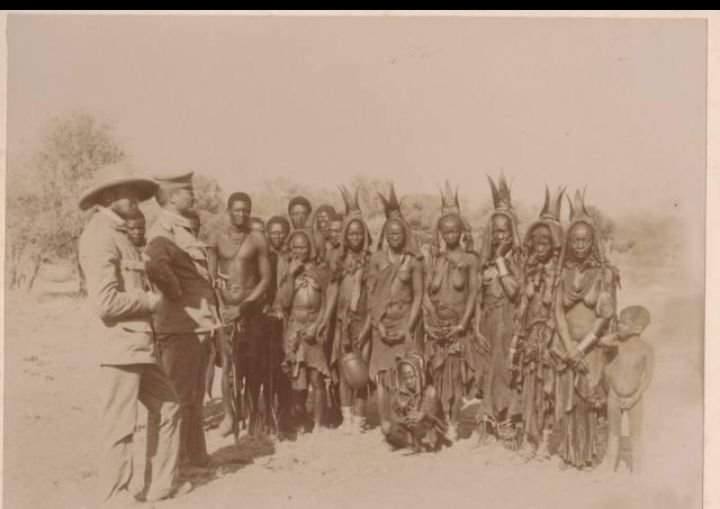
One of the most extensively studied examples comes from German South West Africa, now Namibia, during the early 20th century.
Between 1904 and 1908, German colonial forces conducted a brutal campaign against the Herero and Nama peoples following resistance to German colonial rule.
Thousands of Africans were killed, expelled from their lands or imprisoned in concentration camps. Survivors faced starvation, disease, forced labour and extreme abuse.
Women were among those who suffered particularly severe consequences.
Historical research has documented sexual violence and the exploitation of African women in the colonial camp system. Women were also subjected to forced labour and other forms of abuse.
The violence became part of a broader system designed to destroy resistance and control the surviving population.
The atrocities have since become recognized as genocide. Germany formally acknowledged the genocide against the Herero and Nama in 2021 and agreed to provide financial support to Namibia as part of a reconciliation process.
Yet for generations, the experiences of individual victims remained largely forgotten.
The Congo Under Colonial Rule
The history of the Congo under Belgian colonial rule is another example of extreme colonial violence.
Under King Leopold II’s administration of the Congo Free State, millions of Congolese died from killings, disease, starvation, exhaustion and other consequences of the forced extraction system.
Women were also subjected to violence and coercion.
Although much of the historical discussion surrounding the Congo has focused on forced labour, mutilation and mass killings, researchers have increasingly examined the gendered nature of colonial violence.
Sexual exploitation could occur when colonial authorities, soldiers, company employees or local intermediaries exercised overwhelming power over African communities.
The enormous distance between colonial authorities and the people suffering the consequences also made accountability extremely difficult.
The Mau Mau Emergency in Kenya
During Britain’s suppression of the Mau Mau uprising in Kenya in the 1950s, thousands of Kenyans were detained in a network of detention camps and villages.
For decades, the abuses suffered by detainees received limited international attention.
Later historical investigations and legal proceedings brought allegations of torture and sexual abuse into the public record.
Some Kenyan survivors described being subjected to sexual assault and other forms of degrading treatment while in colonial custody.
In 2013, the British government announced a settlement with more than 5,000 Kenyan claimants who had suffered human-rights abuses during the colonial emergency. Britain expressed regret for the abuses and agreed to pay compensation.
The case was historically significant because it demonstrated that abuses committed during the colonial period could still have legal and political consequences many decades later.
Algeria’s War of Independence
The Algerian War of Independence against France, fought from 1954 to 1962, also involved widespread violence against civilians.
Women participated in the independence movement as couriers, organizers, fighters and supporters. Their involvement exposed them to severe retaliation.
French security forces were accused of using torture, including sexual violence, during interrogations and counter-insurgency operations.
Women suspected of supporting the National Liberation Front (FLN) could be detained and interrogated. Accounts from survivors and later historical investigations describe sexual humiliation and assault among the abuses inflicted during the conflict.
The subject remained politically sensitive in France and Algeria for decades.
The experiences of Algerian women also reveal an important reality about colonial warfare: women were not merely passive victims of conflict. Many actively participated in resistance movements while simultaneously facing violence because of their gender.
The Congo Crisis and Other African Conflicts
Colonial and decolonization conflicts did not end neatly when African countries gained independence.
The Congo Crisis, beginning shortly after the Democratic Republic of the Congo became independent in 1960, involved political violence, foreign intervention and armed conflict.
Sexual violence continued to appear in the context of political and military instability.
Similar patterns could be found elsewhere on the continent, where the transition from colonial rule to independence was accompanied by rebellions, counter-insurgency campaigns and civil wars.
This makes it difficult to separate colonial-era sexual violence from the broader history of violence that followed colonialism.
Why Were So Many Cases Forgotten?
One of the biggest reasons is the nature of historical records.
Colonial governments documented military operations, arrests, deaths and political events, but the voices of African victims were frequently excluded.
In societies where sexual assault carried enormous stigma, victims also had powerful reasons to remain silent.
A woman who had been assaulted could face rejection from her community or pressure to conceal what happened. In other cases, there was simply no institution capable of protecting her or recording her testimony.
There was also a major imbalance of power.
A colonial soldier or official could exercise enormous authority over an African civilian. Reporting an assault to colonial authorities could therefore seem pointless—or dangerous.
As a result, historians often have to reconstruct these experiences from court records, missionary accounts, oral histories, survivor testimonies, private correspondence and archival documents.
Sexual Violence as a Weapon of Power
Sexual violence during colonial conflicts was not always simply an individual act of criminality.
In some circumstances, it functioned as a tool of intimidation and domination.
The assault of women could humiliate families and communities, destroy social bonds and demonstrate the power of occupying forces.
This is one reason historians increasingly examine sexual violence as part of the broader history of colonial warfare rather than treating individual cases as isolated incidents.
At the same time, historians caution against assuming that every allegation had the same circumstances or that sexual violence was systematically ordered in every colonial conflict.
The historical evidence varies considerably from one country and period to another.
Remembering the Victims
Today, researchers across Africa and beyond are working to recover stories that were excluded from older accounts of colonial history.
The goal is not simply to catalogue atrocities.
It is also to recognize the people who survived them.
African women endured wars, displacement, imprisonment, forced labour and sexual violence, but they also resisted colonial domination, protected their families, participated in political movements and helped preserve their communities.
Their stories therefore belong to the history of resistance as much as they belong to the history of suffering.
The colonial era transformed Africa through enormous political and economic upheaval. But understanding that history requires looking beyond maps, governors and battles.
It requires listening to the voices that were often left out.
The Historabase Editorial Team is dedicated to exploring and sharing the stories that have shaped Africa and the wider world. Our work covers African history, ancient civilizations, empires, historical figures, wars, cultures, political movements, and important events from the past.
We aim to present history in a clear, engaging, and accessible way, combining historical records with careful research to help readers better understand the people, events, and civilizations that shaped our world.








One Comment